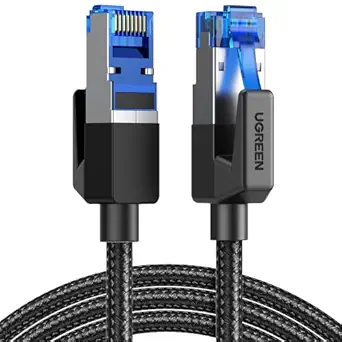
Cat 8 Cables: Is 40Gbps Overkill for Your Home Network?
When shopping for high-speed Ethernet cables like the BUSOHE Cat 8, you're entering a realm of extreme performance designed for data centers and pro gamers. This 40-foot braided S/FTP cable promises 40Gbps speeds and 2000MHz bandwidth, but understanding your actual needs—from shielding to durability—is key to avoiding overpaying for unneeded specs.
Key Considerations Before Buying
- Consider your internet plan and hardware: Cat 8's 40Gbps far exceeds most home connections (often under 1Gbps), so it's future-proofing for multi-gigabit setups or local network transfers between high-end PCs and NAS drives.
- Shielding matters: The S/FTP (screened and foil-shielded twisted pairs) design in this cable reduces electromagnetic interference, which is crucial in cable-heavy areas or near power lines, but may be overkill for short, simple runs.
- Length and flexibility: At 40 feet, this cable suits long runs across rooms, but the braided jacket adds stiffness; ensure your routing path accommodates the cable's rigidity without kinking.
What Our Analysts Recommend
For a Cat 8 cable, verify the RJ45 connectors are gold-plated for corrosion resistance and check for a UV-resistant jacket if used outdoors. Look for a high strand count (e.g., 30 AWG) for flexibility, and confirm the cable meets ANSI/TIA-568 standards to guarantee 40Gbps performance up to 30 meters.
Cat 7 Cables Market Context
Market Overview
The Ethernet cable market has evolved rapidly, with Cat 8 emerging as the latest standard for 40Gbps speeds, targeting gamers, streamers, and small businesses. However, most consumers still use Cat 5e or Cat 6, as these suffice for typical broadband speeds, making Cat 8 a niche but growing segment for future-proofing.
Common Issues
A key issue with high-category cables like Cat 8 is mislabeling—some products claim 40Gbps but fail under real-world testing due to poor shielding or subpar materials. Additionally, length limitations (Cat 8's 40Gbps max is 30 meters) are often overlooked, leading to performance drops over longer runs.
Quality Indicators
Quality Cat 8 cables feature robust braided shielding (S/FTP), 50-micron gold-plated contacts, and a UL-listed rating for fire safety. Look for independent test reports or certifications from bodies like ETL or Intertek, and avoid cables with overly thin PVC jackets that signal cheap construction.
Review Authenticity Insights
Grade B Interpretation
With a Grade B and an estimated 10% fake review rate, the BUSOHE Cat 8 cable has a mostly trustworthy review profile, but a small fraction of reviews may be inflated. This means the 4.43 average rating is slightly optimistic, with the adjusted 4.20 likely reflecting genuine user satisfaction more accurately.
Trust Recommendation
Focus on verified purchase reviews with specific use cases, like those mentioning gaming latency or NAS transfers, as these are harder to fake. The 10% fake rate is low enough to not dismiss the product, but cross-check with third-party benchmarks for performance claims.
Tips for Reading Reviews
For Ethernet cables, prioritize reviews that discuss speed tests (e.g., using iPerf) or real-world scenarios like 4K streaming. Be wary of reviews with generic praise without technical details, and look for photos of the cable's build quality to assess braiding and connector plating.
Expert Perspective
The BUSOHE Cat 8 cable offers robust specs—40Gbps, 2000MHz, S/FTP shielding, and UV resistance—at a competitive price point with 30 cable clips included. The Grade B authenticity suggests most buyers are satisfied, but the 10% fake review rate warrants caution. For users with multi-gigabit routers or demanding local networks, this cable provides genuine future-proofing, but for typical home use, it's likely overkill.
Purchase Considerations
Weigh your current internet speed and device capabilities: if your router and PC only support Gigabit Ethernet (1Gbps), a Cat 6 cable suffices and costs less. However, if you're building a 10Gbps home lab or have a high-end gaming rig with 2.5Gbps ports, this cable's shielding and bandwidth ensure no bottlenecks.
Comparing Alternatives
Shoppers should compare this with other Cat 8 cables from brands like Cable Matters or Monoprice, which may offer similar specs at slightly different price points, and consider Cat 6a as a more cost-effective alternative for 10Gbps needs.