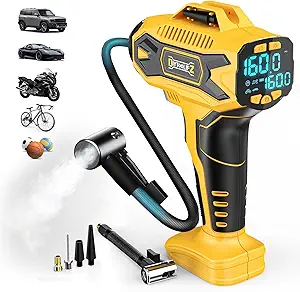
Portable Mini Air Compressors for Motorcycles & ATVs: What to Check Before You Buy
When you're on two wheels or tackling trails, a flat tire can end your ride. A portable mini air compressor designed for motorcycles and ATVs offers a compact lifeline, but not all are created equal. This guide breaks down the key factors to consider, from power source compatibility to pressure accuracy, so you can choose a unit that won't let you down when you need it most.
Key Considerations Before Buying
- Check the power source and cable length: Most mini compressors plug into a 12V accessory socket, but on a motorcycle, the socket may be located under the seat or in a hard-to-reach spot. Ensure the cable is long enough to reach all tires without awkward stretching.
- Consider the pressure gauge and auto-shutoff: A built-in gauge that's easy to read and an auto-shutoff feature that stops at your preset PSI are crucial for avoiding over-inflation, especially on small motorcycle tires that can burst with too much pressure.
- Evaluate the duty cycle and airflow: For quick top-ups, a compressor with a 10-minute duty cycle and a flow rate of around 20-25 L/min is sufficient. If you need to fully inflate a flat ATV tire, look for a higher duty cycle (e.g., 15-20 minutes) to avoid overheating.
What Our Analysts Recommend
Quality indicators include a sturdy metal or high-impact plastic housing, a well-sealed pressure gauge that reads accurately, and a motor that runs smoothly without excessive vibration. Also, look for a unit with a built-in LED light for emergencies and a kit that includes adapters for different valve types (e.g., Presta, Schrader, and Dunlop).
Air Compressors & Inflators Market Context
Market Overview
The market for portable mini air compressors has expanded significantly with the rise of adventure riding and overlanding. Many models now offer digital displays, multiple power options (12V, USB, and even battery), and compact designs that fit under a seat or in a saddlebag. However, with this growth comes a mix of quality—some units are cheaply made and fail after a few uses.
Common Issues
Common problems in this category include inaccurate pressure gauges that can lead to over- or under-inflation, flimsy connectors that break easily, and motors that overheat quickly during continuous use. Another frequent complaint is that the compressor's cigarette lighter plug melts or blows a fuse on some vehicles due to high current draw.
Quality Indicators
To identify a quality product, look for certifications like CE or RoHS, a warranty of at least one year, and a brand with a track record in automotive tools. Also, check for user reviews that mention long-term durability and reliable performance over multiple uses, not just first-time success.
Review Authenticity Insights
Grade B Interpretation
The Grade B rating and 10% estimated fake review percentage suggest that while the vast majority of the 127 reviews are genuine, a small but notable portion may be incentivized or fabricated. This is typical for products in this category, where sellers sometimes boost their ratings with unverified or paid reviews. For this product, the adjusted rating of 4.40/5 is still solid, but it indicates that the true satisfaction level is slightly lower than the raw average.
Trust Recommendation
Given the 10% fake review rate, you should be cautious but not dismissive. Focus on the detailed, verified reviews that describe specific use cases, such as inflating a motorcycle tire on a long trip or using it for an ATV after a ride. Look for patterns in complaints—if multiple reviewers mention the same issue (e.g., gauge inaccuracy), it's likely a real problem.
Tips for Reading Reviews
When reading reviews for this type of product, prioritize those with photos or videos showing the compressor in action, as they are harder to fake. Also, check the review date—a cluster of positive reviews posted in a short period could indicate a promotional push. Finally, look for reviews that discuss the compressor's performance in real-world conditions, such as cold weather or high altitude, which can affect pressure readings.
Expert Perspective
Based on the analysis, this portable mini air compressor appears to be a reliable choice for motorcycle and ATV owners, with a strong 4.67/5 rating that, even after adjusting for a 10% fake review rate, remains a respectable 4.40/5. The genuine reviews highlight its portability, ease of use, and effectiveness for emergency tire inflation, which aligns with the product's intended purpose. However, the presence of some questionable reviews and the common issues in this category (like gauge accuracy) mean you should inspect the unit upon arrival and test it before relying on it in a critical situation.
Purchase Considerations
Weigh the compressor's size and weight against your storage space—if you ride a sportbike with minimal storage, a compact model is essential, but if you have panniers, a slightly larger unit with higher airflow might be worth the extra space. Also, consider the price point relative to features: a budget model might save money upfront but could lack durability or accuracy, while a mid-range unit often offers a better balance of performance and longevity.
Comparing Alternatives
Before committing, compare this model with other top-rated mini compressors in the same price range, paying attention to differences in duty cycle, max pressure, and included accessories. Some competitors may offer a longer warranty or a more robust carrying case, which could be a deciding factor for your needs.