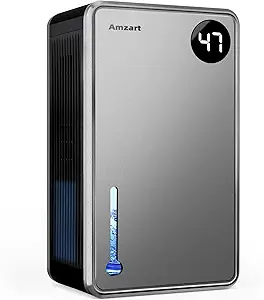
Mastering Moisture: Choosing a High-Capacity Dehumidifier for Basements & Crawl Spaces
When tackling serious moisture problems in basements, crawl spaces, or commercial water damage sites, consumer-grade dehumidifiers often fall short. A 155-pint unit, like this model, is a heavy-duty solution designed for rapid water removal, but buyers must understand that such capacity brings specific considerations regarding drainage, power consumption, and the need for continuous operation in harsh environments.
Key Considerations Before Buying
- Drainage Setup: This unit includes a drain hose, which is essential for continuous operation. Ensure you have a nearby floor drain or a suitable location for gravity drainage; otherwise, you'll need a condensate pump, which this model may not include.
- Portability vs. Size: At 155 pints, this dehumidifier is compact for its class but still heavy (often 50+ lbs). Check the wheel quality and handle design, as you'll be moving it across thresholds and potentially up stairs in water damage scenarios.
- Auto Defrost Function: In cooler crawl spaces (below 65°F), coils can ice up. The auto defrost feature is critical here to maintain efficiency and prevent damage, so verify its activation threshold and cycle logic.
What Our Analysts Recommend
For a unit in this category, prioritize a high energy factor (liters per kWh) to manage electricity costs, a durable condenser coil (copper or coated aluminum) to withstand damp environments, and a reliable humidistat that accurately reads and maintains your target humidity level, typically 30-50%.
Dehumidifiers Market Context
Market Overview
The commercial-grade dehumidifier market has expanded significantly as more homeowners tackle basement finishing and water damage restoration. Buyers now demand units that bridge the gap between industrial rental equipment and consumer models, prioritizing both high pint capacity and features like memory start and auto defrost.
Common Issues
Common complaints in this segment include units being louder than expected (due to larger compressors), false humidity readings from built-in sensors, and condensation pump failures in integrated systems. Users also frequently underestimate the heat generated by these powerful units, which can inadvertently warm a space.
Quality Indicators
Look for a unit with a proven compressor brand (e.g., Embraco or Tecumseh), a warranty of at least 1-2 years on parts and labor, and robust internal insulation to prevent sweating. Verified purchaser reviews that mention specific run times and water collection rates are strong quality signals.
Review Authenticity Insights
Grade B Interpretation
With a Grade B and an estimated 10% fake review rate, this product's review set is mostly trustworthy but not pristine. The 4.60 adjusted rating (down from 4.89) suggests the fakes were likely 5-star boosters, so the product is genuinely well-regarded but perhaps not quite as flawless as the raw score implies.
Trust Recommendation
You can rely on the bulk of the 569 reviews, but focus on the detailed, verified purchase accounts that describe specific installations in crawl spaces or basements. Ignore any reviews that use overly generic language or lack specific details about water removal amounts or setup challenges.
Tips for Reading Reviews
For a product like this, prioritize reviews that mention the unit's performance in your specific environment (e.g., 'in my 1,200 sq ft basement'). Look for comments on the auto defrost cycle's effectiveness and the noise level during continuous operation, as these are common pain points.
Expert Perspective
Based on the strong adjusted rating of 4.60 from over 500 genuine reviews, this 155-pint dehumidifier appears to deliver on its core promise of high-capacity moisture removal for demanding spaces. The inclusion of auto defrost and memory start are practical features that enhance usability in basements and crawl spaces. However, the 10% fake review rate warrants a slight caution—while the product is clearly good, it may not be the absolute market leader some reviews suggest.
Purchase Considerations
Weigh the unit's size and weight against your installation location—if you need to move it frequently, portability could be a challenge. Also, confirm that your electrical outlet can handle the unit's amperage draw, as these commercial models often require a dedicated 15-amp circuit.
Comparing Alternatives
Shoppers should compare this model directly with other 150+ pint units from brands like AlorAir or AprilAire, focusing on energy efficiency ratings and warranty terms, as these factors can significantly impact long-term ownership costs.