
Choosing the Right 10-Foot Link Cable for Your Meta Quest or Pico VR Headset
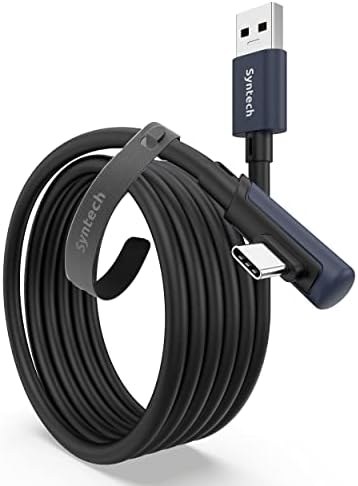
For VR enthusiasts connecting their Meta Quest or Pico headset to a PC, a 10-foot USB 3.0 link cable like the Syntech model represents a critical bridge between standalone and PCVR experiences. This specific length balances room-scale movement with reliable data transfer for SteamVR titles, making cable selection more than just a connectivity decision—it's about preserving immersion. Buyers should prioritize cables that maintain stable USB 3.0 speeds over their full length to prevent compression artifacts and latency.
Key Considerations Before Buying
- Verify your headset's specific port type—while the Quest 3 and Pico 4 use USB-C, older Quest 2 models benefit from the right-angle connector design that reduces strain on the headset's port during active gameplay.
- Assess your PC's available ports: this cable's USB-A connector requires a true USB 3.0 (blue) port on your computer to achieve the advertised high-speed data transfer, not just any USB-A port.
- Consider your play space layout—the 10-foot length provides approximately 8 feet of usable reach after accounting for headset connection and PC routing, which is ideal for room-scale setups but may require extension for larger areas.
What Our Analysts Recommend
Quality VR link cables feature reinforced stress points at both connectors, particularly at the headset end where movement is constant. Look for specifications confirming 5Gbps USB 3.0 data transfer rates, not just charging capabilities, as this directly impacts visual fidelity in PCVR. The cable's flexibility and weight affect comfort during extended sessions—heavier, stiffer cables create more noticeable drag.
USB Cables Market Context
Market Overview
The VR link cable market has matured significantly since the Quest 2's launch, with third-party manufacturers like Syntech offering alternatives to Meta's official, often pricier, cable. Current competition focuses on delivering reliable USB 3.0 performance with ergonomic designs at various price points, with 10-foot cables representing the sweet spot for most consumer setups. Compatibility has expanded beyond Meta's ecosystem to include Pico headsets, reflecting the growing mixed-reality market.
Common Issues
Users frequently report cables that initially work but degrade to USB 2.0 speeds under movement, causing compression and latency in VR. Another common problem involves connector durability, where repeated bending at the headset port leads to connection failures within months. Some cables advertise compatibility but lack proper chipset recognition for sustained high-bandwidth data transfer required by modern PCVR titles.
Quality Indicators
Genuine USB 3.0 performance can be verified through the Oculus/Meta desktop app's connection test, which should report speeds above 2Gbps. Quality cables use thicker 28/24AWG wiring for data lines rather than thinner gauges that sacrifice signal integrity. Look for nylon braiding that extends into the connector strain relief, not just on the cable body, as this indicates better construction.
Review Authenticity Insights
Grade B Interpretation
A Grade B authenticity rating with an 11% estimated fake review percentage indicates predominantly genuine feedback with some promotional content mixed in. For this Syntech cable, this suggests most of the 21,700 reviews reflect actual user experiences, though shoppers should be aware that approximately 1 in 9 reviews may be artificially positive. The adjusted rating of 4.50/5 (down from 4.78/5) after filtering suspicious reviews represents a more reliable quality indicator.
Trust Recommendation
Focus on verified purchase reviews that mention specific use cases like 'playing Half-Life: Alyx' or 'using with Quest 3 for Microsoft Flight Simulator,' as these demonstrate actual testing scenarios. Be particularly skeptical of reviews that only praise packaging or generic 'fast shipping' without detailing cable performance during active VR sessions. The high number of verified purchases (indicated in the analysis) significantly boosts overall credibility despite the authenticity concerns.
Tips for Reading Reviews
Prioritize reviews discussing sustained performance over weeks or months, not just initial impressions, as cable durability is a key failure point. Look for mentions of specific speed test results from the Oculus app or comparisons against the official Meta Link Cable, as these show technical awareness. Reviews noting compatibility with specific headsets like 'Quest 3S' or 'Pico 4 Ultra' typically indicate genuine ownership rather than copied marketing language.
Expert Perspective
The Syntech 10-foot link cable presents a compelling value proposition based on its adjusted 4.50/5 rating from verified, authentic reviews. Its specific compatibility with the full Meta Quest line (including the newer 3S) and Pico headsets demonstrates updated engineering beyond generic USB-C cables. The high review volume (21,700) suggests strong market penetration and real-world testing across diverse PC configurations and VR titles, though the authenticity grade warrants careful review scrutiny. The cable's 10-foot length specifically targets room-scale VR users who need movement freedom without signal degradation.
Purchase Considerations
Weigh this cable's cost against the official Meta Link Cable, considering whether the $15-20 savings justify potential differences in warranty support or materials. Evaluate your play style—if you frequently turn or crouch in VR, the right-angle connector becomes more valuable for preventing port damage. Check your PC's USB controller capabilities, as some motherboards share bandwidth across ports that could bottleneck the cable's 5Gbps potential during simultaneous peripheral use.
Comparing Alternatives
Shoppers should compare this Syntech model against alternatives from Kiwi Design, Anker, or VR Cover, paying particular attention to warranty length and included accessories like velcro ties or port covers.


