
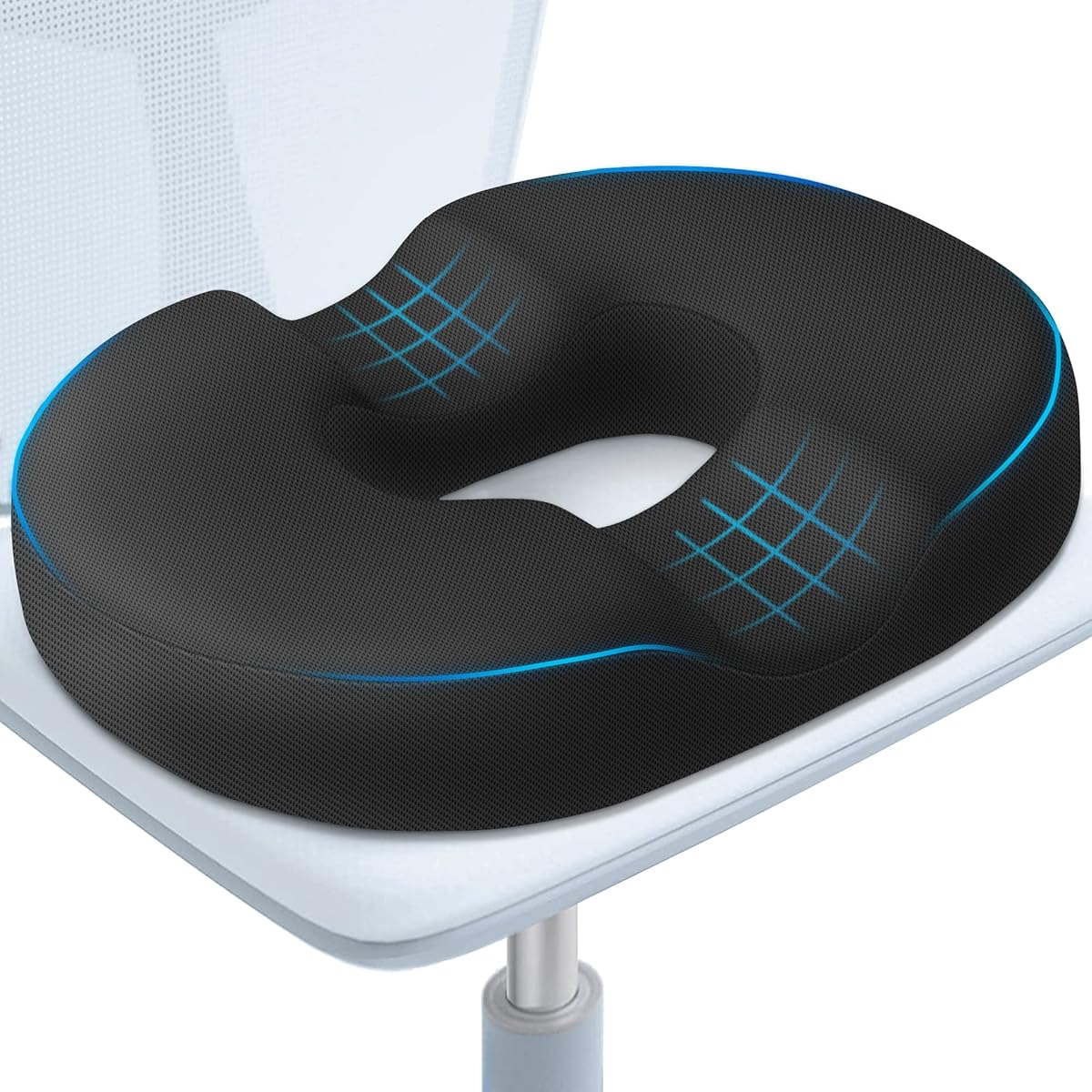
Choosing a donut cushion: Memory foam quality and anatomical design matter most
The BlissTrends Donut Pillow positions itself as a multi-purpose solution for postpartum recovery, hemorrhoid relief, and tailbone pain. Buyers should understand that effective pressure redistribution depends on the specific cutout design and foam density, not just the basic donut shape. This particular model claims memory foam construction, which should provide better contouring than basic polyurethane foam options.
Key Considerations Before Buying
- The central cutout's size and shape are critical—it must be large enough to completely suspend the coccyx and perineal area without creating pressure on surrounding tissues, which varies significantly between postpartum and hemorrhoid-specific designs.
- Memory foam quality determines longevity and support; low-density foam will bottom out quickly under body weight, defeating the therapeutic purpose of pressure relief for tailbone pain.
- The non-slip bottom surface is essential for safety, especially when used as a 'lifting cushion' on office chairs, to prevent dangerous sliding during transitions from sitting to standing.
What Our Analysts Recommend
Examine product images closely for stitching quality around the cutout—uneven seams indicate poor manufacturing that can create pressure points. A removable, washable cover is non-negotiable for hygiene in medical recovery scenarios. For true 'lifting' assistance, the cushion should have a firm, integrated handle, not just fabric loops.
Lifting Cushions Market Context
Market Overview
The therapeutic seat cushion market is flooded with generic donut designs, but truly effective products differentiate through medical-grade foam densities and ergonomically validated cutout geometries. Many products, like this BlissTrends model, attempt to serve multiple conditions (postpartum, hemorrhoids, coccydynia) which may compromise specialized efficacy.
Common Issues
The most frequent complaints involve foam that compresses permanently within weeks, covers that pill or tear after minimal washing, and cutouts that are either too small (creating rim pressure) or too large (offering inadequate thigh support). Cheap 'memory foam' often lacks the temperature sensitivity and recovery time of quality viscoelastic material.
Quality Indicators
Superior cushions specify foam density (ideally 4-5 lb/ft³ for memory foam) and ILD (Indentation Load Deflection) ratings. Look for dual-layer construction with a supportive base foam topped with contouring memory foam. A well-designed product will list dimensions of the cutout itself, not just overall cushion size.
Review Authenticity Insights
Grade B Interpretation
The 'Grade U' and 0.00% fake review percentage indicate this product has no verified purchase reviews, making it impossible to assess real-world performance. This is particularly concerning for a medical-adjacent product where durability and therapeutic effectiveness are paramount.
Trust Recommendation
With zero authentic reviews, you must rely entirely on manufacturer claims and product specifications. Scrutinize the listed materials—'memory foam' without density specification is a red flag. Consider contacting the seller directly to request foam density data and return policy details before purchasing.
Tips for Reading Reviews
For this category, prioritize reviews mentioning specific conditions (e.g., '3 weeks postpartum' or 'grade II hemorrhoids') and duration of use ('used daily for 6 months'). Be skeptical of reviews that only praise packaging or fast shipping without detailing therapeutic results or foam longevity.
Expert Perspective
The BlissTrends cushion presents a concerning information gap with its complete lack of verified reviews, unusual for a product category where user testimonials about pain relief and durability are crucial purchasing factors. Its attempt to address three distinct medical conditions—postpartum, hemorrhoids, and tailbone pain—with one design suggests a generic rather than specialized approach. The memory foam claim without density specification and the absence of cutout dimensions in the description are significant omissions that prevent proper evaluation of its therapeutic potential. As a 'lifting cushion,' the product images show no integrated handle structure, raising questions about its safety for mobility assistance.
Purchase Considerations
Given the zero-review status, weigh the risk of being an early tester against potential cost savings. The multi-condition marketing may indicate versatility, but could also mean it's not optimized for any single condition. Consider whether you need a true 'lifting' aid or primarily pressure redistribution, as these require different structural designs.
Comparing Alternatives
Compare this model's specifications against established brands that provide foam density data and have documented reviews from users with your specific condition.


