Balancing 1440p clarity with 180Hz speed in a 27-inch gaming monitor
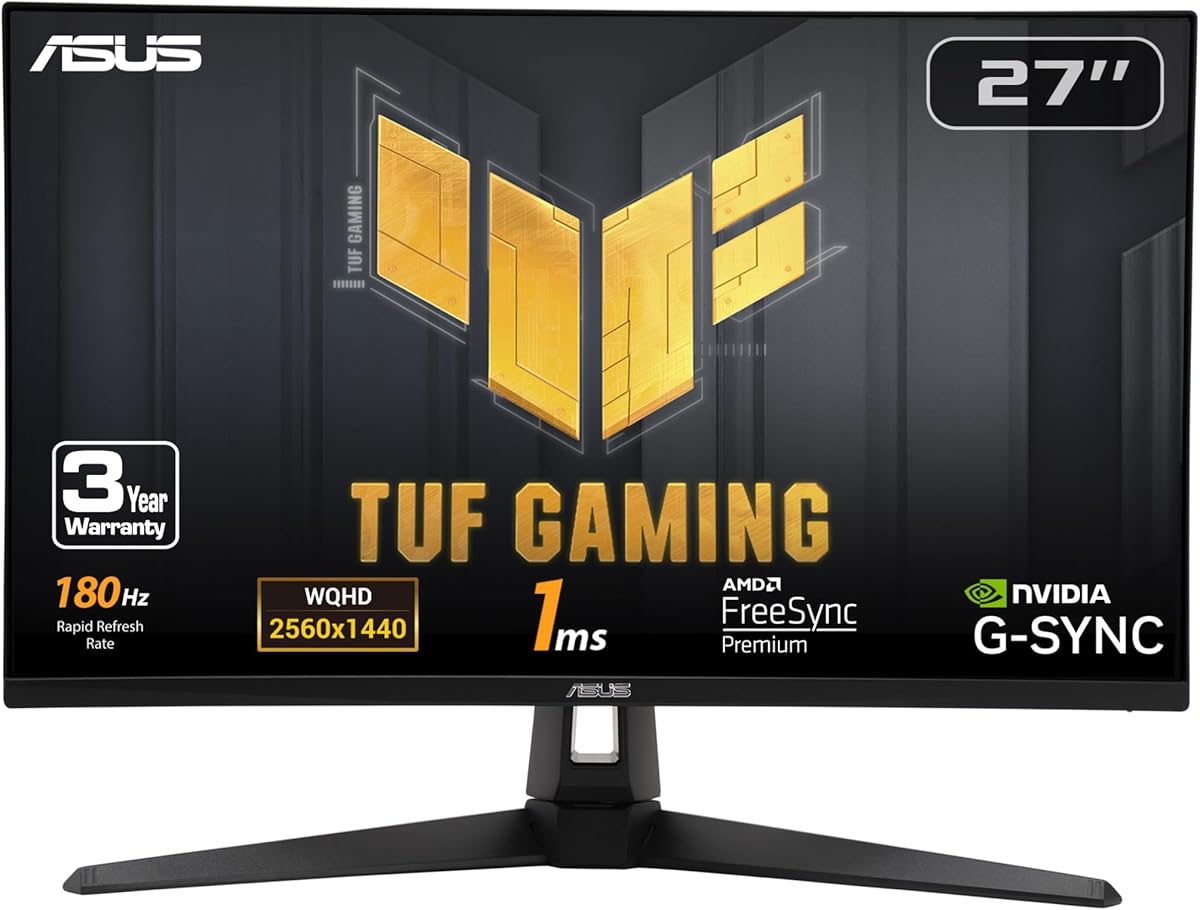
The ASUS TUF VG27AQ3A targets gamers seeking the sweet spot between resolution and refresh rate. Its QHD (2560x1440) pixel density on a 27-inch Fast IPS panel provides sharper detail than 1080p without the GPU strain of 4K, while the 180Hz refresh rate aims for fluid motion beyond standard 144Hz displays.
Key Considerations Before Buying
- The 130% sRGB color gamut indicates vibrant, saturated colors ideal for gaming and media, but creative professionals may require wider Adobe RGB or DCI-P3 coverage for color-accurate work.
- Compatibility with both AMD FreeSync Premium and NVIDIA G-SYNC ensures variable refresh rate (VRR) functionality works with most modern graphics cards to eliminate screen tearing.
- The inclusion of built-in speakers adds convenience for casual use, but dedicated gaming headsets or external speakers will be necessary for competitive audio positioning and quality.
What Our Analysts Recommend
For a monitor in this class, verify the implementation of the advertised 1ms response time through technologies like Extreme Low Motion Blur (ELMB) Sync, which combines motion blur reduction with adaptive sync. Check real-world user feedback on backlight uniformity and IPS glow, common quality control points for IPS panels.
Monitors Market Context
Market Overview
The 27-inch 1440p high-refresh-rate segment is fiercely competitive, with models from ASUS, LG, and Gigabyte vying for dominance. This ASUS TUF model competes directly by offering a slight bump to 180Hz over the common 165Hz standard, positioning itself as a performance-oriented choice.
Common Issues
Buyers in this category frequently report inconsistencies with HDR performance on monitors lacking full-array local dimming, as well as potential backlight bleed or IPS glow inherent to the panel technology. Warranty support and dead pixel policies are also frequent points of discussion.
Quality Indicators
Look for monitors with robust stand adjustability (height, tilt, swivel), a comprehensive OSD (On-Screen Display) menu with gaming presets, and verified compatibility certifications like DisplayHDR or VESA Adaptive-Sync. The use of a Fast IPS panel, as specified here, is a key indicator targeting faster pixel response.
Review Authenticity Insights
Grade B Interpretation
A Grade B with an 11% estimated fake review rate suggests a generally trustworthy review pool with a typical level of inauthentic promotion for this category. The adjusted rating of 4.60/5, down from the surface 4.89/5, is a more reliable indicator of genuine customer satisfaction.
Trust Recommendation
Focus on the detailed 4- and 5-star reviews that mention specific use cases, like transitioning from a 1080p 60Hz monitor or comparing motion clarity to other 144Hz models. Be slightly more critical of overly vague 5-star reviews that lack technical or experiential details.
Tips for Reading Reviews
Prioritize reviews that discuss the setup process for the 180Hz refresh rate (e.g., needing DisplayPort), experiences with the ELMB Sync feature, and long-term impressions of the panel's consistency. Look for mentions of specific games or graphics cards used for context.
Expert Perspective
The VG27AQ3A's specifications present a compelling package for the mainstream gaming enthusiast. The 180Hz refresh rate, while a marginal gain over 165Hz, demonstrates ASUS's push for performance leadership in the TUF line. The high adjusted rating of 4.60/5 from verified analysis indicates strong real-world user satisfaction, particularly regarding its combination of sharp QHD resolution and smooth high-frame-rate gameplay. The dual adaptive sync certification is a significant advantage, ensuring broad compatibility.
Purchase Considerations
Your decision should hinge on whether your GPU can consistently drive frames above 144Hz at 1440p in your preferred games to leverage the full 180Hz, and if the included speaker solution is sufficient or merely a backup. Consider the value of the TUF's durability-focused branding against competitors offering otherwise similar specs.
Comparing Alternatives
Shoppers should compare this model directly against other 27-inch 1440p monitors in the 165-180Hz range, such as the LG 27GP850-B or the Gigabyte M27Q, evaluating differences in color accuracy, stand design, and OSD features.