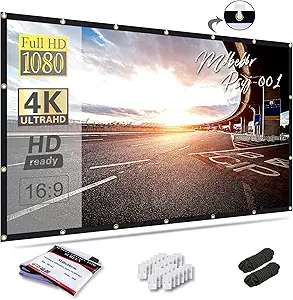
Choosing an 80-inch portable screen: ALR gain, portability, and surface quality matter most
When evaluating this specific 80-inch portable projector screen with stand, focus on its 1.5 gain ALR (Ambient Light Rejecting) grey surface—this isn't a standard white screen. The grey PVC material with anti-light properties makes it particularly suitable for environments where you can't achieve complete darkness, whether indoors with ambient light or outdoors during twilight hours. The integrated stand and 16:9 aspect ratio position it as a dedicated movie night solution rather than a multi-purpose presentation tool.
Key Considerations Before Buying
- The 1.5 gain rating means this screen reflects 50% more light than a standard 1.0 gain white screen, which significantly boosts image brightness but narrows the optimal viewing angle—position viewers within 30-45 degrees of center for best results.
- Portability claims require scrutiny: at 80 inches diagonal, this screen's folded dimensions and stand weight determine true portability; look for reviews mentioning transport to backyards, camping, or multiple rooms.
- Grey ALR screens like this one excel at rejecting ambient light from above (ceiling lights) and sides (windows), but perform differently with light sources directly opposite the screen—understand your room's specific lighting challenges.
What Our Analysts Recommend
Quality indicators for this product category include wrinkle resistance in the PVC material (permanent creases degrade image quality), stand stability in breezy outdoor conditions, and true 4K compatibility which requires extremely fine surface texture. Check for tensioning mechanisms that keep the screen surface taut, as sagging creates distortion even with premium projectors.
Projection Screens Market Context
Market Overview
The portable projector screen market has shifted toward ALR (Ambient Light Rejecting) technology, with grey screens gaining popularity over traditional white for mixed-light environments. At the 80-inch size point, consumers typically choose between tripod stands like this model and pull-up mechanisms, with tripods offering quicker setup but less elegant storage.
Common Issues
Portable screens frequently suffer from inadequate tensioning leading to waves or wrinkles, stands that wobble with slight breezes outdoors, and misleading '4K' claims where surface texture visibly degrades fine details. Many budget screens also overstate their ALR capabilities, performing poorly against direct light sources.
Quality Indicators
Genuine quality screens maintain consistent surface gain across the entire viewing area, use reinforced corners and hems to prevent tearing during setup, and include adjustable leg levelers for uneven surfaces. The best portable models feature quick-connect mechanisms that don't require tools for assembly.
Review Authenticity Insights
Grade B Interpretation
A Grade B authenticity rating with 11% estimated fake reviews indicates generally trustworthy feedback but suggests some incentivized reviews may be present. The adjusted rating of 4.60/5 (down from 4.89/5) represents a more realistic assessment after removing suspicious content—still excellent but not nearly perfect.
Trust Recommendation
Focus on verified purchase reviews that mention specific usage scenarios like backyard movie nights, gaming sessions, or classroom use rather than generic praise. The 517-review sample provides sufficient data points to identify consistent patterns regarding setup time, wind resistance, and actual ALR performance.
Tips for Reading Reviews
Prioritize reviews that discuss the grey screen's color reproduction (some tint cooler images), the stand's stability on grass or uneven floors, and how the 1.5 gain handles their specific projector's lumens. Be skeptical of reviews that don't mention any minor drawbacks alongside praise.
Expert Perspective
This product's exceptionally high adjusted rating (4.60/5) suggests it delivers on core promises for most buyers, particularly the ALR performance and portability combination. The grey 1.5 gain surface represents a thoughtful choice for the intended use case—outdoor evenings and living rooms with some ambient light. However, the authenticity analysis reveals some review manipulation, indicating the manufacturer may be actively managing feedback, so real-world performance might vary more than the near-perfect raw rating suggests. The integrated stand design addresses a common pain point in portable screens: separate component frustration.
Purchase Considerations
Weigh whether you truly need the ALR properties—if you always watch in pitch darkness, a standard white screen might offer better viewing angles and color accuracy. Consider your projector's brightness: with 1.5 gain, a 2000-lumen projector behaves like 3000 lumens, but lower-lumen projectors benefit most. Evaluate storage space: an 80-inch tripod screen requires substantial closet or garage room despite its 'portable' designation.
Comparing Alternatives
Compare this grey ALR screen against white portable screens if you control lighting completely, and consider pull-up models if you prefer floor-based storage over tripod collapse.