
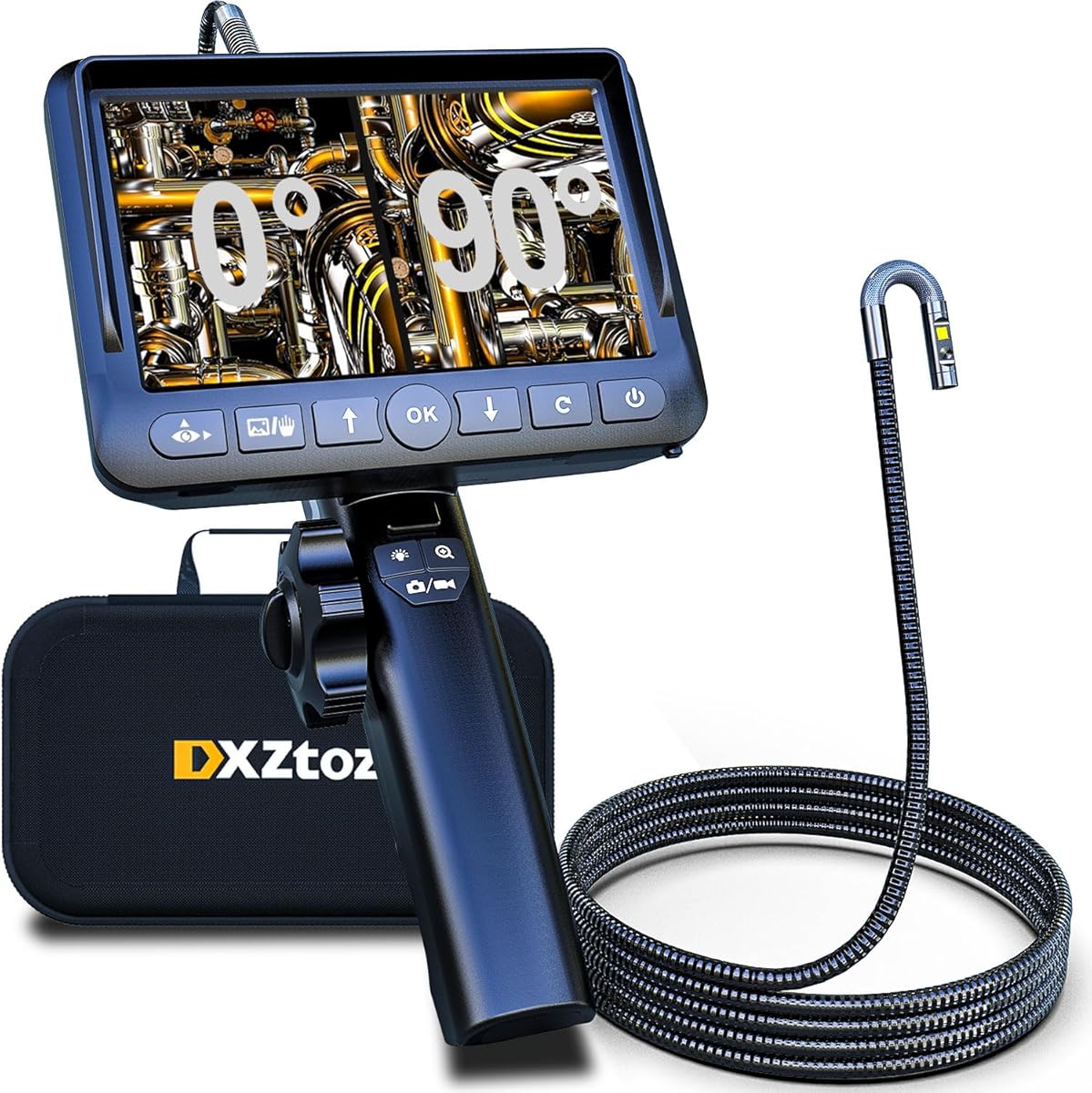
Choosing a Dual-Lens Articulating Borescope: Screen Size vs. Probe Maneuverability
For the DXZtoz model specifically, its 5-inch integrated screen eliminates the need for a separate smartphone, but requires managing a larger handheld unit. The dual-lens design with 180-degree articulation allows you to look forward and sideways without pulling the probe back out, a key feature for navigating automotive engine bays or plumbing. The 0.33-inch diameter probe is a trade-off—slim enough for many spark plug holes but may not fit the tightest automotive or HVAC channels.
Key Considerations Before Buying
- Articulation vs. Length: The 5-foot cable on this model is sufficient for many under-hood or in-wall inspections, but the dual-lens articulation mechanism adds complexity; ensure the joints move smoothly without excessive force that could damage the probe inside a confined space.
- Integrated Display Trade-offs: The 5" screen provides a dedicated, bright viewport, but it makes the entire unit bulkier to hold in tight spots compared to a wireless probe that transmits to your phone. Consider your workspace constraints.
- Lighting and Resolution Reality: While marketed as 1080P, the actual clarity for identifying small cracks or corrosion depends on the dual lenses' focus and the 8 adjustable LEDs. True diagnostic use requires sharp focus at the probe tip, not just high pixel count.
What Our Analysts Recommend
Prioritize a rigid yet flexible cable sheath that won't kink permanently during use, a critical failure point. For the DXZtoz, examine reviews mentioning the durability of the articulation control knobs—plastic gears can strip. Quality units maintain a waterproof seal at the articulating joint, not just the tip, to prevent fogging or failure during wet inspections.
Borescopes Market Context
Market Overview
The sub-$200 borescope market is crowded with models featuring integrated screens, as seen with this DXZtoz, moving away from phone-dependent apps that often have connectivity issues. True dual-lens articulation (where the tip bends in two directions) remains a premium feature now trickling down to budget-friendly units, primarily benefiting automotive and HVAC diagnostics.
Common Issues
Users frequently report fragile articulation mechanisms that fail after repeated use, cables that lose flexibility or memory, and displays with poor visibility in bright sunlight. Battery life claims are often overstated, and waterproof ratings may not extend to the articulation joint, leading to internal condensation.
Quality Indicators
Look for metal reinforcement at the articulation joint and probe tip. A high-quality CMOS sensor will perform better in low-light conditions than just more LEDs. The best units specify IP67 rating for the entire probe length and offer replaceable protective lens caps, as the front lens is highly susceptible to scratches.
Review Authenticity Insights
Grade C Interpretation
A 'C' grade and 22% estimated fake reviews indicate a moderate level of review manipulation. For this DXZtoz borescope, this suggests the impressive 4.89/5 rating is likely inflated. The adjusted 4.40/5 rating is a more realistic benchmark, placing it as a good, but not flawless, option in its category.
Trust Recommendation
Focus on verified purchase reviews that detail long-term use over several weeks or months, specifically mentioning the articulation mechanism's durability. Be skeptical of glowing reviews that don't mention any minor cons, as even excellent borescopes have trade-offs like battery life or screen glare.
Tips for Reading Reviews
Search reviews for specific technical scenarios: 'checked cylinder walls,' 'inspected drain pipe elbow,' or 'viewed behind dryer.' Authentic reviews often describe the physical challenge of maneuvering the probe. Pay close attention to 3- and 4-star reviews for balanced insights on the lens clarity and control interface.
Expert Perspective
The DXZtoz presents a compelling package for a home mechanic or DIY inspector, combining a decent 5-inch screen with genuine dual-lens articulation at an accessible price point. The significant discrepancy between its raw and adjusted ratings, however, signals that its exceptional 4.89/5 score should be tempered. Its real-world performance likely aligns with the 4.4/5 range—very capable for intermittent use, but potentially lacking the ruggedness for daily professional service. The integrated screen is a major convenience factor that justifies its form factor for many users.
Purchase Considerations
This model is best suited for users who value a standalone device and need articulated viewing for tasks like inspecting valve seats or plumbing bends. Consider your tolerance for potential repair complexity; the all-in-one design means a broken screen renders the entire unit useless, unlike a modular system. The 5-foot length is adequate for passenger vehicles but may fall short for some truck or industrial applications.
Comparing Alternatives
Shoppers should compare the physical control layout and articulation range against similar-priced units from brands like Depstech or Teslong, which may offer different screen sizes or wireless capabilities.
![𝟐𝟎𝟐𝟔 𝐧𝐞𝐰 7” Trolley Sewer Camera, HD 1080P w/DVR-32GB,[Quick-Unlock Y Clamp] Sewer Pipe Camera,Telescoping Aluminum Handle (3 Adjustable Heights),5000mAh, [360°Rotate] Drain Camera,165ft/50m](https://m.media-amazon.com/images/I/51hRage5CzL._SY445_SX342_QL70_FMwebp_.jpg)


