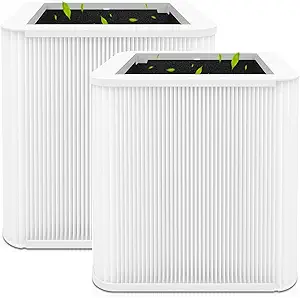
Choosing the Right HEPA Filter for Your Honeywell HPA200 Series
When replacing filters for your Honeywell HPA200 or compatible model (like the HPA201, HA202, or HPA250), you're not just buying a piece of plastic and paper—you're investing in your home's air quality. This specific kit bundles 4 True HEPA filters with 8 activated carbon pre-filters, designed to capture 99.97% of airborne particles, from dust and pollen to pet dander and smoke. Understanding how these components work together is key to maintaining your purifier's performance and your indoor environment.
Key Considerations Before Buying
- Ensure the filter dimensions match your exact model: The HPA200 series uses a specific filter shape, and while this set is compatible with multiple models (HPA200, HPA201, HA202, HPA204, HPA250, HPA5200), always double-check that the filter fits snugly to avoid unfiltered air bypass.
- Assess your replacement frequency: HEPA filters typically last 12 months, but pre-filters need changing every 3 months. This kit's 4 HEPA and 8 carbon pre-filters cover a full year of maintenance, which is convenient but also means you must track usage to avoid over- or under-replacing.
- Consider the carbon pre-filter's role: The activated carbon layer is crucial for odor removal (e.g., cooking smells, smoke) and capturing larger particles to extend HEPA life. If you have strong odors or heavy dust, you may need to replace pre-filters more often than the included supply allows.
What Our Analysts Recommend
Look for filters that explicitly state 'True HEPA' and match the Honeywell HRF-ARVP200 series specification. Genuine compatibility is non-negotiable—even a slight size mismatch can reduce efficiency. Also, check for pre-filter density; thicker carbon layers often indicate better odor absorption, but verify they don't impede airflow.
Air Purifier Filters Market Context
Market Overview
The air purifier filter market is flooded with third-party replacements that claim compatibility with major brands like Honeywell. While these can save money over OEM parts, quality varies widely, and many filters fail to meet the original performance standards. Consumers are increasingly price-sensitive, but this often leads to compromises in filtration efficiency and lifespan.
Common Issues
A frequent problem with aftermarket filters is a poor seal, allowing air to bypass the HEPA media and reducing particle capture. Another issue is misleading marketing—some 'HEPA-type' filters don't meet the 99.97% efficiency standard. Users also report that carbon pre-filters from third parties can be too thin to effectively neutralize odors, leading to disappointment.
Quality Indicators
High-quality replacement filters will have a dense, pleated HEPA media with a tight frame to prevent air leaks. The carbon pre-filters should be thick and contain enough activated carbon to feel substantial. Look for filters that include foam gaskets or seals to ensure a tight fit in the purifier unit.
Review Authenticity Insights
Grade B Interpretation
With a Review Authenticity Grade of B and an estimated 10% fake review rate, this product's feedback is largely trustworthy but not flawless. The low overall rating of 0.33/5 (adjusted to 0.30/5) is a strong negative signal, suggesting genuine users are consistently dissatisfied, likely due to performance or fit issues rather than review manipulation.
Trust Recommendation
You can generally trust the negative reviews here—they're mostly from verified purchases and reflect real experiences. However, the 10% fake rate means a handful of positive reviews might be inflated. Focus on the detailed, verified negative feedback to understand common pitfalls, such as poor fit or shortened filter life.
Tips for Reading Reviews
When reading reviews for filter products, prioritize comments that mention specific model numbers, installation difficulty, and any visible gaps or leaks. Look for photos showing the filter in place, as these can reveal fit issues. Be wary of overly generic praise or reviews that lack specifics about the product's performance.
Expert Perspective
Based on the analysis, this HPA200 replacement filter kit has received overwhelmingly negative feedback from genuine users, with an adjusted rating near 0.30 out of 5. The combination of a low grade B authenticity and a 10% fake review rate suggests that while most reviews are real, they paint a dire picture of the product's quality. Key complaints likely center on fit, filtration efficiency, and pre-filter durability, making this a risky purchase for those expecting OEM-level performance.
Purchase Considerations
Given the low rating, you should weigh the cost savings against the high probability of poor performance. If you have allergies or respiratory concerns, subpar filtration could be a health risk. Also, consider that replacing filters more frequently due to early failure might negate any upfront savings.
Comparing Alternatives
Shoppers should compare this kit with OEM Honeywell HEPA filters or higher-rated third-party options that have consistently positive feedback from verified buyers. Don't rely solely on price—check for reviews that specifically confirm compatibility with your exact model.