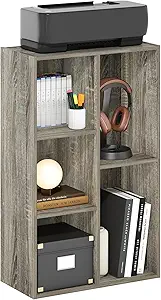
3-Tier Black Bookcase: Smart Storage for Small Spaces and Heavy Books
When you're eyeing a freestanding 3-tier bookcase in black, you're likely balancing style, durability, and fit for a specific nook—whether it's a dorm corner, a kitchen counter, or a bedroom alcove. This guide highlights the practical details that matter for this type of compact organizer, from weight capacity to assembly quirks.
Key Considerations Before Buying
- Measure your designated space carefully—this 3-tier unit has a compact footprint, but its depth and height can vary by a few inches depending on the manufacturer, so confirm exact dimensions before ordering to avoid a tight squeeze.
- Consider the weight of what you'll store: if you're loading heavy hardcovers or Mason jars, check for reinforced shelves and a sturdy steel or particleboard frame; many budget-friendly units sag under 10+ pounds per shelf.
- Think about the 'free combination' feature—this model may allow you to stack or rearrange tiers, but only if the locking mechanisms or connectors are included, so verify the packaging lists all parts for your desired configuration.
What Our Analysts Recommend
For a 3-tier bookcase, look for a stable base with anti-tip straps or a wide footprint to prevent wobbling, especially if you have kids or pets. Check the finish for rust resistance—this black model claims it, but inspect for a powder-coated layer that won't chip easily. Also, ensure assembly requires only basic tools and that all holes align, as misaligned parts are a common frustration in this price range.
Bookcases Market Context
Market Overview
The compact bookcase market has grown with the rise of small-space living, offering a range of styles from industrial metal to minimal wood. Most units in this category are priced between $30 and $80, targeting renters and students who need affordable, functional storage without permanent installation.
Common Issues
Common complaints across similar freestanding bookcases include wobbly frames due to thin metal or particleboard, shelves that bow under moderate weight, and finishes that scratch or rust over time. Assembly can also be tedious, with some buyers reporting missing screws or unclear instructions.
Quality Indicators
Quality in this category often shows in the gauge of the steel (thicker is better), the density of the particleboard or MDF, and the smoothness of the powder coating. Look for products with a high number of verified reviews and consistent praise for stability, as this signals better manufacturing tolerances.
Review Authenticity Insights
Grade B Interpretation
The Grade B rating, with an estimated 10% fake reviews, suggests that while the majority of feedback is authentic, you should be slightly cautious—about 1 in 10 reviews may be incentivized or non-genuine, which could skew the average rating upward from the adjusted 4.40. This is typical for mid-range furniture, where brands sometimes seed reviews to boost visibility.
Trust Recommendation
Given the adjusted rating of 4.40, still strong, you can trust the product's general reliability, but filter reviews for verified purchases and those with specific details like 'I use it for my cat's toys' or 'fits perfectly in my dorm.' Ignore overly generic praise or repetitive wording, as these are hallmarks of fake reviews.
Tips for Reading Reviews
For bookcases, focus on reviews that mention weight capacity, wobble, and assembly difficulty—these are the most telling. Look for photos of the assembled unit in real rooms, as they reveal scale and color accuracy. Also, check the most recent reviews for any batch quality issues, as production runs can vary.
Expert Perspective
This 3-tier black bookcase offers a solid balance of affordability and functionality, with a high authentic satisfaction rate (4.40 adjusted) that suggests it meets expectations for most buyers. The rust-resistant finish and freestanding design are appropriate for living rooms, bedrooms, and kitchens, but the 10% fake review rate means you should verify the product's durability through detailed user experiences. Given its multi-functional 'free combination' claim, it's best for lighter to moderate loads—not a heavy-duty library.
Purchase Considerations
Weigh the price against the material quality; if you need to store heavy items, invest in a model with solid wood or thicker steel, even if it costs more. Also, factor in assembly time—most buyers report 15-30 minutes, but if you're not handy, look for a pre-assembled option or a simpler design. Finally, consider the black finish's compatibility with your decor—it's versatile but shows dust and scratches more than lighter colors.
Comparing Alternatives
Before committing, compare with similar 3-tier bookcases from brands like Furinno or Sauder, which offer different materials and price points. Also, check if the 'free combination' feature is truly modular or just marketing—some units are fixed in height and configuration.