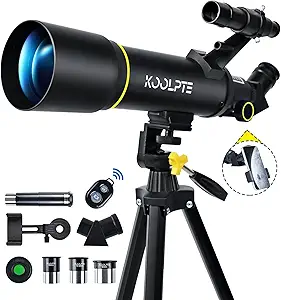
Choosing Your First Refractor: 80mm Aperture Telescopes for Adult Beginners
For adult beginners stepping into astronomy, a refractor telescope like this 80mm aperture, 600mm focal length model offers a straightforward, low-maintenance entry point. Unlike reflectors, refractors use lenses to gather light, providing crisp, high-contrast views of the moon and brighter planets without the need for frequent alignment. Understanding the specific balance between aperture size and portability is key to making a satisfying first purchase.
Key Considerations Before Buying
- Aperture size: An 80mm aperture is a solid starting point for beginners, gathering enough light to reveal lunar craters, Jupiter's cloud bands, and Saturn's rings, but it will struggle with faint deep-sky objects like galaxies or nebulae.
- Mount stability: The included tripod must be sturdy enough to prevent vibrations at higher magnifications; a wobbly mount is a common frustration that can render even a good telescope unusable.
- Fully multi-coated optics: Ensure the lenses have multiple anti-reflective coatings, as advertised, to improve light transmission and contrast, which directly impacts image brightness and clarity.
What Our Analysts Recommend
Quality refractors in this class should feature all-glass optics (not plastic lenses) and smooth, precise focuser mechanisms that don't slip under the weight of a phone adapter or heavier eyepiece. Look for a finderscope that is easy to align with the main tube, as this is critical for locating objects in the night sky. The included accessories, like eyepieces and a phone adapter, should feel robust rather than flimsy.
Refractors Market Context
Market Overview
The beginner refractor market is crowded with budget-friendly options, typically ranging from 60mm to 90mm in aperture, often bundled with tripods and basic accessories. Many of these kits promise 'high power' but deliver underwhelming views due to poor optical quality or unstable mounts. The 80mm/600mm configuration is a popular compromise between light-gathering ability and portability, making it a frequent choice for casual stargazers and gift buyers.
Common Issues
Common problems in this segment include chromatic aberration (color fringing around bright objects), cheap plastic focusers that slip or break, and tripods that are too lightweight to hold the tube steady. Many users also report frustration with the assembly instructions, which can be vague, and the finderscope, which is often misaligned out of the box.
Quality Indicators
For a refractor in this price range, quality is indicated by fully multi-coated glass lenses (not just 'coated'), a metal or heavy-duty plastic focuser, and a tripod with a central spreader or leg braces for added rigidity. A smooth, slow-motion control cable on the mount is another sign of a more usable setup, as it allows fine adjustments without jarring the telescope.
Review Authenticity Insights
Grade B Interpretation
With a Review Authenticity Grade of B and an estimated 10% fake reviews, this product shows a generally trustworthy review profile, though a small but notable portion of feedback may be unreliable. The adjusted rating of 4.00, down from 4.22, suggests that the fake reviews were slightly inflating the average, so buyers should temper expectations slightly.
Trust Recommendation
You can place moderate confidence in the review consensus, but focus on verified purchase reviews that mention specific experiences, such as viewing Jupiter or the moon, and those that discuss both pros and cons. Be wary of overly short, vague five-star reviews or those that only praise the packaging or delivery speed.
Tips for Reading Reviews
When reading reviews for this type of product, prioritize those that describe actual usage conditions (e.g., light pollution, weather) and mention specific accessories used. Look for patterns: if multiple reviews complain about the same issue, like a wobbly tripod or difficult assembly, it is likely a real concern. Also, check for reviews from users who mention comparing this model to other beginner scopes.
Expert Perspective
This 80mm refractor appears to be a competent entry-level option for adult beginners, with its fully multi-coated optics and portable design aligning well with the needs of casual stargazers. The 4.00 adjusted rating, supported by a majority of genuine reviews, suggests it delivers acceptable performance for its price point, particularly for lunar and planetary observation. However, the 10% fake review rate and common complaints about mount stability indicate that it is not a standout in its class, and buyers should be prepared for potential setup frustrations.
Purchase Considerations
Weigh the convenience of an all-in-one kit against the likelihood of needing to upgrade the tripod or eyepieces for a more satisfying experience. If your primary interest is viewing the moon and bright planets, this telescope is a reasonable choice, but if you aspire to explore deeper sky objects, you may outgrow it quickly.
Comparing Alternatives
Shoppers should compare this model with other 80mm refractors from brands like Celestron or Orion, which often have more established reputations for optical quality and customer support.