
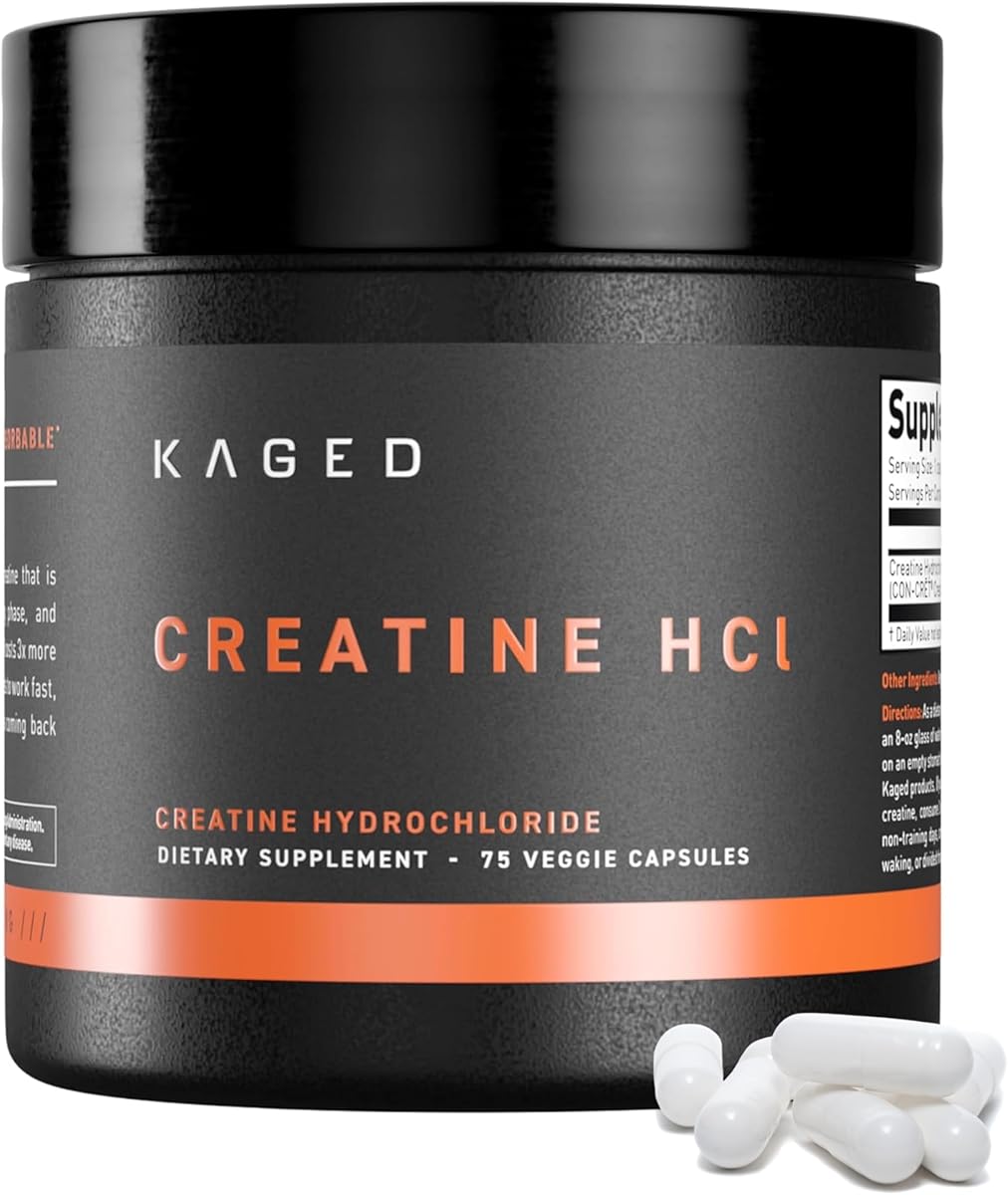
Kaged Creatine HCl: Is This High-Absorption Formula Worth the Premium?
For those seeking creatine without the bloating often linked to monohydrate, Kaged’s Creatine HCl capsules promise a 7X concentrated dose with superior absorption. This guide helps you assess whether the higher cost per serving justifies the potential benefits for muscle building and recovery, especially if you have a sensitive stomach or prefer convenience over powders.
Key Considerations Before Buying
- Dosage efficiency: With 1.5g of creatine HCl per serving versus the standard 3-5g of monohydrate, you need fewer capsules for similar effects, which may reduce digestive discomfort. However, ensure your total daily intake aligns with your fitness goals, as HCl’s potency can vary per individual.
- Bloating and water retention: Creatine HCl is marketed as non-bloating due to its higher solubility and lower required dose. If you’re prone to gastrointestinal issues with monohydrate, this form may be a game-changer, but expect a higher price per gram of creatine.
- Form factor: Capsules offer convenience and precise dosing without the mess of powders, but they come with a premium. If you already mix powders easily, the value proposition diminishes unless you specifically need portability or taste avoidance.
What Our Analysts Recommend
In creatine HCl products, check for third-party testing (e.g., NSF, Informed Sport) to verify purity and potency. Look for a clear breakdown of HCl versus monohydrate benefits, and ensure the brand provides transparent sourcing—Kaged’s vegan and gluten-free claims are a plus, but confirm with certification logos.
Market Context
Market Overview
The creatine market has expanded beyond monohydrate to include HCl, ethyl ester, and buffered forms, each claiming improved absorption and fewer side effects. Kaged positions itself in the premium segment, targeting athletes who prioritize purity and convenience, but consumers should weigh the cost against proven monohydrate efficacy.
Common Issues
Bloating and stomach cramps are the top complaints with standard creatine monohydrate, driving interest in HCl alternatives. However, some users report that HCl is less effective for strength gains or requires higher doses than advertised, leading to confusion about optimal serving sizes.
Quality Indicators
Look for a low percentage of fillers or additives, a clear HCl content per capsule, and batch-specific testing. Brands like Kaged that emphasize vegan, gluten-free, and unflavored options often cater to sensitive users, but always verify through independent lab reports.
Review Authenticity Insights
Grade B Interpretation
With a Review Authenticity Grade of B and an estimated 10% fake review rate, Kaged Creatine HCl has a mostly trustworthy review base but still carries some risk of inflated ratings. The 4.56 average is likely slightly padded, but the adjusted 4.30 rating still indicates strong customer satisfaction, suggesting the product generally delivers on its claims.
Trust Recommendation
Focus on verified purchase reviews, especially those that detail digestive experiences or compare with monohydrate. Given the 10% fake rate, be cautious of overly enthusiastic 5-star reviews lacking specifics—cross-reference with the 1-star critiques for a balanced view.
Tips for Reading Reviews
For supplements like this, prioritize reviews that mention specific outcomes (e.g., recovery time, workout performance) and duration of use. Ignore vague praise or complaints about shipping; instead, look for patterns in bloating or absorption—if multiple users note no bloating, that’s a stronger signal than isolated claims.
Expert Perspective
Kaged Creatine HCl offers a legitimate alternative for those who struggle with monohydrate’s side effects, backed by a mostly authentic review profile and a B-grade authenticity score. The 4.30 adjusted rating suggests reliable performance, but the 10% fake review rate warrants caution—the product likely works well for many, but not all. Its premium pricing and capsule format cater to convenience seekers, yet the evidence for HCl’s superiority over monohydrate remains mixed in clinical studies, so it’s best for niche needs rather than universal recommendation.
Purchase Considerations
If you’ve tried monohydrate and experienced bloating, this is a worthy trial, but start with a smaller purchase to test tolerance. Factor in the cost per serving—this is more expensive than bulk monohydrate, so only buy if the no-bloat claim is critical to your routine.
Comparing Alternatives
Shoppers should compare with standard creatine monohydrate from brands with higher authenticity grades (e.g., A-rated) for a cost-effective option, or explore other HCl products with stronger third-party verification.


