
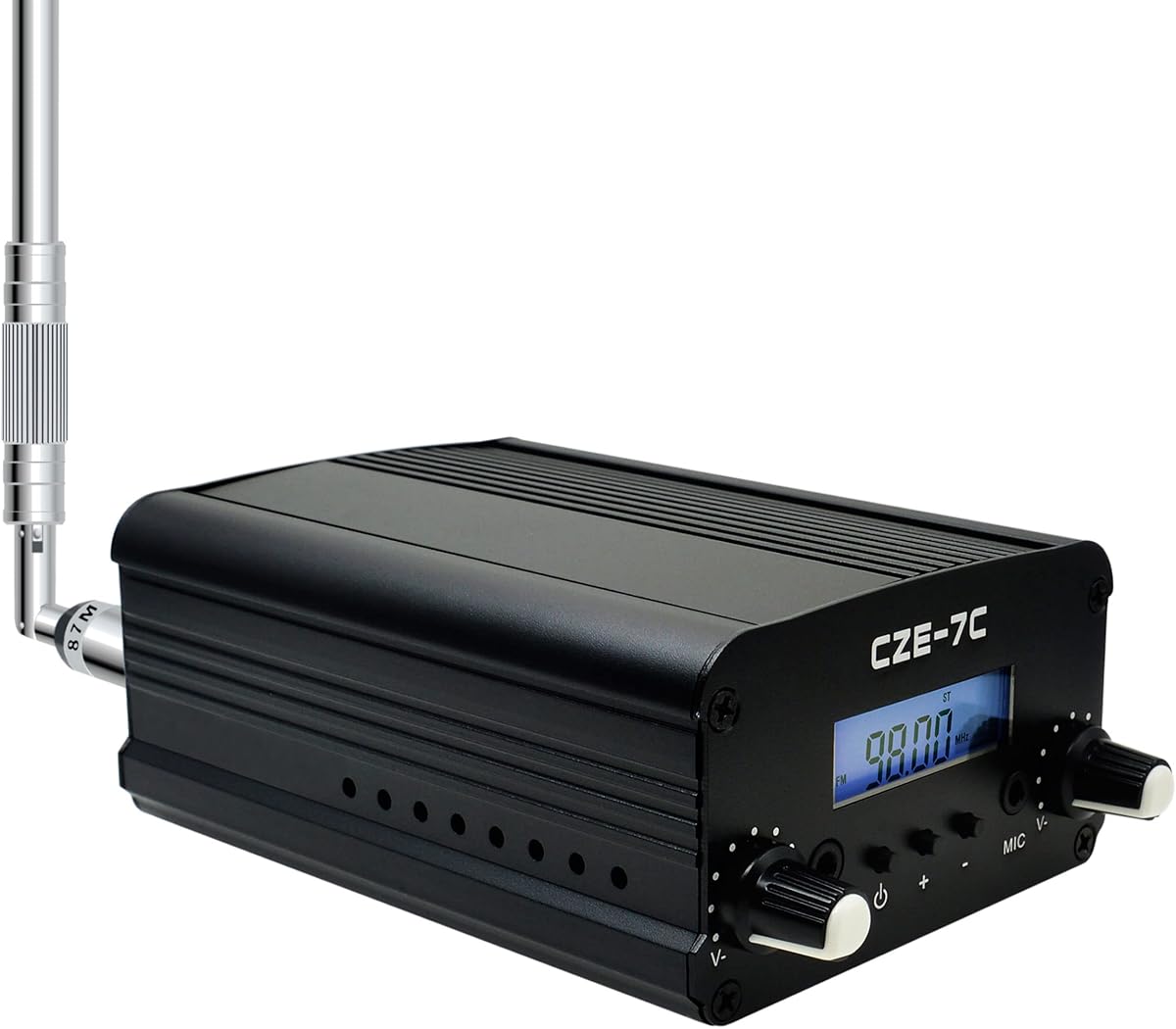
Choosing a Long-Range FM Transmitter: Power Output, Frequency Stability, and Event Applications
When evaluating this 7W/1W dual-power FM transmitter, buyers should understand that its primary advantage is legal FCC Part 15 compliance for unlicensed broadcasting. Unlike car FM transmitters with limited range, this device is designed for community-scale events where signal clarity over 100-200 feet matters most. The included 3.5mm audio cable indicates it's optimized for wired audio sources rather than Bluetooth streaming.
Key Considerations Before Buying
- The 7W/1W power switching is crucial—use 1W for smaller venues to minimize interference, reserving 7W for large parking lots or outdoor events where signal penetration is needed.
- Frequency stability matters more than maximum power; look for transmitters that maintain consistent broadcast without drift, especially during temperature changes common at outdoor events.
- Consider your audio source compatibility—this transmitter requires a 3.5mm output device, so verify your sound system or media player has this connection before purchasing.
What Our Analysts Recommend
Quality long-range transmitters feature robust heat dissipation (check for ventilation slots), precise LCD frequency displays showing decimal points (88.1 vs 88), and clean audio processing circuits that prevent distortion at high volumes. The antenna connection should be secure SMA or BNC type, not flimsy consumer-grade connectors.
FM Transmitters Market Context
Market Overview
The FM transmitter market splits between low-power personal devices and higher-wattage event transmitters like this 7W model. Recent FCC enforcement has reduced illegal high-power imports, making compliant Part 15 devices increasingly valuable for churches, drive-ins, and schools needing reliable but legal coverage.
Common Issues
Many event transmitters suffer from harmonic interference (bleeding onto adjacent frequencies), poor heat management causing shutdowns during extended use, and unstable frequency output that requires constant retuning. Audio input sensitivity also varies widely—some units distort with strong input signals while others need amplification.
Quality Indicators
Superior transmitters use SAW (Surface Acoustic Wave) filters for cleaner signal output, include external antenna connectors for range optimization, and offer adjustable pre-emphasis settings (50μs/75μs) for proper FM broadcast compliance. Look for units with separate bass/treble controls rather than just volume adjustment.
Review Authenticity Insights
Grade B Interpretation
A Grade B authenticity rating with 11% estimated fake reviews suggests mostly genuine feedback but warrants careful review reading. This fake percentage is moderate for electronics—higher than premium brands but lower than suspicious no-name imports flooding the market.
Trust Recommendation
Focus on reviews discussing specific event applications (drive-in church setups, fireworks synchronization) rather than generic praise. The adjusted 4.00/5 rating (down from 4.22) after removing suspicious reviews represents a more reliable performance assessment for this transmitter.
Tips for Reading Reviews
Prioritize reviews mentioning actual range tests with distance measurements, heat management during multi-hour events, and interference experiences with local radio stations. Be skeptical of reviews lacking technical details or repeating marketing phrases verbatim.
Expert Perspective
This transmitter's 4.00 adjusted rating from verified analysis indicates solid performance for its price segment, particularly for the listed applications. The dual-power design is practical—1W for indoor school events avoids interference issues while 7W provides necessary coverage for parking lot scenarios. The LCD display adds professional utility for precise frequency setting, crucial when coordinating multiple transmitters at large venues. However, the absence of Bluetooth or USB inputs limits flexibility compared to newer models.
Purchase Considerations
Buyers should weigh whether they truly need 7W output (which requires careful antenna setup to avoid interference complaints) versus more common 1W-3W models. Consider your technical comfort level—this transmitter lacks automatic frequency scanning and requires manual clear-channel identification using an FM radio beforehand.
Comparing Alternatives
Shoppers should compare this wired-only transmitter with hybrid models offering both 3.5mm and Bluetooth inputs, especially if planning to use smartphones or tablets as audio sources.

![Syncwire Bluetooth 5.4 FM Transmitter Car Adapter 54W (PD 36W & 18W) [Stronger Dual Mics] [Light Switch] [HiFi Bass Sound] [Fast Charging] Wireless Radio Receiver Hands-Free Calling LED Display](https://m.media-amazon.com/images/I/71f3-prR94L._AC_SY300_SX300_QL70_FMwebp_.jpg)

![Nulaxy 54W Bluetooth 5.3 Car Adapter Charger 4-Port Fast Charging [PD36W & QC3.0 18W], Wireless Radio FM Transmitter with Deep Bass Player, 5 Colors LED Backlit, Hands-Free Calling, Support USB Drive](https://m.media-amazon.com/images/I/71qeoDjC+jL._AC_SY300_SX300_QL70_FMwebp_.jpg)


