Roll-Not-Pump Compression Bags: What Travelers and Organizers Should Know
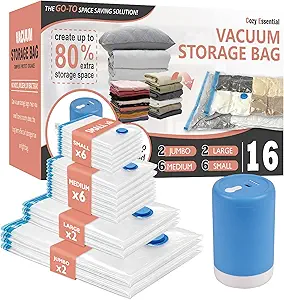
These 12-pack transparent compression bags represent a specific subcategory: manual roll-style compression that requires no vacuum pump. Unlike traditional vacuum-sealed versions, these rely on pressure from rolling to expel air through one-way valves. The transparent design allows for visibility of contents, which is particularly valuable for travel and seasonal storage.
Key Considerations Before Buying
- Manual compression strength varies: The effectiveness depends entirely on your ability to roll tightly and apply consistent pressure to force air out through the valves.
- Valve durability is critical: The one-way air valves are the most likely failure point; repeated rolling can stress the seal, leading to air leakage over time.
- Material thickness impacts reusability: Thinner, more flexible PVC or PEVA materials compress easier but may be more prone to punctures during packing or storage.
What Our Analysts Recommend
Examine the valve construction—it should be firmly heat-sealed to the bag without thin, weak points. Quality bags use reinforced seams along all edges, not just basic welding. For a 12-pack, expect a mix of sizes; verify the dimensions suit your intended use, whether for bulky sweaters or flat-packed dress shirts.
Space Saver Bags Market Context
Market Overview
The compression bag market has bifurcated into electric vacuum pump systems and manual roll-style bags like this set. The manual segment competes heavily on pack count and perceived convenience, often sacrificing material durability for lower price points. Transparent bags are now standard, moving away from opaque versions that hid contents.
Common Issues
Premature valve failure is the top complaint, where air slowly re-enters the bag, defeating compression. Zipper seals can also separate under the stress of tightly packed, compressed contents. Users frequently underestimate the physical effort required to achieve the advertised '80% reduction' through rolling alone.
Quality Indicators
Superior bags use dual-track zippers with a wider sealing channel and thicker, mil-spec valves. The best materials have a slight texture to resist sliding during the rolling process. Check for included travel patches—a sign the manufacturer anticipates and prepares for minor punctures.
Review Authenticity Insights
Grade B Interpretation
A 'B' grade with an 11% estimated fake review rate suggests generally reliable feedback but warrants scrutiny. For this product, it indicates that while most reviews are genuine, there may be a pattern of incentivized reviews focusing on the 'no pump needed' convenience while downplaying the manual effort involved.
Trust Recommendation
Prioritize verified purchase reviews that mention specific use cases like 'college dorm move' or 'off-season coat storage,' and pay close attention to 3-star reviews. These often provide the most balanced assessment of the rolling mechanism's real-world effectiveness versus marketing claims.
Tips for Reading Reviews
Look for reviews that detail long-term performance (e.g., 'after 6 months in the attic') to assess valve integrity. Be skeptical of reviews that only praise the concept without describing the physical process of rolling or that don't mention what items they compressed.
Expert Perspective
The adjusted 4.4/5 rating from authentic reviews is strong for this category, indicating these bags perform reliably for most users within the constraints of manual compression. The high rating likely reflects satisfaction with the convenience factor of needing no pump, a significant advantage for travelers. However, the gap between the raw and adjusted rating suggests some review manipulation around the ease-of-use claim. The 12-pack quantity is a practical offering, allowing for different garment types while accounting for the potential that some bags may fail or be less effective.
Purchase Considerations
Choose this product if your primary need is portability and avoiding a separate vacuum device, and you are prepared for a physical rolling process. Consider alternatives with a manual pump if you have large volumes to compress or want more consistent pressure. Assess your storage environment; these are excellent for protected spaces like closets but may be less reliable in damp or high-temperature attics where material and valve stress increases.
Comparing Alternatives
Shoppers should compare the valve design and material thickness (often listed in 'mils') with similar roll-style packs, as these are the key differentiators for longevity.