Choosing 1-inch Wedge Foam: What Matters for Home Studios and Offices
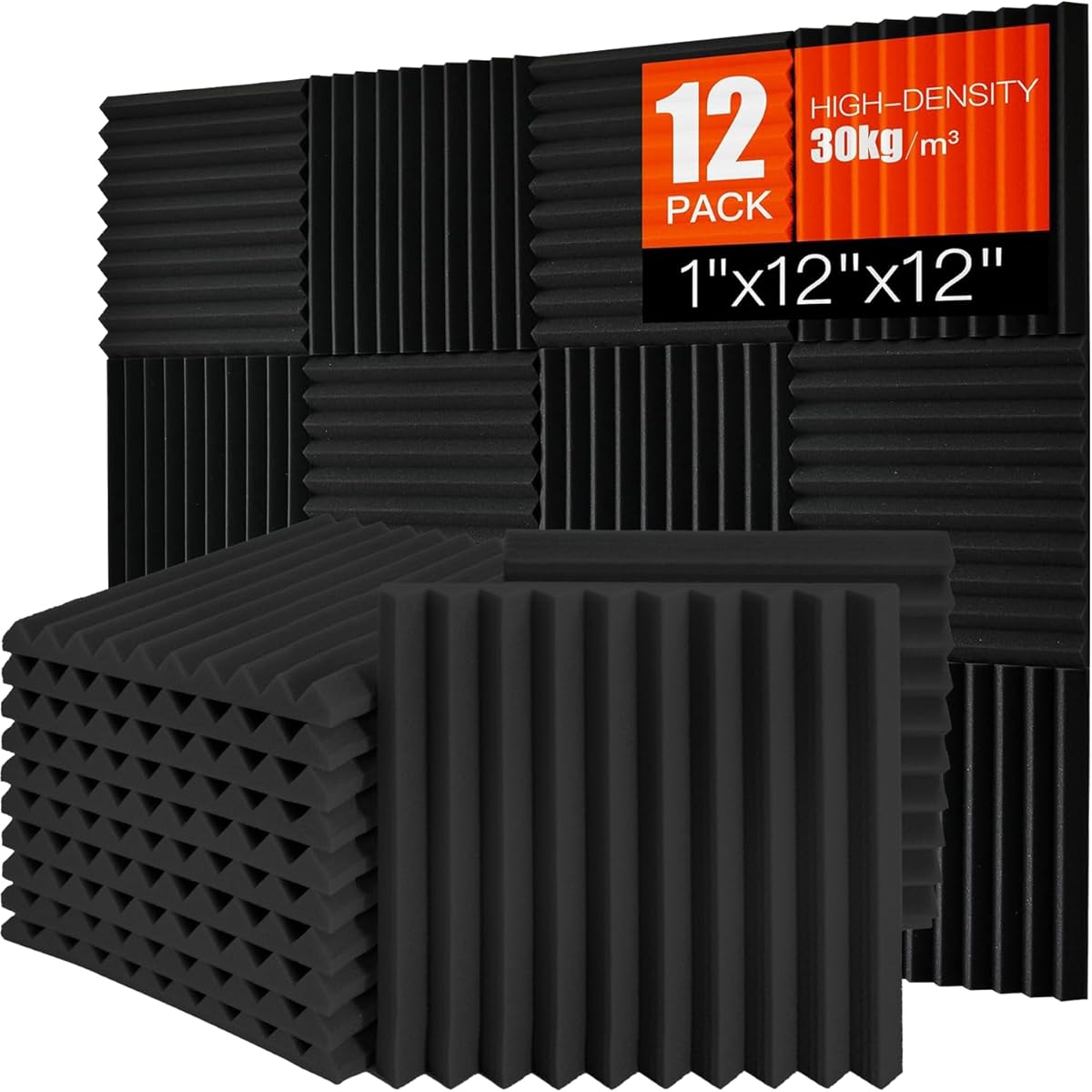
When evaluating these specific 12"x12"x1" black wedge acoustic panels, understand that their 1-inch thickness targets mid-to-high frequency absorption rather than true soundproofing. These panels are designed for echo reduction in smaller spaces like podcasting corners, home vocal booths, or noisy home offices, where controlling flutter echo and reverb is the primary goal.
Key Considerations Before Buying
- The 1-inch thickness and wedge profile are optimized for frequencies above 500Hz, making them suitable for taming voice frequencies and guitar amps but less effective for low-frequency bass traps.
- A 12-pack covers 12 square feet; measure your target wall area carefully, as corners and first reflection points often require more coverage than beginners anticipate.
- These panels use adhesive strips or spray adhesive for mounting; consider your wall surface (drywall, concrete) and whether you need removable, non-damaging installation.
What Our Analysts Recommend
For wedge foam, check for consistent cell structure and density—high-density foam should spring back slowly when compressed. Look for a Class E fire rating, which is standard for studio foam, and ensure the packaging includes adequate mounting hardware. The black color minimizes light reflection in recording environments.
Studio Environment Market Context
Market Overview
The budget acoustic foam panel market is saturated with similar-looking 12"x12" wedge packs, creating intense competition on price and pack size. Most products in this tier, including this one, are manufactured overseas with polyurethane foam and compete primarily on adhesive quality and packaging completeness.
Common Issues
Buyers often confuse 'sound absorption' with 'soundproofing'—these panels reduce reverberation within a room but won't prevent sound from leaking to neighbors. Other frequent complaints involve weak adhesive strips, inconsistent foam density within a pack, and an underestimation of how many panels are needed for audible results.
Quality Indicators
Beyond density, quality is shown in the consistency of the wedge cuts and the inclusion of reliable mounting options. Better panels in this category often have beveled edges for seamless installation and include both adhesive strips and recommendations for professional spray adhesives for permanent setups.
Review Authenticity Insights
Grade B Interpretation
A 'B' grade with an 11% estimated fake review rate suggests a mostly authentic review pool with some likely incentivized reviews. The adjusted rating of 3.90/5 (down from 4.11) indicates that the genuine customer experience is slightly less enthusiastic than the raw average suggests.
Trust Recommendation
Focus on reviews that discuss specific installation details, like using third-party adhesive, or that mention measurable outcomes, like reduced reverb time. Be slightly skeptical of overly vague 5-star reviews that lack installation context or specific use cases like 'for my podcast' or 'in my guitar room.'
Tips for Reading Reviews
Prioritize reviews that mention the product's limitations, such as minimal bass absorption or adhesive failures, as these demonstrate authentic use. Look for multi-photo reviews showing the panels installed in real rooms, as these provide the best evidence of performance and coverage.
Expert Perspective
This product sits squarely in the entry-level acoustic treatment category. The 3.90 adjusted rating from verified patterns is realistic for a basic 1-inch wedge foam pack—it performs its intended function adequately for high-frequency absorption but requires proper expectations. Its value lies as a first-step solution for treating primary reflection points in a small project studio or office, not as a comprehensive room treatment. The high-density claim is relative to cheaper packing foam but doesn't match professional mineral wool or thicker bass traps.
Purchase Considerations
Purchase this pack if your goal is to reduce echo and 'brightness' in a small, rectangular room for voice work or acoustic instrument recording. Consider thicker (2-inch or 4-inch) panels or bass traps if you need to manage lower frequencies from drums, bass amps, or loudspeakers. Factor in the cost and effort of supplemental adhesive, as the included strips may not suffice for long-term mounting.
Comparing Alternatives
Shoppers should compare the cost per square foot and included mounting hardware with other 1-inch wedge packs, as well as consider investing in a few thicker panels for corner bass trapping instead of more thin panels.