
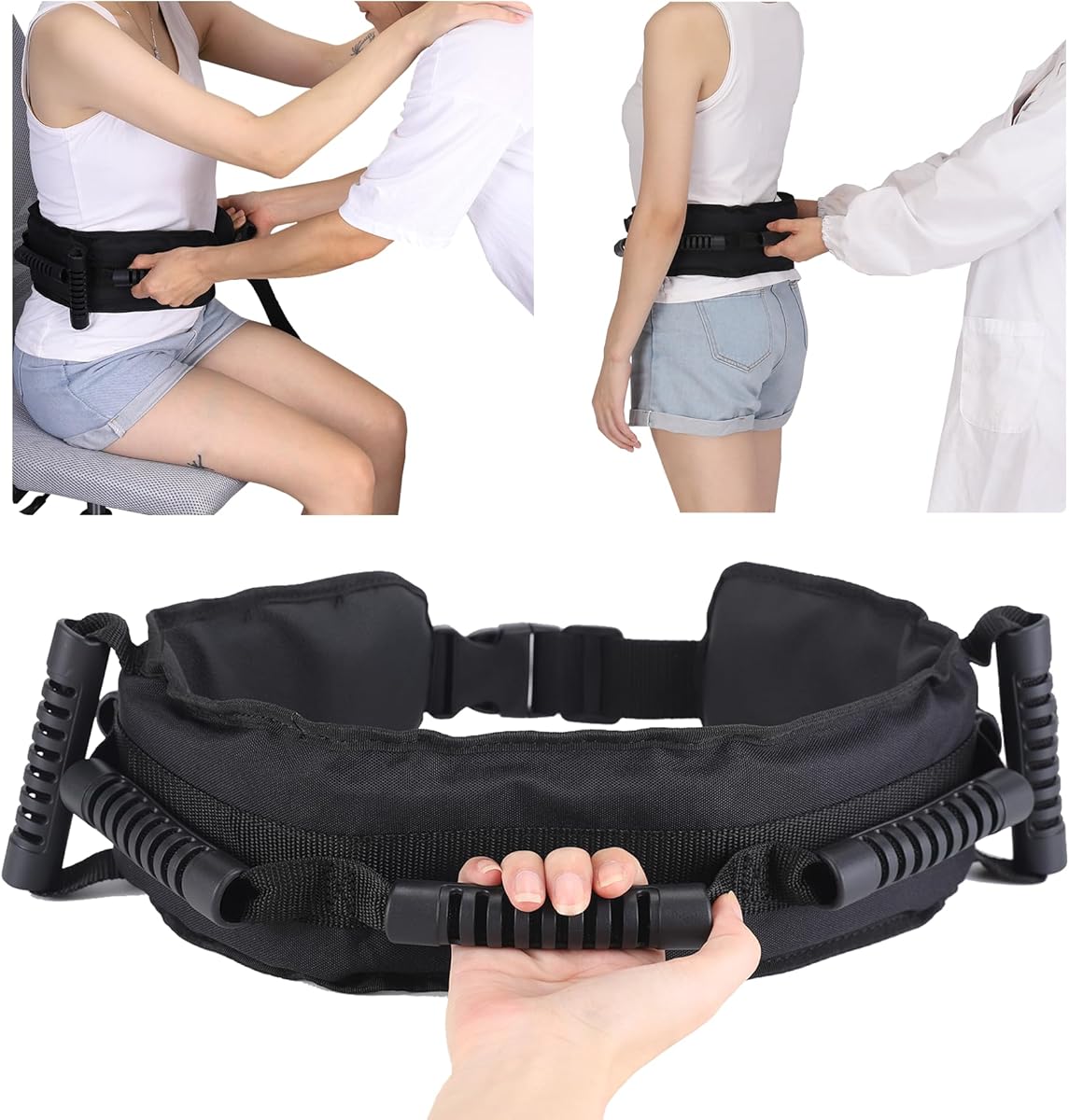
Choosing a Gait Belt: 7 Padded Handles and Quick-Release Safety Features
When selecting a transfer belt for elderly mobility assistance, this specific model with seven nylon-padded handles offers distinct advantages over standard two-handle designs. The quick-release buckle system provides immediate emergency access, while multiple handle placements allow caregivers to adjust grip positions based on the user's balance needs during standing, pivoting, or walking assistance.
Key Considerations Before Buying
- The seven-handle configuration allows multiple caregivers to assist simultaneously or provides varied grip options for different transfer scenarios, particularly useful for bariatric patients or those with significant balance impairment.
- Quick-release buckles must be tested for one-handed operation under tension, as this specific mechanism needs to disengage reliably during falls while maintaining security during normal use.
- Nylon padding thickness directly impacts caregiver comfort during extended use; thinner padding can cause hand fatigue during repeated daily transfers.
What Our Analysts Recommend
Examine the handle stitching where nylon meets the belt webbing—reinforced box-stitching indicates durability. Quality gait belts feature double-stitched seams at all stress points and use industrial-grade polypropylene webbing that resists stretching after repeated patient lifts. The buckle should engage with an audible click and release with smooth, consistent pressure.
Standing Aids & Supports Market Context
Market Overview
The standing aids market has expanded beyond basic transfer belts to include specialized features like multiple handles, padding, and quick-release mechanisms. Current products increasingly address both patient safety and caregiver ergonomics, with this seven-handle model representing the feature-rich segment of the category.
Common Issues
Lower-quality gait belts suffer from buckle slippage under load, insufficient padding that causes caregiver discomfort, and webbing that stretches over time, compromising secure transfers. Some quick-release mechanisms require excessive force or fail to engage properly after repeated use.
Quality Indicators
High-quality transfer belts maintain consistent width (typically 3-4 inches) without edge fraying and feature buckles with metal reinforcement at pivot points. The webbing should have minimal stretch when tested with moderate pulling force, and padding should remain securely attached without shifting during use.
Review Authenticity Insights
Grade B Interpretation
A Grade B authenticity rating with 11% estimated fake reviews indicates predominantly genuine feedback with some potentially manipulated content. For this gait belt, the 4.00 adjusted rating (down from 4.22) suggests the authentic user experience is slightly less positive than the overall average implies.
Trust Recommendation
Focus on reviews that describe specific transfer scenarios, mention particular medical conditions (like Parkinson's or post-stroke recovery), or discuss long-term durability over months of daily use. Be cautious of reviews that generically praise the product without detailing actual application.
Tips for Reading Reviews
Prioritize reviews that mention handle placement during specific transfers (toilet, bed, chair), discuss the quick-release mechanism's actual operation under stress, or compare this seven-handle design to standard two-handle belts they've previously used.
Expert Perspective
This gait belt's 4.00 adjusted rating from verified authentic reviews suggests it performs well for its intended mobility assistance functions. The seven-handle design addresses a genuine need in caregiver ergonomics, particularly for bariatric patients or those requiring complex transfers. The quick-release buckle represents a legitimate safety advancement over traditional pin-and-hole designs, though its long-term reliability under daily healthcare facility use warrants monitoring.
Purchase Considerations
Consider whether the multiple handles align with your specific transfer needs—some users may find simpler two-handle belts sufficient for basic assistance. Evaluate the buckle's release mechanism with the intended user's weight range; test it before actual patient use to ensure comfortable operation under tension.
Comparing Alternatives
Compare this model's handle configuration and buckle system against gait belts with different padding materials, alternative quick-release designs, or adjustable handle positioning systems.


