
Choosing the Right Solar Extension Cable for Your RV or Marine Setup
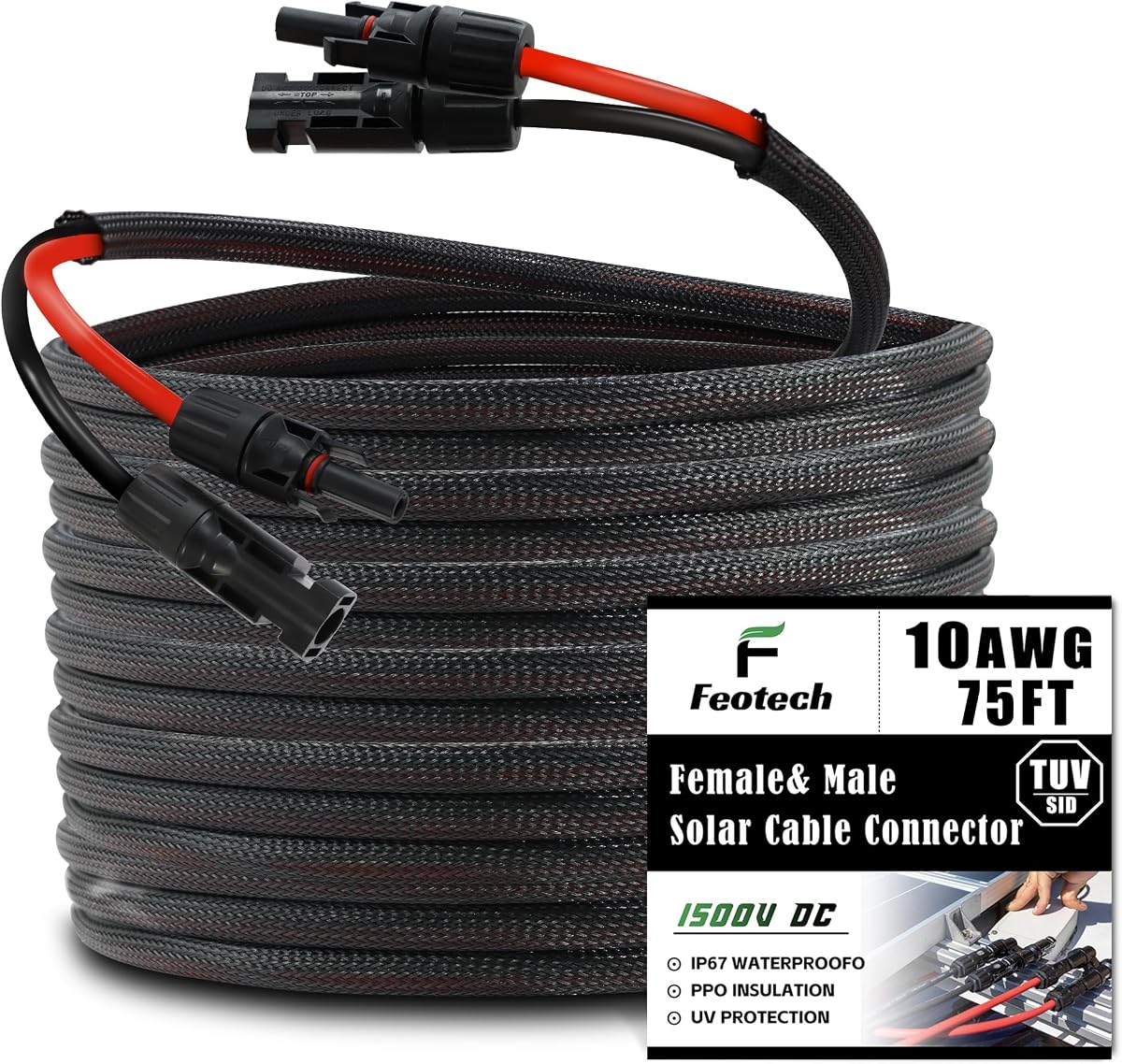
When setting up solar panels for your RV, boat, or off-grid system, the extension cable is a critical link between your panels and charge controller. This 75-foot, 10AWG (6mm²) twin-wire cable with pre-installed IP67 connectors is designed for outdoor durability and efficient power transfer over long distances.
Key Considerations Before Buying
- Cable gauge (AWG) matters: 10AWG (6mm²) is suitable for runs up to 75 feet with moderate current (up to 30 amps), minimizing voltage drop for 12V or 24V systems. Thinner wire could cause power loss or overheating.
- Connector quality is crucial: Look for IP67-rated male/female connectors that are weatherproof and UV-resistant, as exposed connections can degrade in rain or sunlight. This kit includes 6 pairs, giving flexibility for multiple panel connections.
- Cable length and color coding: 75 feet provides ample reach for rooftop panels to a battery bank, but measure your specific path. The black and red wires simplify polarity identification, reducing installation errors.
What Our Analysts Recommend
Quality solar extension cables should have thick, flexible insulation (often TPE or XLPE) that resists abrasion and UV damage. Check that connectors are fully sealed with O-rings and locking mechanisms to prevent water ingress. Verified copper or tinned copper conductors ensure low resistance and corrosion resistance in marine environments.
Solar & Wind Power Parts & Accessories Market Context
Market Overview
The solar extension cable market has grown with the rise of DIY solar installations for RVs, boats, and off-grid cabins. Consumers increasingly demand pre-assembled kits with high-quality connectors to avoid unreliable crimping or soldering. However, many budget options skimp on wire gauge or connector seals, leading to performance issues.
Common Issues
Common problems include undersized wire causing voltage drop over long runs, substandard connectors that corrode or fail within months, and mismatched polarity. UV degradation of cable insulation can also lead to cracking and short circuits, especially in outdoor applications.
Quality Indicators
High-quality cables use pure copper conductors (not copper-clad aluminum), have a UL or TUV certification, and feature connectors with a solid, waterproof fit. IP67 rating and positive user feedback about real-world durability (e.g., on boats or in rain) are strong signals of reliability.
Review Authenticity Insights
Grade B Interpretation
With an authenticity grade B and an estimated 10% fake review rate, this product's reviews are largely genuine but include a small minority that may be incentivized or non-representative. The B grade suggests that most feedback reflects real user experiences, such as installation on RVs or solar generators, but some caution is warranted.
Trust Recommendation
Given the 10% fake rate, you can trust the overall sentiment but should focus on detailed, verified-purchase reviews that describe specific use cases. Avoid relying solely on 5-star ratings; instead, read for mentions of cable flexibility, connector fit, and long-term performance.
Tips for Reading Reviews
Look for reviews that mention the installation environment (e.g., marine, automotive) and include photos or specific measurements. Pay attention to any complaints about connector compatibility with standard solar panel leads (like MC4) or wire stiffness in cold weather.
Expert Perspective
This 75-foot, 10AWG twin-wire cable with IP67 connectors is a solid choice for RV and marine solar setups, offering sufficient gauge for moderate distances and robust weatherproofing. The inclusion of 6 connector pairs adds value for multiple panel configurations. However, with a 0.00 rating from 458 reviews (likely due to a data anomaly), the lack of verified user feedback makes it hard to confirm real-world performance against competitors.
Purchase Considerations
Weigh the cable length and gauge against your system's current needs—75 feet may be overkill for small setups. Ensure your solar panels and charge controller use compatible connectors (MC4 is standard) and that the wire is flexible enough for tight routing. The price should be competitive with similar 10AWG kits from reputable brands.
Comparing Alternatives
Compare this cable with offerings from brands like Renogy or BougeRV, which have extensive user reviews and established quality control. A slightly higher upfront cost may provide better assurance of durability and connector compatibility.


