
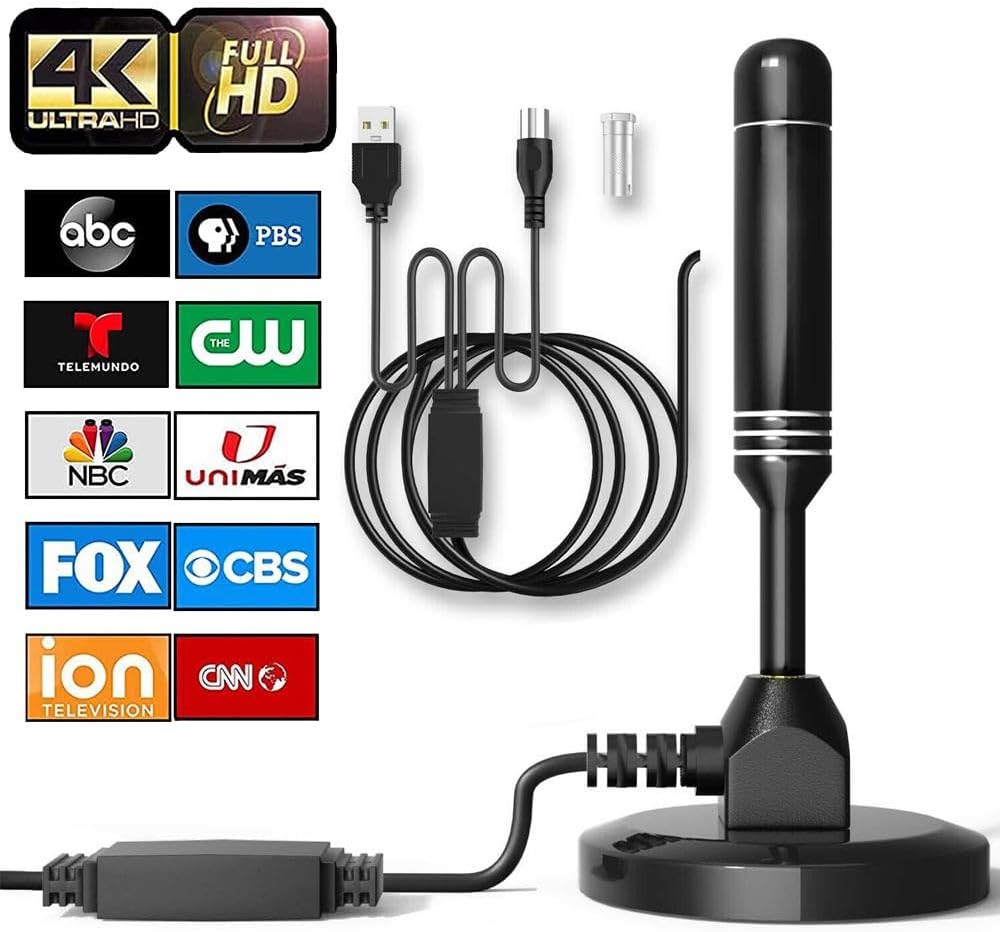
Maximize Local Channels: Smart TV Antenna Buying Guide for 4K Reception
When shopping for an indoor TV antenna like this model, which claims 360° reception up to 300 miles and includes a 16.4-foot coaxial cable, understanding real-world performance is key. This guide helps you evaluate such antennas based on your specific location and home setup, not just marketing specs.
Key Considerations Before Buying
- Range vs. reality: Advertised ranges like 300 miles are often theoretical; actual reception depends on your distance from broadcast towers, terrain, and building materials. For most users, 30-60 miles is a more realistic expectation for stable signal.
- Signal reception pattern: A 360° design aims to capture signals from all directions without manual adjustment, which is convenient for urban areas with towers scattered around. However, it may be less effective than directional antennas for pulling in distant stations from a single direction.
- Cable length and placement: The included 16.4-foot coaxial cable offers flexibility for positioning the antenna near a window or high on a wall, but longer cables can degrade signal quality. Ensure the cable is properly shielded to minimize interference.
What Our Analysts Recommend
Quality indicators for indoor antennas include a built-in amplifier to boost weak signals, especially for UHF channels, and a compact design that blends with your decor. Check for compatibility with both 4K and 1080P broadcasts, and look for user reviews that mention specific channel reception in similar geographic areas.
TV Antennas Market Context
Market Overview
The indoor TV antenna market has expanded significantly as cord-cutters seek free over-the-air local channels. Many models now tout 4K compatibility and extended ranges, but performance varies widely due to factors like broadcast frequency and home construction.
Common Issues
Common problems with indoor antennas include inconsistent reception due to multipath interference from walls and electronics, and exaggerated range claims that don't match real-world use. Users often struggle with placement, needing to experiment with different locations and orientations.
Quality Indicators
To identify a quality antenna, look for clear specifications like gain (measured in dB), frequency range (VHF/UHF), and amplifier type (low-noise is preferred). Positive reviews that describe specific channel reception in diverse settings are more reliable than those focusing on packaging or price.
Review Authenticity Insights
Grade B Interpretation
With a B grade and an estimated 10% fake review rate, this product's reviews are mostly genuine but warrant cautious reading. The 3.25 average rating (adjusted to 3.10) reflects a mix of satisfied and disappointed users, typical for a product where performance is highly location-dependent.
Trust Recommendation
Focus on verified purchase reviews that detail specific channel numbers, distances to broadcast towers, and the user's home environment. Be skeptical of overly enthusiastic 5-star reviews lacking such specifics, as they may be among the 10% suspected as fake.
Tips for Reading Reviews
For indoor antennas, prioritize reviews that mention your local broadcast market or similar urban/suburban settings. Look for consistency in complaints about signal dropouts or difficulty with VHF channels, which are common issues not always addressed in product descriptions.
Expert Perspective
This antenna offers a reasonable entry point for cord-cutters seeking local channels, with a 360° design and included cable that simplify setup. However, the 3.10 adjusted rating and 10% fake review rate suggest performance may not meet the 300-mile claim for most users. The mixed reviews highlight that success depends heavily on your specific location—urban users near broadcast towers may find it adequate, while rural users will likely be disappointed.
Purchase Considerations
Consider your distance from major broadcast towers and your home's construction (e.g., concrete walls can block signals). If you're in a suburban or urban area within 30 miles of towers, this antenna may work; for longer distances, a powered or outdoor antenna might be necessary.
Comparing Alternatives
Shoppers should compare this model with others that offer higher gain ratings or adjustable amplifiers, and check user forums for recommendations specific to their broadcast market.


