
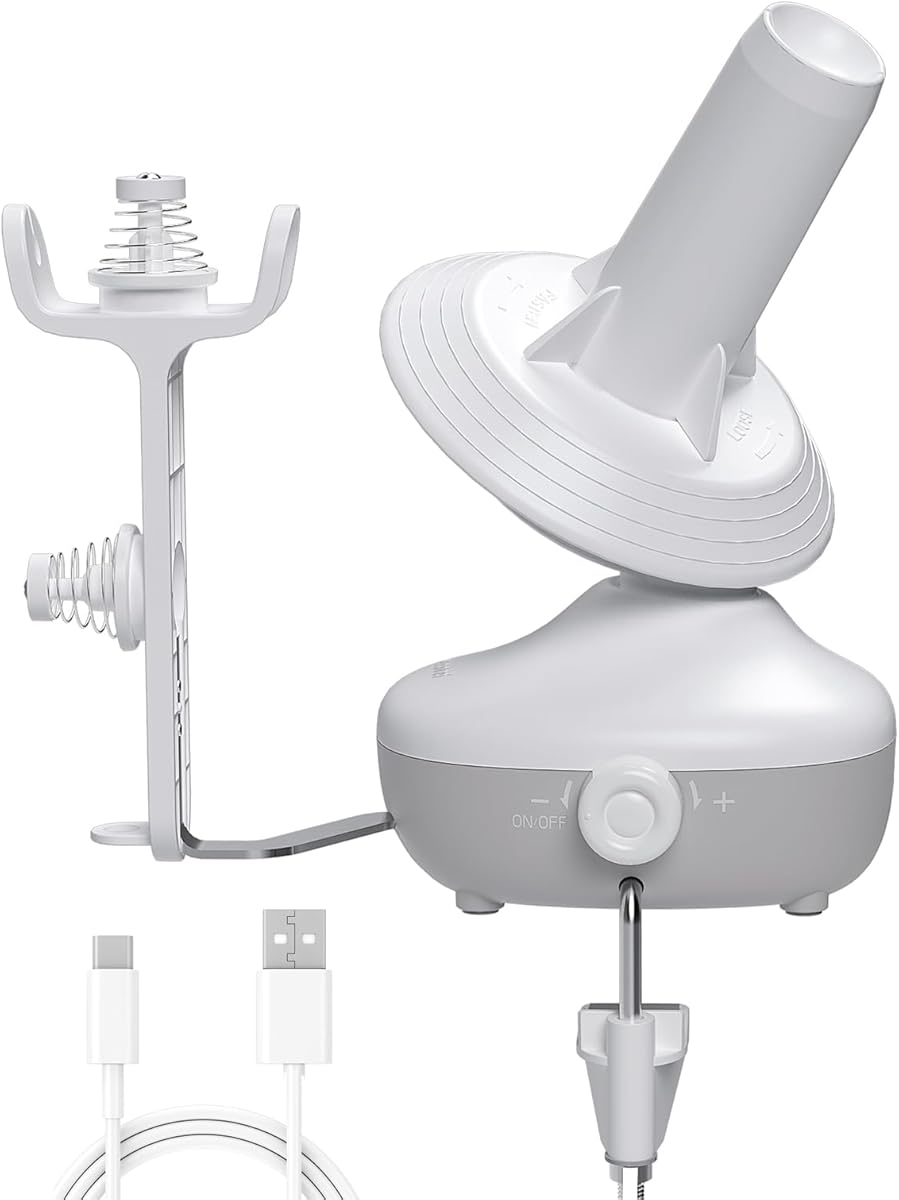
Choosing an Electric Yarn Winder: Key Features for Smooth Skein-to-Cake Conversion
When selecting an electric yarn winder like this compact white model, focus on how its specific features—stepless speed control and strong tension—translate to real-world use. Unlike manual winders, electric models should offer consistent winding without overstretching fibers, making the transition from skein to center-pull cake efficient for serious crafters.
Key Considerations Before Buying
- Stepless speed control, as featured here, is crucial for handling delicate fibers like silk or mohair without breakage, allowing you to adjust winding pace based on yarn weight.
- A compact footprint matters for crafters with limited space; this unit's design should integrate storage without sacrificing stability during operation.
- Strong, adjustable tension mechanisms prevent loose cakes that collapse during use, a common frustration with poorly designed winders.
What Our Analysts Recommend
Examine the build quality of the gears and spindle; metal components typically offer greater durability than all-plastic assemblies. Listen for consistent motor hum in video reviews—erratic sounds may indicate poor quality control. The ideal winder creates firm, stable cakes that maintain their shape when removed from the spindle.
Ball Winders Market Context
Market Overview
The electric yarn winder market has expanded significantly, with models now targeting home crafters seeking efficiency over traditional hand-cranking. This product sits in a competitive mid-range segment, where features like stepless speed differentiate it from basic single-speed units.
Common Issues
Common failures include plastic gears stripping under tension, motors overheating during large projects, and tension systems that cannot accommodate varying yarn weights. Poorly designed spindles may produce cakes with uneven density or difficulty in removal.
Quality Indicators
Look for winders with metal reinforcement at stress points, consistent positive mentions of durability in long-term reviews, and clear warranty information. Quality units maintain consistent tension across different yarn types without manual readjustment mid-cake.
Review Authenticity Insights
Grade B Interpretation
A Grade B with 11% estimated fake reviews indicates generally reliable feedback, though shoppers should remain critical of overly effusive five-star reviews lacking specific usage details. The adjusted 4.50 rating from 4.78 suggests some review inflation but still reflects strong user satisfaction.
Trust Recommendation
Prioritize reviews discussing actual project use—particularly those mentioning winding lace-weight yarns or large quantities—as these demonstrate authentic engagement. Be skeptical of reviews focusing solely on unboxing or generic praise without mentioning performance characteristics.
Tips for Reading Reviews
Search for reviews mentioning specific yarn types (e.g., 'merino wool,' 'cotton blend') and project sizes, as these provide genuine insight into performance. Pay special attention to mid-range (3-4 star) reviews that often detail nuanced pros and cons of the tension system and motor consistency.
Expert Perspective
This winder's combination of stepless speed control and strong tension addresses two primary pain points in the category: fiber damage and unstable cakes. The 4.50 adjusted rating from over 2,300 reviews suggests it performs reliably for most users, though the 11% fake review rate warrants careful evaluation of long-term durability claims. Its compact design appears tailored to crafters with space constraints, a specific advantage over bulkier models.
Purchase Considerations
Consider your typical yarn weights and project scale; this unit's stepless speed is particularly valuable if you work with varied fibers. Evaluate whether the compact size suits your workspace, as smaller footprints sometimes compromise stability during larger winding sessions. The white color may show fiber residue more than darker finishes.
Comparing Alternatives
Compare this model's tension mechanism and motor warranty against similarly priced electric winders, particularly regarding gear construction and noise levels during operation.


