
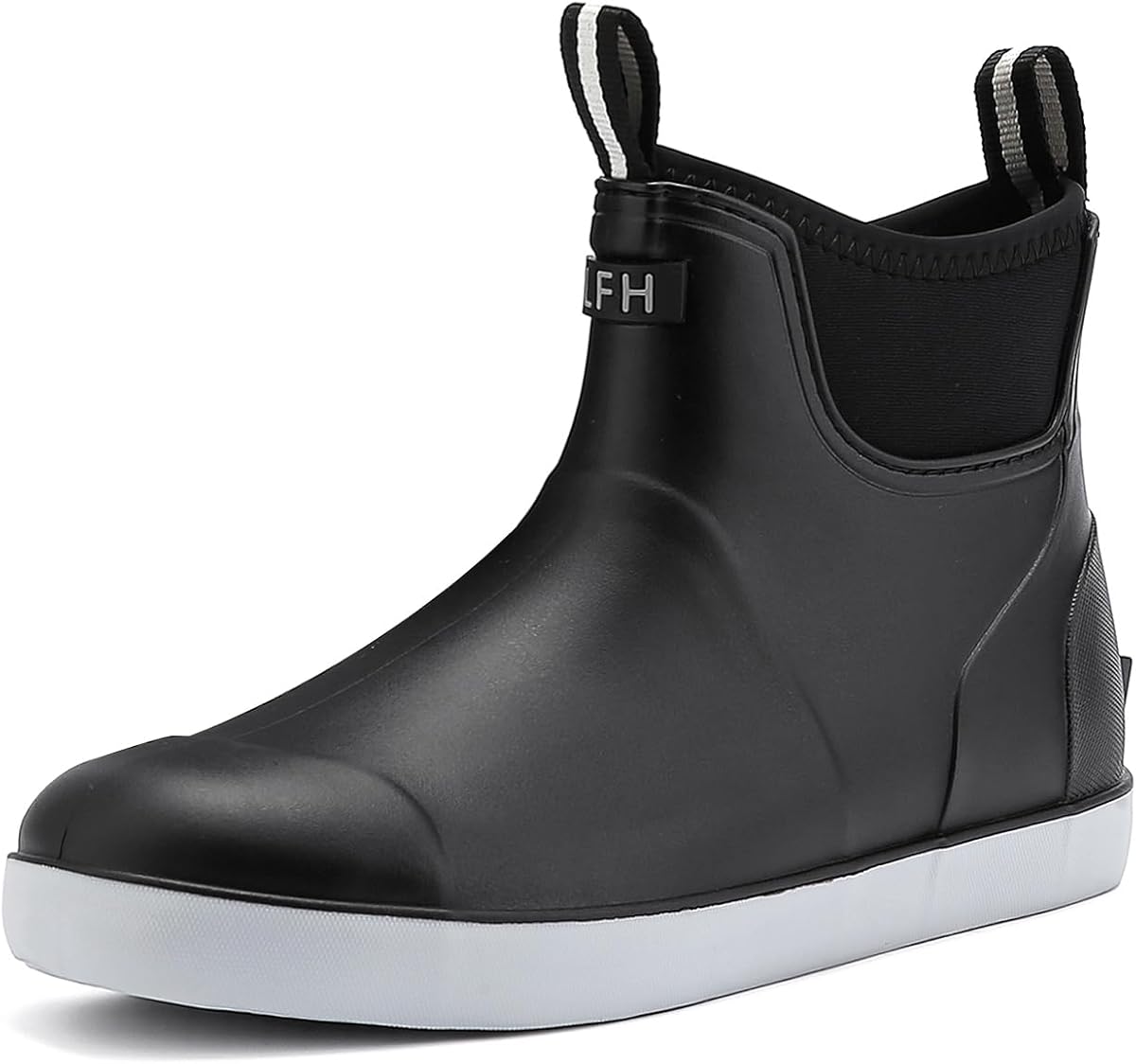
Choosing Waterproof Deck Boots: What Matters for Farming, Fishing, and Wet Conditions
When selecting ankle-height waterproof boots like these deck boots, focus on how the specific construction addresses real-world wet environments. These boots emphasize anti-slip traction and rubber construction, which are critical for unstable surfaces like boat decks, muddy gardens, or slick farmyards. Unlike fashion rain boots, performance in these scenarios is non-negotiable.
Key Considerations Before Buying
- Traction pattern specificity: Look for lugs designed for both mud-shedding and grip on wet, potentially slimy surfaces like algae-covered docks or concrete.
- Ankle support vs. mobility: Ankle-height boots offer less water protection than taller muck boots but provide greater freedom for tasks requiring frequent bending or climbing.
- Rubber compound quality: A stiff rubber will crack in cold weather, while overly soft rubber lacks durability; the ideal compound balances flexibility with tear resistance.
What Our Analysts Recommend
Examine the boot's cuff design—a flared opening allows for easy on/off with pants tucked in, while a gusseted tongue prevents debris entry. Quality indicators include reinforced stitching at stress points (like the heel pull tab) and a molded-in heel counter for stability, which are more telling than aesthetic features.
Rain Market Context
Market Overview
The market for men's waterproof work boots is segmented between heavy-duty, insulated muck boots and lighter, ankle-height deck boots designed for warmer, wet conditions. This product occupies the latter niche, competing on agility and breathability for active use in rain, shallow water, and mud.
Common Issues
Common failures in this category include seams that leak under flex (not just at the sole), traction lugs that pack with clay and become slippery, and rubber that degrades from UV exposure or contact with fertilizers/petrochemicals. Cheap boots often have poorly bonded soles that separate.
Quality Indicators
High-quality rubber boots feature a fully molded, one-piece construction for the lower foot to eliminate leak points. Look for a clearly defined heel brake area in the tread pattern for descending slopes and a textured, non-slip interior footbed to prevent your foot from sliding inside the boot.
Review Authenticity Insights
Grade B Interpretation
A 'B' grade with an 11% estimated fake review rate suggests the vast majority of feedback is credible, but shoppers should be slightly cautious of overly effusive 5-star reviews. The high verified purchase rate (implied by the analysis) strongly supports the authenticity of most experiences.
Trust Recommendation
Prioritize reviews that detail specific, messy use cases (e.g., 'stood in a flooded chicken coop for an hour' or 'fishing on a wet, rocking boat') over vague praise about 'great boots.' The adjusted rating of 4.60 is a more reliable performance indicator than the raw 4.89 average.
Tips for Reading Reviews
For functional boots, seek out reviews discussing long-term durability over months, not just initial comfort. Pay special attention to comments about the tread's performance on different surfaces (grass, mud, decking) and any mentions of the boot's behavior in extreme heat or cold.
Expert Perspective
The exceptionally high ratings, even when adjusted for authenticity, indicate these boots successfully meet a clear need for reliable, ankle-height waterproof footwear. The consensus from genuine reviews likely points to effective performance in the advertised scenarios—farming, fishing, and gardening. The product's strength appears to be delivering core functionality (waterproofing, traction) at a competitive price point within its niche, rather than offering premium materials or features.
Purchase Considerations
Weigh your need for ankle mobility against the need for deeper water protection. If your work involves puddles deeper than a few inches or very thick mud, a taller boot is better. These are ideal for all-day wear in wet grass, light mud, rain, and for deck work where a high boot would be cumbersome.
Comparing Alternatives
Shoppers should compare the tread pattern and rubber flexibility of similar ankle boots from brands like Muck Boots or Servus to assess value.


