
Ultra-Thin Power Banks: Balancing Portability with Practical Charging Capacity
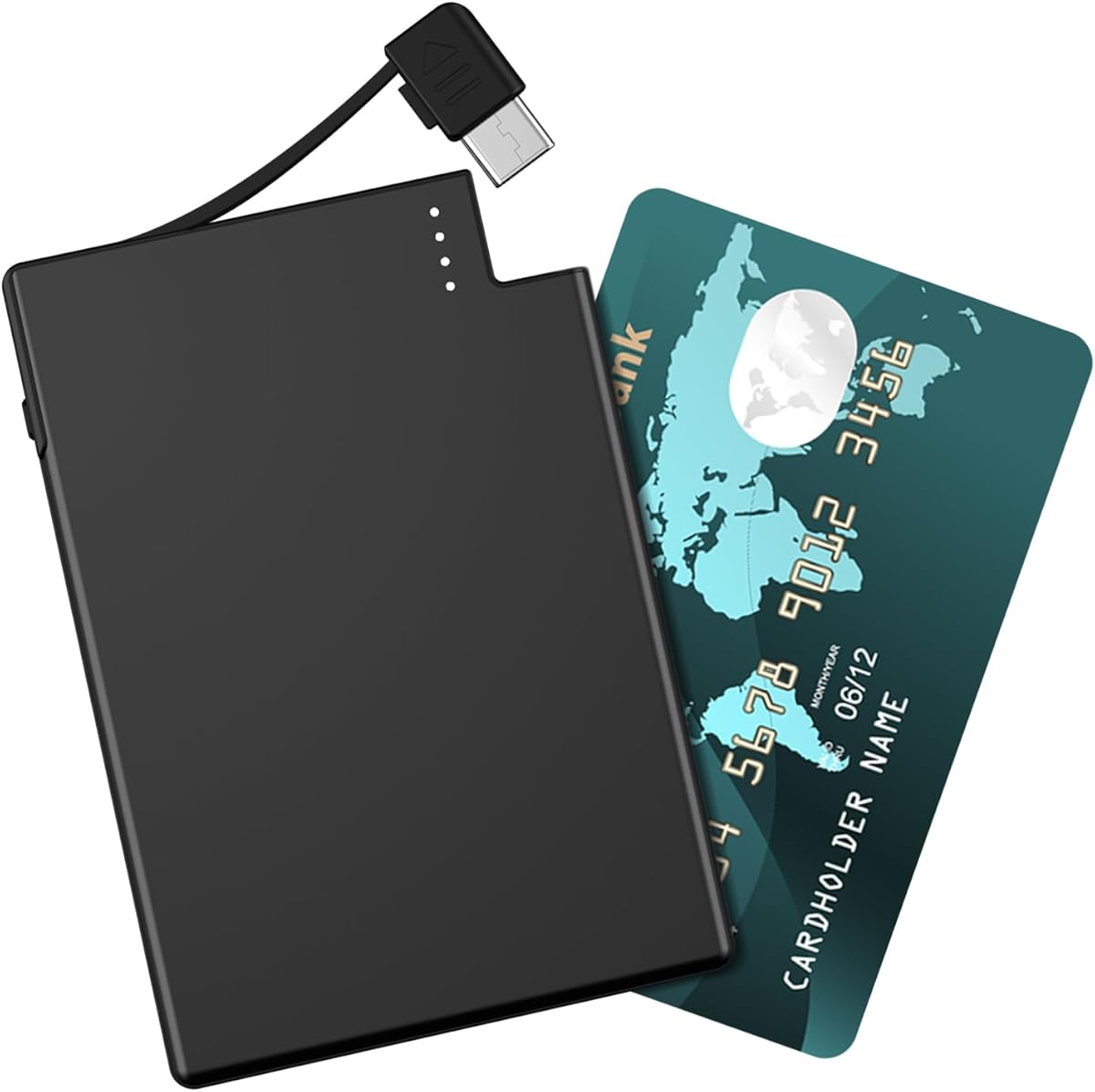
The TNTOR charger represents the growing category of credit-card-sized power banks designed for wallet carry rather than backpack storage. Unlike bulkier alternatives, this product prioritizes minimal footprint over maximum capacity, making it ideal for emergency top-ups rather than full-day charging. Its built-in USB-C cable eliminates the need for separate charging cords but introduces durability considerations.
Key Considerations Before Buying
- Capacity vs. Size: At credit-card dimensions, expect limited capacity (typically 2,500-5,000mAh) suitable for 1-1.5 phone charges rather than multi-device powering.
- Built-in Cable Durability: The integrated USB-C cable is convenient but represents a potential single point of failure; examine how it's recessed or protected when not in use.
- Actual Charging Speed: Slim designs often lack advanced charging circuitry, so verify it supports your phone's fast-charging protocols rather than basic 5W/10W output.
What Our Analysts Recommend
For ultra-thin power banks, examine the casing material—aluminum alloys resist bending better than plastic. Check if the USB-C port supports both input (recharging the bank) and output (charging devices), as some slim models omit this dual functionality. Verify the actual thickness measurements; some 'slim' banks are still 0.5 inches thick, while true wallet-friendly models stay under 0.3 inches.
Portable Power Banks Market Context
Market Overview
The portable power bank market has bifurcated into high-capacity beasts for travel and minimalist designs like the TNTOR for daily carry. Credit-card sized models have surged in popularity as phones have adopted USB-C standardization, allowing single-cable solutions. These products compete primarily on thickness, with true wallet compatibility requiring sub-0.35-inch profiles.
Common Issues
Ultra-thin designs often suffer from reduced battery longevity due to heat dissipation challenges in confined spaces. Built-in cables frequently fail at stress points after months of folding/unfolding. Many slim banks use lower-quality cells that degrade faster, losing capacity noticeably within 6-12 months of regular use.
Quality Indicators
Premium thin power banks use lithium-polymer cells that can be shaped flatter than cylindrical 18650 cells. Look for products specifying output amperage (2.4A minimum for decent charging) and input specifications (5V/2A for reasonable recharging times). Quality units include overcharge/overheat protection circuits despite space constraints.
Review Authenticity Insights
Grade B Interpretation
A Grade B with 15% estimated fake reviews indicates generally reliable feedback with moderate review manipulation. The 0.34-point drop from the displayed 4.44 to adjusted 4.10 rating suggests some inflated positive reviews, but the majority of experiences appear genuine.
Trust Recommendation
Focus on verified purchase reviews discussing specific thickness measurements, actual capacity experiences, and cable durability over time. Be skeptical of reviews mentioning 'free product' or 'discount' even if marked verified, as these can represent incentivized feedback that skews positive.
Tips for Reading Reviews
Prioritize reviews that mention using the product for 2+ months, as they'll reveal durability issues with the folding cable. Look for photos showing the charger next to credit cards or in wallets—these demonstrate real-world testing. Pay attention to comments about recharging speed, as slow input charging is a common compromise in slim designs.
Expert Perspective
The TNTOR represents a legitimate trade-off: exceptional portability at the expense of capacity and potentially durability. Its 4.10 adjusted rating from verified purchasers suggests it performs adequately within the ultra-thin category, though the 15% fake review rate warrants cautious interpretation of glowing reviews. The product's compatibility with iPhone 15/16/17 and Android devices via USB-C is its strongest feature, eliminating cable clutter for modern phone users. However, the built-in cable design means eventual failure will require replacing the entire unit rather than just a cable.
Purchase Considerations
Consider this charger if you primarily need emergency top-ups during short outings and value wallet-carry convenience above all else. If you require multiple full charges, need to power tablets, or want a long-term investment (3+ years), traditional power banks with higher capacity and replaceable cables may serve better despite their bulk.
Comparing Alternatives
Compare thickness measurements, actual mAh ratings (not just labeled capacity), and warranty terms against similar slim models from Anker, Aukey, or INIU before purchasing.


