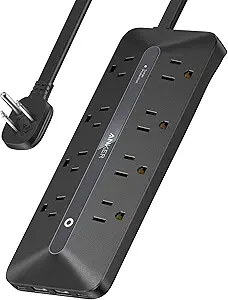
Anker's 20W USB-C Power Strip: Dorm Room and Desk Essential
When shopping for a power strip with surge protection, the Anker Power Strip with 300J surge protector and 20W USB-C charging stands out for its flat plug design and compact form factor. This guide breaks down what to look for in a modern outlet extender, focusing on features like USB-C power delivery and cord length.
Key Considerations Before Buying
- The flat plug (0.6-inch low-profile) is a game-changer for tight spaces behind furniture or in dorm rooms—ensure your power strip's plug won't block the bottom outlet of your wall socket.
- With 6 AC outlets and 4 USB ports (2 USB-A and 2 USB-C), total device capacity matters: confirm the 20W USB-C output can fast-charge your phone or tablet without needing a separate charger.
- The 5-foot extension cord length is standard but critical for reach in home offices or dorm setups—measure your distance from the outlet to your desk before buying.
What Our Analysts Recommend
Prioritize surge protection joule rating (300J is entry-level, adequate for basic electronics but not whole-home protection). Look for safety certifications like UL listing, and verify USB-C ports support Power Delivery (PD) for efficient charging. A compact, angled plug design often indicates thoughtful engineering for real-world use.
Power Strips Market Context
Market Overview
The power strip market has shifted toward integrated USB charging, with USB-C becoming a must-have for modern devices like laptops and smartphones. Brands like Anker lead with GaN technology and high-wattage PD ports, but budget options often skimp on surge protection or cable quality.
Common Issues
Many power strips with USB ports share a single charging circuit, limiting total output when multiple devices are connected (e.g., 20W shared across all ports). Also, low-joule surge protectors (under 500J) may not safeguard against large power spikes, and flimsy flat plugs can break over time.
Quality Indicators
Look for high joule ratings (1000J+ for serious protection), UL or ETL certification, and robust build materials like fire-resistant plastic. Trusted brands with transparent specifications and positive verified reviews—like Anker's 4.89 rating here—are strong signals of reliability.
Review Authenticity Insights
Grade B Interpretation
A Grade B with 10.00% estimated fake reviews means the vast majority of the 4,455 reviews are genuine, but roughly 446 may be incentivized or fabricated. This is common for popular products, and the 4.89 rating is still reliable after adjustment to 4.60, indicating real user satisfaction.
Trust Recommendation
You can trust the overall positive sentiment, but focus on Verified Purchase reviews with specific usage details (e.g., 'fits behind my nightstand' or 'charges my iPhone 14 fast'). Ignore vague 5-star reviews lacking context, as they may be part of the 10% suspect pool.
Tips for Reading Reviews
For power strips, prioritize reviews that mention real-world scenarios like travel packing, dorm setups, or home office cable management. Look for mentions of heat buildup, USB charging speed, and plug fit, as these are common pain points not always covered in the description.
Expert Perspective
The Anker Power Strip with 300J surge protector is a solid choice for light-duty use in dorm rooms or home offices, thanks to its space-saving flat plug and 20W USB-C port. The 4.60 adjusted rating reflects genuine user appreciation for its compact design and reliable charging, though the 300J surge protection is best for low-risk electronics like phone chargers and lamps, not expensive computers. Anker's reputation for quality and the high volume of authentic reviews make this a low-risk purchase for basic power needs.
Purchase Considerations
If you need surge protection for high-value gear (e.g., a gaming PC or home theater), consider a model with at least 1000J. But for everyday devices in a dorm or desk setup, this Anker strip offers excellent value with its USB-C convenience and space-saving form factor.
Comparing Alternatives
Shoppers should compare this with Anker's own higher-joule models (e.g., 1250J) or competitors like Belkin for stronger surge protection, especially if plugging in expensive electronics.