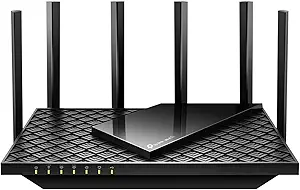
Choosing a 5G Dual-WAN Router for Business Continuity and Mobile Connectivity
The Peplink B One 5G is a specialized router designed for environments where reliable internet is critical and traditional wired connections may fail. Unlike standard home routers, its core value lies in its dual-WAN capability, allowing it to combine a 5G cellular connection with a primary wired broadband line for automatic failover and load balancing. Buyers should evaluate this product based on their need for network redundancy, the quality of their local 5G coverage, and the number of concurrent devices requiring stable connectivity.
Key Considerations Before Buying
- Assess your primary use case: This router excels in small offices, retail locations, or as a backup for remote work where a single internet outage is costly, not for casual home browsing where a simpler router suffices.
- Verify local 5G band support: The router's cellular failover performance is entirely dependent on your proximity to a 5G tower and the specific bands (e.g., n41, n71) your carrier uses, which may require checking coverage maps.
- Understand the setup commitment: While the Peplink app aids setup, configuring dual-WAN failover rules, VLANs, and managing 150 user connections involves a steeper learning curve than plug-and-play consumer models.
What Our Analysts Recommend
For a router in this class, prioritize verified throughput tests showing the actual 1Gbps wired-to-wireless performance under load, not just theoretical specs. Quality is also indicated by robust, enterprise-style management features like detailed connection logs, customizable failover triggers, and the ability to prioritize traffic for specific applications like VoIP, which the Peplink ecosystem provides.
Routers Market Context
Market Overview
The market for cellular-integrated routers is expanding rapidly, driven by the rise of remote work and the need for business-grade backup solutions. The Peplink B One 5G occupies a niche between expensive, rack-mounted enterprise systems and consumer-grade 5G hotspots, targeting small businesses and power users who need reliability without a full IT department.
Common Issues
Common pitfalls in this category include underestimating the data costs of using 5G as a primary or failover connection, encountering compatibility issues with certain cellular carriers or modems, and experiencing Wi-Fi interference in dense urban environments despite Wi-Fi 6. Users also often misconfigure load balancing, leading to suboptimal performance.
Quality Indicators
High-quality cellular routers feature robust signal aggregation (like carrier aggregation for 5G), comprehensive and intuitive cloud-based management dashboards, and sturdy hardware designed for 24/7 operation. The inclusion of four Gigabit LAN ports and support for advanced networking protocols like VPN and VLAN are key enterprise indicators.
Review Authenticity Insights
Grade B Interpretation
A 'B' grade with an 11% estimated fake review rate suggests the review corpus is generally reliable but requires careful reading. The adjusted rating of 4.30/5, slightly down from the displayed 4.50/5, is a more accurate reflection of genuine user sentiment, indicating very positive but not flawless reception.
Trust Recommendation
Focus on the verified purchase reviews that detail specific deployment scenarios, such as using the router in a veterinary clinic, food truck, or home office, as these contain the most actionable, authentic insights. Be slightly more skeptical of reviews that only praise generic 'speed' without mentioning setup, carrier, or failover testing.
Tips for Reading Reviews
For technical hardware like this, prioritize reviews that mention real-world throughput tests, specific cellular carriers (e.g., T-Mobile, Verizon), and the nuances of configuring the dual-WAN setup. Reviews discussing long-term stability over weeks or months are more valuable than first-impression posts.
Expert Perspective
The Peplink B One 5G presents a compelling solution for a specific user: someone who needs carrier-grade reliability in a compact form factor. Its strong points are the legitimate dual-WAN functionality with true failover, the professional-grade Peplink OS for granular control, and Wi-Fi 6 for handling dense client environments. The 18-review sample size, while positive, is relatively small for a definitive verdict on long-term hardware durability. The consensus suggests it delivers on its core promise of seamless failover, which is the primary justification for its price premium over a standard router plus a separate hotspot.
Purchase Considerations
The decision hinges on the monetary value of your uptime. If an internet outage means lost sales, interrupted security systems, or halted remote operations, this router's cost is justifiable insurance. If your needs are less critical, a standard router with a separate 5G hotspot as a manual backup may be more cost-effective. Ensure you have or are willing to obtain a suitable 5G data plan with adequate priority data allowances.
Comparing Alternatives
Shoppers should compare the B One 5G's total cost of ownership, including any required data plans, against alternatives like Cradlepoint or Netgear's LTE/5G offerings, and also consider modular systems from Peplink itself that allow for external, high-gain antennas.