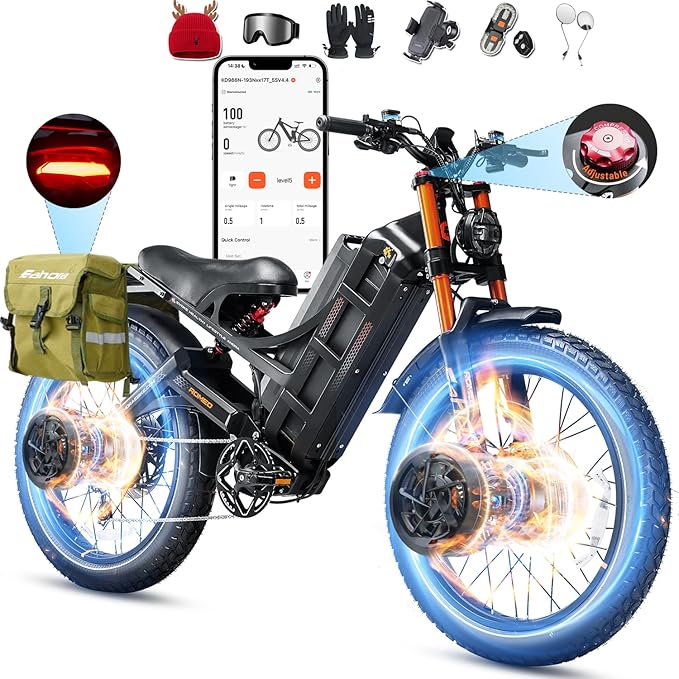
Evaluating High-Power Commuter E-Bikes: What the PASELEC 1000W Offers
The PASELEC model positions itself as a high-performance city cruiser, blending a 1000W peak motor with a substantial 768Wh battery. Buyers considering this e-bike should understand that its claimed 70-mile range and 35MPH top speed place it in a performance tier requiring careful assessment of real-world usage versus manufacturer claims.
Key Considerations Before Buying
- The 1000W motor and 35MPH capability may exceed local e-bike regulations in many US municipalities, so verifying local Class 1, 2, or 3 e-bike laws is essential before purchase.
- The 27.5''x3.0'' tire size and dual hydraulic suspension suggest a focus on urban comfort, but the bike's weight (not listed, but likely 60+ lbs with this battery) impacts portability and handling.
- An 8-speed mechanical drivetrain paired with a high-power hub motor indicates a design prioritizing throttle-assisted riding over traditional pedaling efficiency; assess your preferred riding style.
What Our Analysts Recommend
For e-bikes in this power class, scrutinize the battery's brand and warranty (often omitted in listings), as the 768Wh unit is the most expensive component. Genuine reviews should discuss real-world range at varying assist levels, not just the maximum claim. Quality is also signaled by specifics on the hydraulic brake brands and suspension adjustability.
Electric Bicycles Market Context
Market Overview
The direct-to-consumer e-bike market is saturated with models boasting similar 1000W/35MPH specs, creating intense competition on paper. Brands like PASELEC compete primarily on component bundling (like hydraulic brakes) and battery capacity at specific price points, often sacrificing detailed component transparency.
Common Issues
Common pain points include significant variance between advertised and real-world range, delayed customer service for direct brands, and assembly challenges that affect brake alignment and motor function. High-power hub motors can also strain standard spokes, leading to wheel truing issues.
Quality Indicators
Look for disclosure of motor brand (e.g., Bafang), battery cell type (e.g., LG, Samsung), and brake caliper manufacturer. A quality e-bike will specify these components. The presence of a torque sensor (versus a basic cadence sensor) is a premium feature rarely found at this price point but dramatically improves ride feel.
Review Authenticity Insights
Grade B Interpretation
A 'B' grade with an 11% estimated fake review rate suggests a mostly authentic review pool with some likely incentivized feedback. For a newer brand like PASELEC with only 31 reviews, this is a moderate risk that a small portion of reviews may overstate performance or underreport issues.
Trust Recommendation
Focus on the verified purchase reviews that detail long-term ownership (mentioning months of use) and discuss specific scenarios like hill climbing, range in cold weather, or customer service interactions. Be skeptical of reviews that only parrot marketing specs like '70-mile range' without personal context.
Tips for Reading Reviews
Prioritize reviews that mention the bike's weight, the actual process of assembly and tuning, and any communication with PASELEC support. For high-power e-bikes, reviews discussing speed consistency on hills and battery level accuracy are more valuable than generic 'love this bike' statements.
Expert Perspective
The PASELEC's specifications target a rider seeking a car-alternative for longer urban commutes, with its large battery and high speed being the primary draws. The adjusted 4.00/5 rating from a small review sample indicates generally positive initial experiences, but the limited data volume means long-term reliability of the motor controller, battery management system, and suspension components remains unproven. The dual hydraulic suspension is a notable value-add in its class, aiming to mitigate the harsh ride of a heavy, rigid e-bike frame.
Purchase Considerations
Weigh the necessity of 35MPH speeds against legal and safety implications. The 768Wh battery promises substantial range, but achieving the claimed 70 miles likely requires minimal assist and ideal conditions—plan for 30-50 miles in realistic mixed use. Consider your mechanical aptitude or local bike shop's willingness to service a direct-to-consumer brand for adjustments and repairs.
Comparing Alternatives
Shoppers should compare the PASELEC's component package and warranty terms directly against similar spec'd models from brands like Juiced, Ride1Up, or Aventon, which have larger established review histories.