
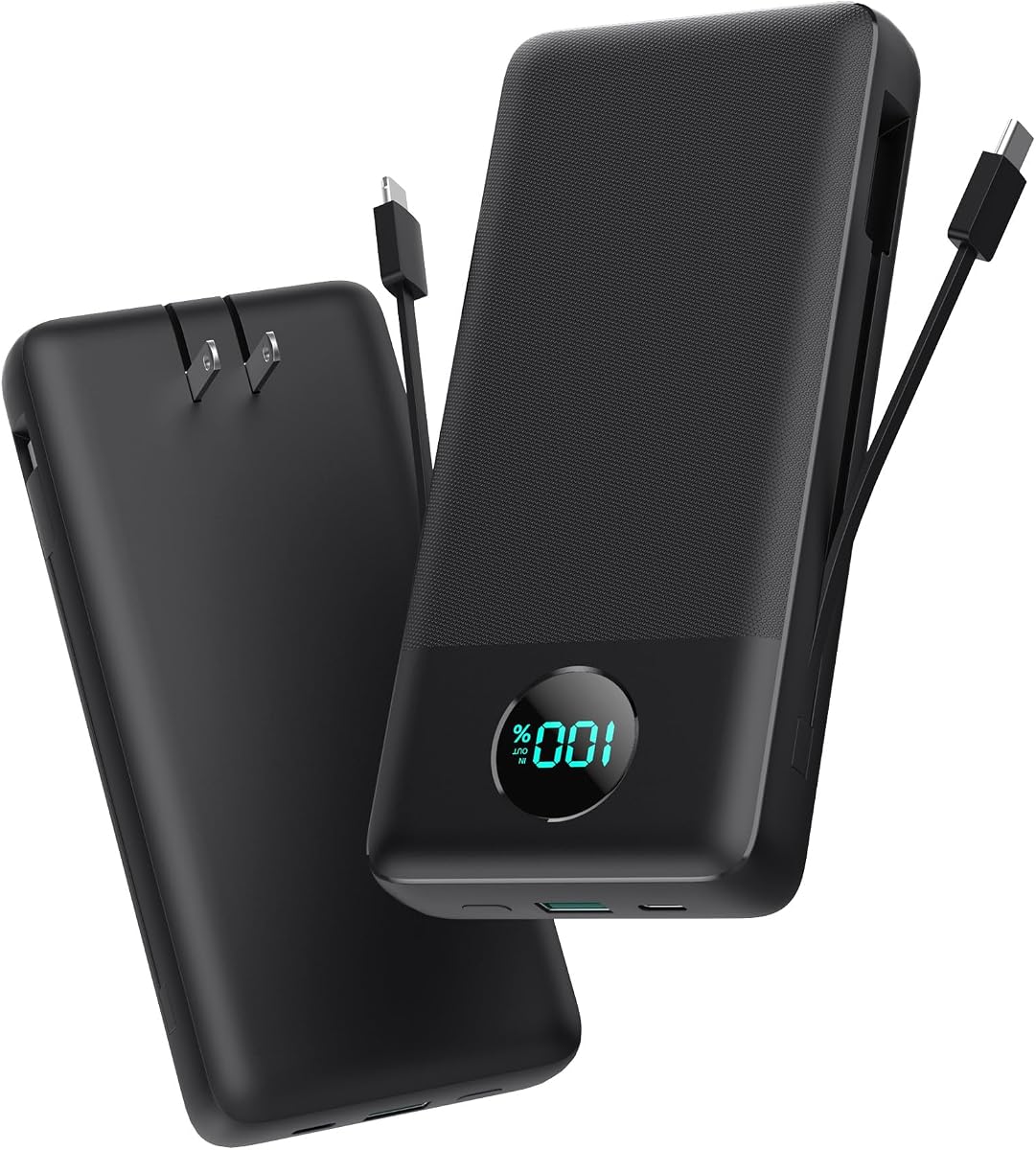
Max Capacity Meets Built-In Convenience: 33800mAh Power Bank Buying Guide
When considering a portable charger with a massive 33800mAh capacity, built-in cables, and an AC wall plug, you're looking at a device designed for extended trips or heavy device usage. This guide focuses on the unique trade-offs of such high-capacity units, including weight, charging speed across multiple ports, and the reliability of integrated components like cables and plugs.
Key Considerations Before Buying
- Capacity vs. Portability: A 33800mAh battery pack is heavy (often over 1.5 pounds) and large, making it ideal for travel or camping but less convenient for daily pocket carry. Ensure the size fits your bag and usage scenario.
- Built-in Cable Durability: With integrated cables, check for reinforced strain relief points and cable length. These are convenient but can be a failure point over time, so look for units with detachable or replaceable cable options if long-term use is a priority.
- Fast Charging Compatibility: The 25W fast charging and QC 4.0 support means faster top-ups for compatible phones, but verify that the power bank's output matches your device's maximum charging speed (e.g., iPhone 16 may need USB-PD, Samsung might use QC). Also, note that charging the power bank itself via the AC wall plug can take several hours at this capacity.
What Our Analysts Recommend
Quality indicators include UL or FCC certification for safety, clear labeling of output wattage per port, and a reputation for accurate capacity ratings (some brands overstate mAh). Look for units with multiple output options (USB-A, USB-C) and pass-through charging capability, which allows you to charge the bank and your devices simultaneously.
Portable Power Banks Market Context
Market Overview
The portable power bank market has shifted toward higher capacities (20,000mAh+) and integrated features like built-in cables and AC plugs to reduce accessory clutter. With 25W fast charging becoming standard for mid-range and flagship phones, consumers now prioritize compatibility with both USB-PD and Qualcomm Quick Charge standards.
Common Issues
Common problems include inaccurate capacity claims (some banks deliver only 60-70% of rated mAh due to energy conversion losses), overheating during fast charging, and built-in cables that fail after repeated bending. Also, high-capacity banks with AC plugs may be banned on some airline flights due to lithium-ion battery size restrictions (over 100Wh).
Quality Indicators
Quality products feature temperature protection circuits, high-quality lithium-polymer cells from reputable manufacturers (e.g., Samsung, LG), and clear documentation of input/output specs. Look for independent safety certifications and a warranty of at least 12 months, which signals manufacturer confidence.
Review Authenticity Insights
Grade B Interpretation
A Grade B authenticity rating with an estimated 10% fake review rate suggests the product has a moderate number of potentially unreliable reviews, but the majority are genuine. This is common for popular power banks, where sellers may inflate ratings with a small batch of incentivized or fake reviews, but the core feedback remains trustworthy.
Trust Recommendation
You can generally trust the overall rating (4.44/5, adjusted to 4.20/5) as a reliable indicator of user satisfaction, but focus on reviews that mention specific usage scenarios (e.g., 'charged my iPhone 16 three times' or 'weight is accurate') and verified purchase tags. Ignore overly generic praise or complaints about packaging.
Tips for Reading Reviews
When reading reviews for high-capacity power banks, look for comments on real-world battery life (e.g., number of full phone charges), charging speed under load, and physical durability after months of use. Pay attention to reviews that mention the built-in cables' performance over time and whether the AC plug works reliably in different outlets.
Expert Perspective
This 33800mAh power bank stands out for its all-in-one design, combining high capacity with built-in cables and an AC plug—a rare combination that simplifies travel charging. The 25W fast charging and QC 4.0 support cover most modern smartphones, though the weight (likely over 1.5 lbs) makes it better suited for backpacks than purses. Given the Grade B authenticity and adjusted 4.20/5 rating, it appears to deliver on its core promises, but buyers should verify airline compliance (over 100Wh may require approval).
Purchase Considerations
Weigh the convenience of built-in cables against potential long-term durability: if you're a frequent traveler who hates carrying separate cables, this is a strong choice. However, if you prioritize the lightest possible pack or need to charge laptops (which require 30W+), explore alternatives with higher wattage outputs.
Comparing Alternatives
Shoppers should compare this model with similarly high-capacity banks from Anker, RAVPower, or Baseus, which may offer higher wattage (45W+ for laptops) or detachable cables, though often without an integrated AC plug.


![LISEN CCC Certified [Metal Alloy] 20000mAh Power Bank for 40+ Hours of Extra Power, TSA Approved Airplane Travel Essentials, 35W Fast Charging for iPhone 17 16 15 Pro Max Samsung Galaxy S26 Ultra iPad](https://m.media-amazon.com/images/I/71kjjVSg5JL._AC_SY300_SX300_QL70_FMwebp_.jpg)


