
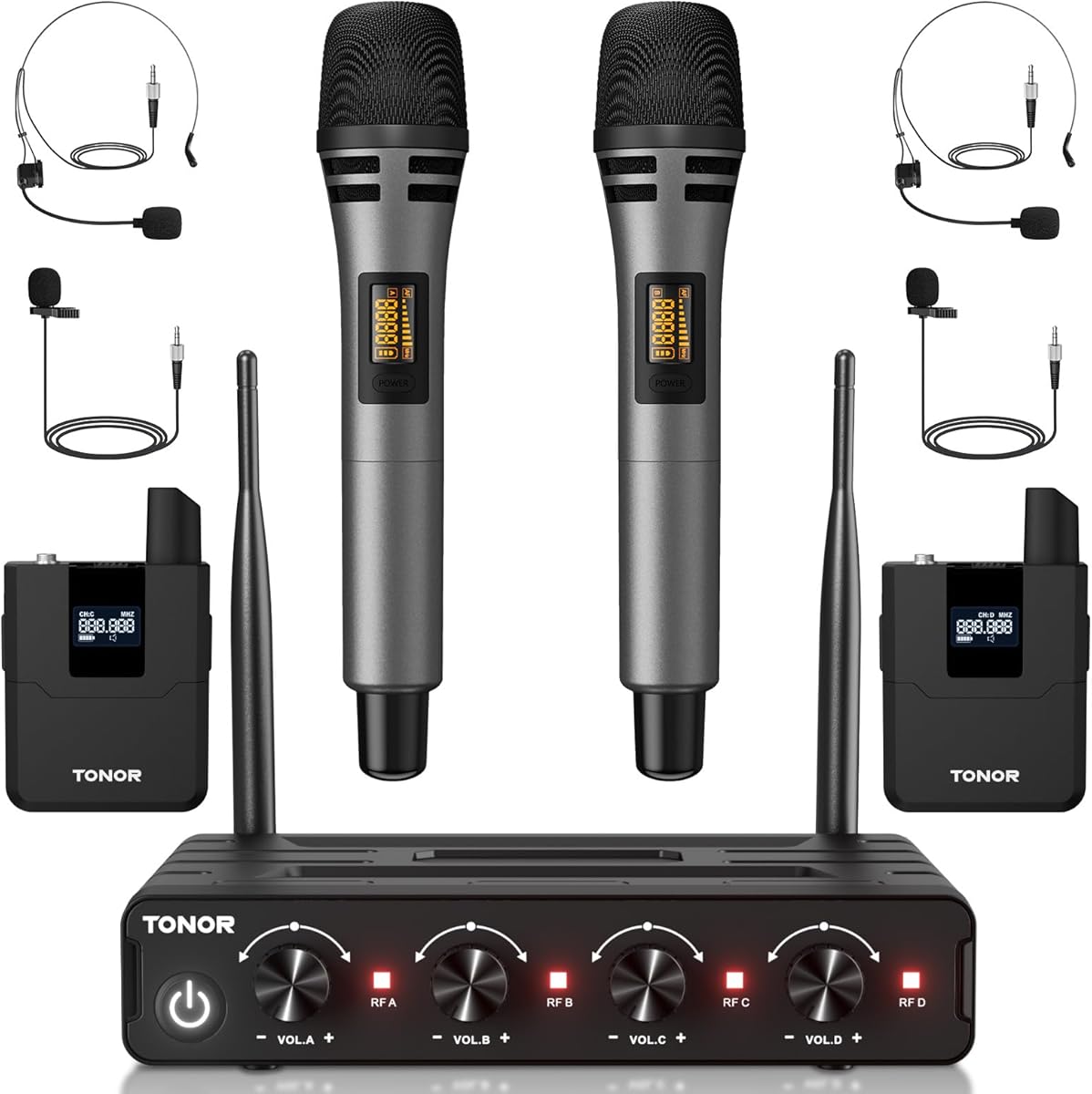
Evaluating a 4-Mic UHF System for Multi-Person Karaoke and Church Applications
The TONOR system's defining feature is its four independent UHF transmitters, which is crucial for group settings like choirs or family karaoke. Buyers should understand that the 10-channel frequency selection is key to avoiding interference, especially when multiple mics are active simultaneously. This setup, with its mix of handheld and lapel options, offers flexibility but requires proper frequency coordination.
Key Considerations Before Buying
- The 60m/200ft UHF range is suitable for most indoor venues, but performance can degrade through walls or in crowded RF environments like urban churches.
- Managing four separate transmitters and their batteries adds logistical complexity compared to single or dual-mic systems, impacting setup time and ongoing maintenance.
- The inclusion of both handheld and lavalier/headset mics makes this a versatile kit, but ensure the lavalier's omnidirectional pickup pattern is suitable for your speaking or singing style.
What Our Analysts Recommend
For UHF systems, prioritize units with multiple selectable channels (like this 10-channel system) to find clear frequencies. Check that the receiver has clear channel status indicators and that the bodypack transmitters have secure, positive-locking connectors for the lapel mics. Robust metal construction on the handheld mics is a good indicator of durability.
Handheld Wireless Microphones Market Context
Market Overview
The budget UHF wireless microphone market is crowded, with systems often competing on channel count and accessory inclusion rather than pure audio fidelity. TONOR positions this 4-mic set as a high-value bundle for users needing multiple simultaneous wireless inputs without professional-grade pricing.
Common Issues
Common problems include interference from other wireless devices (Wi-Fi, Bluetooth), inconsistent audio dropouts at the edge of the stated range, and cheap lavalier mics with fragile cables or poor noise rejection. Battery life management for multiple transmitters is also a frequent user challenge.
Quality Indicators
Look for true UHF diversity reception (two antennas), metal grilles on handheld mics to prevent plosive damage, and receivers with both XLR and 1/4" outputs for speaker compatibility. A genuine 10+ channel system with easy frequency sync between transmitters and receiver indicates better engineering.
Review Authenticity Insights
Grade B Interpretation
A 'B' grade with an 11% estimated fake review rate suggests the majority of feedback is trustworthy, but shoppers should be slightly more critical than with an 'A' grade product. The adjusted rating of 4.40/5 is a more reliable performance indicator than the raw 4.67/5 score.
Trust Recommendation
Focus on verified purchase reviews that detail long-term use over several months, as these will reveal issues like battery contact wear or intermittent interference. Be slightly skeptical of reviews that only praise the unboxing experience or initial sound check without context of real-world application.
Tips for Reading Reviews
Prioritize reviews from users in similar applications—specifically church sound operators, karaoke hosts, or small venue presenters. Look for mentions of specific challenges, like coordinating all four mics during a live event or the actual wireless range in a crowded room, as these provide the most actionable insights.
Expert Perspective
The TONOR system's value proposition is clear: it provides a complete multi-person wireless solution at an entry-level price point. The strong adjusted rating of 4.40/5 from nearly 1,000 reviews indicates it generally meets expectations for its target market. The bundle's versatility is its main strength, but managing four separate transmitters introduces operational complexity that single-mic buyers don't face. The UHF band offers more stability than 2.4GHz systems in congested areas, making it a pragmatic choice for churches or community halls.
Purchase Considerations
Weigh the necessity of having four simultaneous wireless channels against the added setup and battery management. If your use case typically involves only one or two speakers at a time, a simpler dual system might be more efficient. Consider your venue's RF environment; the 10-channel selection is valuable, but in extremely dense wireless areas, a system with automatic frequency scanning might be preferable.
Comparing Alternatives
Shoppers should compare this bundle's channel count and accessory set against dual-system offerings from brands like Moukey or Pyle, which may offer similar audio quality with fewer management headaches.


