
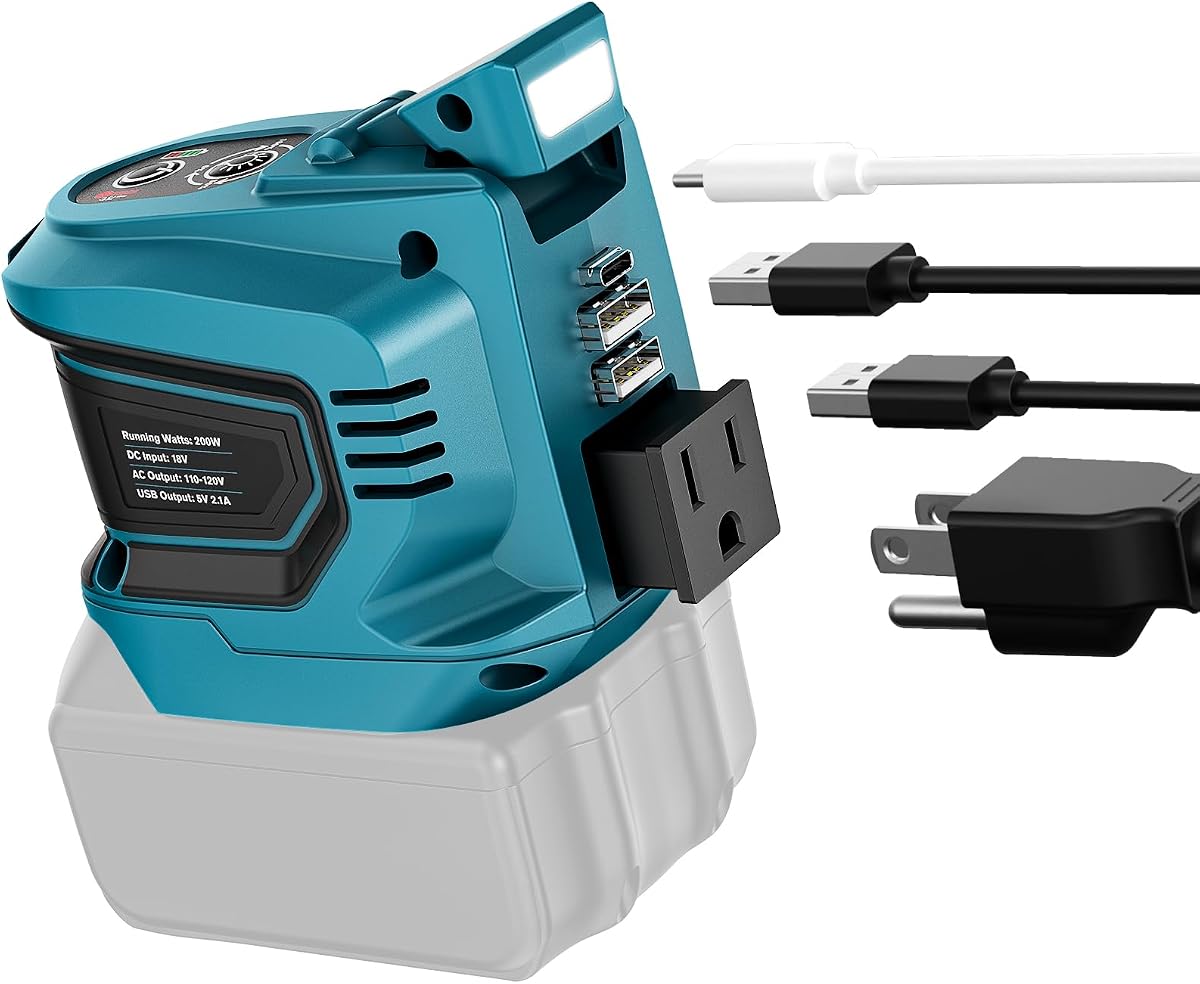
Power Your Tools Anywhere: Ecarke 200W Makita-Compatible Inverter Insights
This portable power inverter turns your Makita 18V batteries into a 110V AC power station, offering a compact solution for outdoor and emergency use. With one AC outlet, dual USB ports, and a USB-C, it’s designed to charge or run small devices like laptops and lights without wall power. Buyers should know it’s a battery converter, not a standalone generator—you supply the Makita battery separately.
Key Considerations Before Buying
- Compatibility: Ensure you have a Makita 18V battery, as this unit doesn’t include one—check your existing battery’s capacity for runtime, like a 3Ah battery providing roughly 30-40 minutes at full 200W load.
- Power Limits: The 200W rating handles small electronics (e.g., phones, fans) but won’t run power tools like drills or saws—ideal for charging, not heavy-duty operation.
- Portability: At just over a pound, it’s ultra-light for camping or emergency kits, but the LED light’s brightness (often around 100 lumens) is for close-up tasks, not area lighting.
What Our Analysts Recommend
Focus on inverter type—modified sine wave (common here) works for most devices but may hum with sensitive electronics. Check USB output specs (e.g., 2.4A per port) for fast charging, and verify the AC outlet’s waveform compatibility with your gear. Build quality, like solid casing and heat dissipation, matters for outdoor durability.
Battery Converters Market Context
Market Overview
The portable power inverter market has surged with demand for off-grid power, especially among DIYers and campers. Products like the Ecarke leverage existing tool batteries to reduce waste and cost, competing with brands like Ryobi and DeWalt. This niche focuses on compact, battery-agnostic solutions for emergency and recreational use.
Common Issues
Users often face runtime disappointments when overloading the inverter, as 200W is modest. Another issue is compatibility—some inverters lack proper voltage regulation for Makita batteries, leading to shutdowns. Fake reviews sometimes inflate claims, so verified purchase indicators are critical.
Quality Indicators
Look for units with over-current and short-circuit protection, as advertised in genuine reviews. Consistent output under load and cooling fans indicate robust design. Check for UL or FCC certifications, which signal safety testing, though many budget inverters skip this.
Review Authenticity Insights
Grade B Interpretation
The Grade B rating with a 10% estimated fake review rate suggests most feedback is genuine, but about 1 in 10 reviews may be incentivized or fabricated. This is typical for Amazon’s power tool accessories, where competition drives some manipulation. The 4.44 average rating is reliable but slightly inflated by these fakes.
Trust Recommendation
Focus on reviews detailing specific use cases, like running a CPAP machine or charging a laptop—these show real-world testing. Verified purchase tags are your best bet; ignore one-liners praising “amazing” performance without context. The adjusted rating of 4.20 is a safer benchmark for decision-making.
Tips for Reading Reviews
For inverters, prioritize reviews that mention runtime with specific battery Ah ratings (e.g., “with a 5Ah battery, I got 45 minutes”). Watch for overly technical jargon without practical details, which may signal fake expertise. Cross-check negative reviews for consistent issues like overheating or port failure.
Expert Perspective
The Ecarke 200W inverter is a solid choice for Makita users needing a lightweight, battery-powered AC source for small electronics, backed by a high volume of authentic positive feedback. Its 4.44 rating (adjusted to 4.20) reflects genuine satisfaction with portability and convenience, though the 10% fake rate warrants caution. The lack of a battery and modest wattage limit its utility to specific scenarios like camping or emergency phone charging, not workshop use.
Purchase Considerations
Weigh your need for 110V output versus simpler USB-only solutions—this adds versatility if you have Makita batteries already. Consider runtime: a 4Ah battery gives about 50 minutes at 100W, so plan for backup batteries. The LED light is a bonus for short tasks but not a primary feature.
Comparing Alternatives
Compare with other battery inverters like the PULIDO or TACKLIFE for different battery ecosystems (e.g., DeWalt or Ryobi), or standalone power stations for higher capacity. The Ecarke excels in Makita-specific integration, so it’s best for existing users.


