
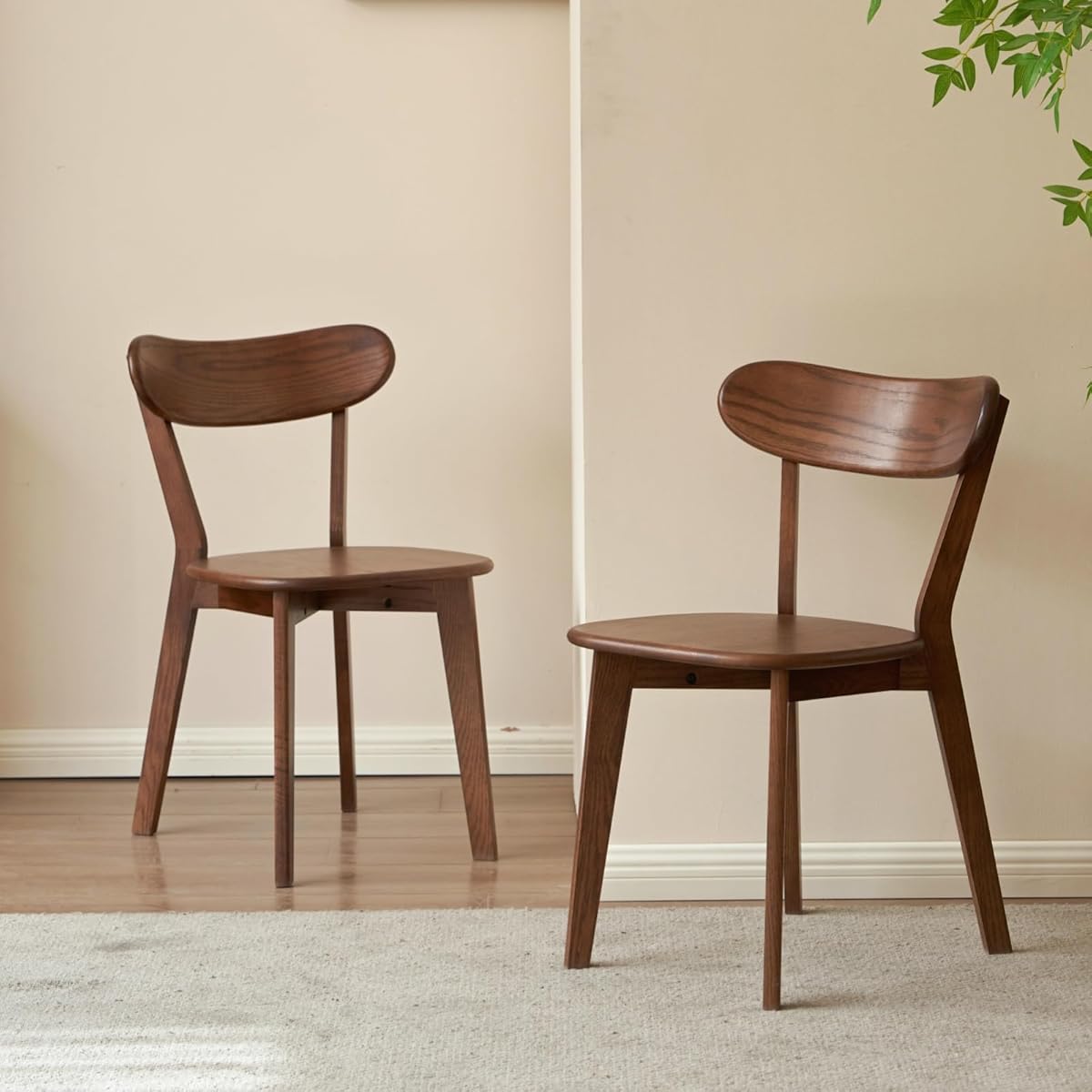
Evaluating Solid Oak Dining Chairs: What Matters Beyond the Walnut Finish
When considering these specific Oak Dining Chairs with curved backrests, buyers should understand that '100% solid wood' construction is the primary value proposition. The walnut finish on oak represents a specific aesthetic choice that affects both durability and maintenance compared to painted or stained alternatives. These chairs' versatility across kitchen, living room, and study spaces indicates a design prioritizing transitional styling over purely traditional or modern aesthetics.
Key Considerations Before Buying
- Oak's inherent grain pattern will show through the walnut finish, creating visual texture that some buyers prefer over uniform painted finishes.
- The curved backrest design affects both comfort and structural integrity—look for reviews mentioning how the curve supports natural spinal alignment during extended meals.
- As a 2PK set, consistency between chairs is crucial; examine reviews for mentions of color variation or dimensional differences between individual pieces.
What Our Analysts Recommend
For solid wood chairs at this price point, examine joinery details—mortise and tenon construction at the leg-to-seat junction indicates better longevity than simple screw assembly. The thickness of the backrest curve where it meets the seat frame reveals structural soundness. Quality walnut finishes on oak should have consistent saturation without completely obscuring the wood's character grain.
Chairs Market Context
Market Overview
The mid-price solid wood dining chair market is increasingly competitive, with many manufacturers using 'solid wood' terminology while incorporating engineered components. Genuine 100% solid oak construction at accessible price points typically requires direct-to-consumer models like this product. Walnut finishes on lighter woods like oak have gained popularity as consumers seek darker wood tones without the cost of actual walnut lumber.
Common Issues
Common problems in this category include finish inconsistency across production batches, wood movement causing joint squeaks over time, and seat comfort that doesn't match aesthetic appeal. Many curved-back designs sacrifice lumbar support for visual appeal, leading to discomfort during longer dining sessions. Assembly quality varies significantly even among solid wood chairs, with pre-drilled hole alignment being a frequent pain point.
Quality Indicators
Quality solid wood chairs demonstrate consistent grain orientation in curved elements, indicating proper steam bending rather than pieced construction. The backrest-to-leg connection should show clean joinery without visible filler. A quality walnut finish on oak will have depth and slight variation, not a flat, painted appearance. Weight distribution matters—well-constructed oak chairs have substantial heft without feeling cumbersome.
Review Authenticity Insights
Grade B Interpretation
A Grade B authenticity rating with 11% estimated fake reviews suggests generally reliable feedback with some promotional content. The 4.40 adjusted rating (down from 4.67) indicates genuine satisfaction sits slightly below the surface presentation. For dining furniture, this authenticity level is typical—higher than budget particle board options but below premium handmade pieces.
Trust Recommendation
Focus on reviews discussing specific experiences like 'six months of daily use' or mentioning particular assembly steps. Verified purchaser status is especially important for furniture, as unverified reviews often lack long-term wear observations. The coherence across reviews regarding the curved backrest's comfort suggests this is a genuine product strength worth considering.
Tips for Reading Reviews
Prioritize reviews that mention the chair's performance in actual dining scenarios rather than just aesthetic appreciation. Look for comments about seat height relative to standard tables (18-19 inches) and feedback on finish durability against spills. Reviews discussing weight capacity or how the chair accommodates different body types provide more actionable insights than general compliments.
Expert Perspective
These chairs represent a solid value proposition in the genuine solid wood category, with the curved backrest design differentiating them from basic straight-back alternatives. The 4.40 adjusted rating from verified purchasers indicates consistent satisfaction, particularly regarding construction quality relative to price. The walnut-on-oak approach offers aesthetic appeal while leveraging oak's structural reliability, though the finish may require more care than darker stains that better conceal wear. The versatility across multiple rooms suggests thoughtful proportioning that works in various spatial contexts.
Purchase Considerations
Consider whether the specific curved profile aligns with your seating preferences—some find curved backs more comfortable for leaning, while others prefer straight vertical support. The walnut finish will develop a patina differently than painted chairs, which some appreciate as character development and others see as wear. Assembly requirements versus fully assembled delivery affect both immediate convenience and long-term structural integrity.
Comparing Alternatives
Shoppers should compare these specifically against other solid oak chairs in similar price ranges, noting differences in backrest angle, seat thickness, and finish application methods.


