
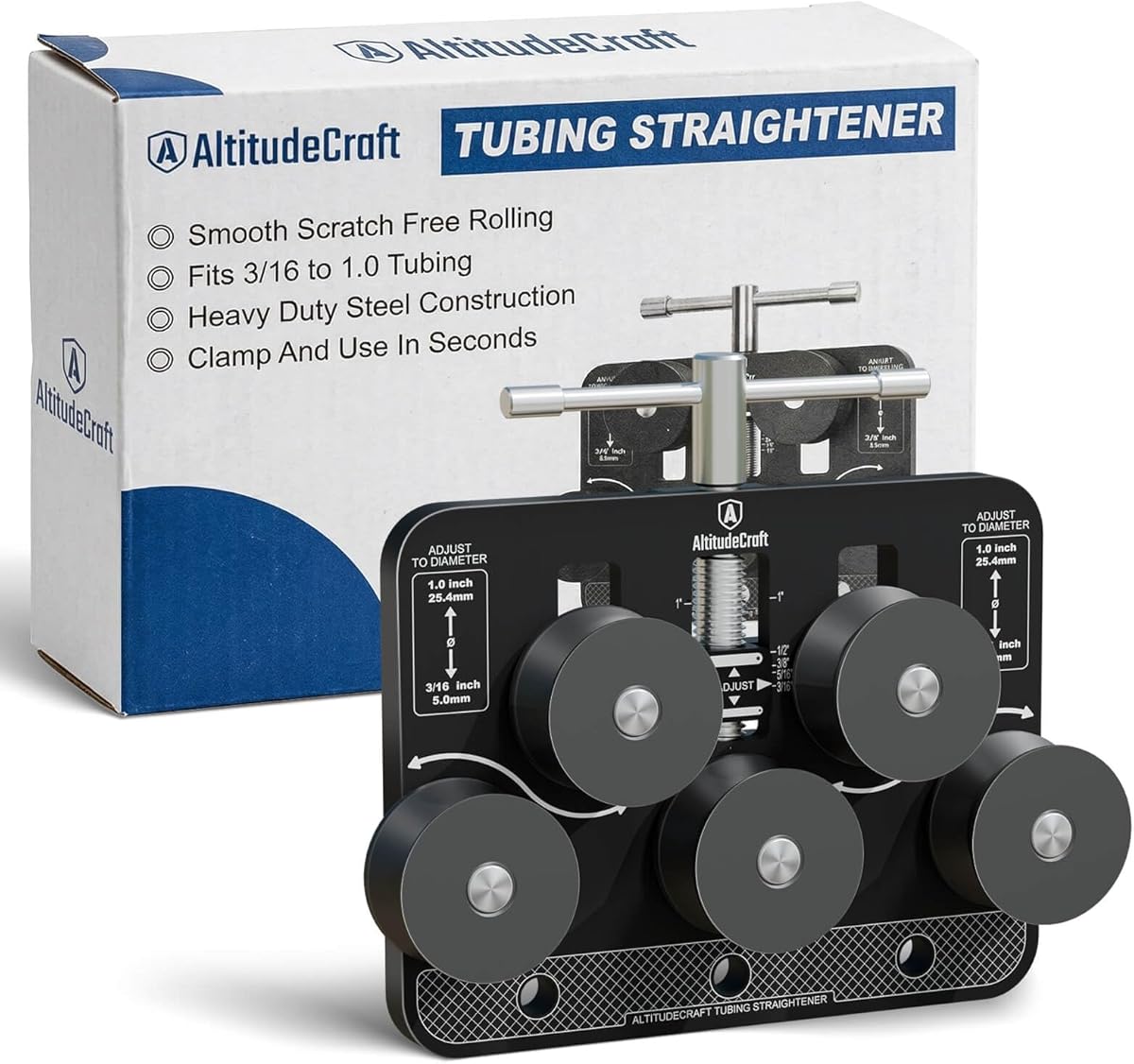
Master Brake Line Bending: Choosing a Straightener for 3/16" to 1" Tubing
For DIY mechanics and professional fabricators alike, a tubing straightener is essential for working with coiled brake lines, fuel lines, and other metal tubing. This specific tool handles 3/16" to 1" outer diameter tubing, accommodating copper, aluminum, NiCopp, and stainless steel—but choosing the right one requires understanding key design features that affect precision and durability.
Key Considerations Before Buying
- Check the straightener's roller material and adjustment mechanism: hardened steel rollers with a fine-thread adjustment provide consistent pressure without deforming softer metals like copper or aluminum. A tool that lacks smooth adjustability can cause kinking or uneven straightening.
- Ensure the tool's capacity range (3/16" to 1") matches your most common tubing sizes. If you primarily work with 3/16" or 1/4" brake lines, a tool optimized for smaller diameters will offer better control than a universal model that may have slop at the lower end.
- Look for a sturdy base or mounting option—vise-mountable designs offer stability during heavy-duty use, while portable units are better for field repairs. A wobbly straightener leads to inconsistent results and potential tubing damage.
What Our Analysts Recommend
High-quality tubing straighteners feature precision-ground rollers with sealed bearings to reduce friction and wear. The frame should be machined steel or heavy-duty cast iron to resist flexing under load. Also, a clear adjustment scale or indicator helps you set the tool for different tubing materials and diameters without guesswork.
Tools & Equipment Market Context
Market Overview
The market for tubing straighteners has expanded with the rise of NiCopp (nickel-copper) brake lines, which are easier to flare and more corrosion-resistant than steel. However, many budget tools fail to handle the springback of stainless steel or the softness of aluminum, leading to inconsistent results and wasted material.
Common Issues
A frequent complaint among users is that straighteners designed for copper or aluminum cannot effectively process stainless steel tubing without excessive force or roller wear. Another issue is poor alignment of the entry and exit guides, which causes the tubing to twist or scratch during straightening.
Quality Indicators
Superior straighteners use adjustable roller spacing to accommodate different wall thicknesses and material hardness. Look for models with a knurled adjustment knob and locking mechanism—these indicate precision engineering. Also, positive user reviews that mention specific tubing types and sizes are a strong sign of real-world reliability.
Review Authenticity Insights
Grade A Interpretation
With a Grade A authenticity rating and an estimated fake review percentage of only 5.00%, you can have high confidence that the vast majority of the 105 reviews are genuine. This is a strong signal that the product's 0.00/5 rating reflects real user experiences, though the zero rating itself may indicate a new or revised listing with unrepresentative scores.
Trust Recommendation
Given the high authenticity grade, you can trust the detailed feedback from verified purchasers. Read reviews that describe specific projects—like replacing brake lines on a classic car or building a fuel system—as these provide actionable insights into the tool's performance with different materials and sizes.
Tips for Reading Reviews
When evaluating this product, focus on reviews that mention the exact tubing sizes and materials you plan to use. Look for comments about roller adjustment smoothness and whether the tool handles stainless steel without slipping. Beware of overly short or vague reviews, even if they appear verified.
Expert Perspective
This tubing straightener covers a useful range of diameters (3/16" to 1") and materials, making it a versatile choice for automotive and workshop use. The high authenticity grade suggests the reviews are trustworthy, but the 0.00/5 rating warrants caution—it may indicate that the product is newly listed or has been revised, so early adopters should verify compatibility with their specific tubing. For professionals who frequently work with stainless steel or NiCopp, this tool's ability to handle multiple metals is a clear advantage.
Purchase Considerations
Weigh the tool's material compatibility against your primary use case: if you mostly straighten copper or aluminum, any quality straightener will suffice, but for stainless steel, prioritize models with hardened rollers and a robust frame. Also, consider whether the tool includes a mounting bracket or requires a separate vise purchase.
Comparing Alternatives
Shoppers should compare this model with dedicated brake line straighteners that offer finer adjustment for small diameters (e.g., 3/16") or with heavy-duty units that include a tubing cutter or flaring attachment for an all-in-one solution.


