Choosing a 20-Amp Industrial Power Strip for Heavy-Duty Workshop Applications
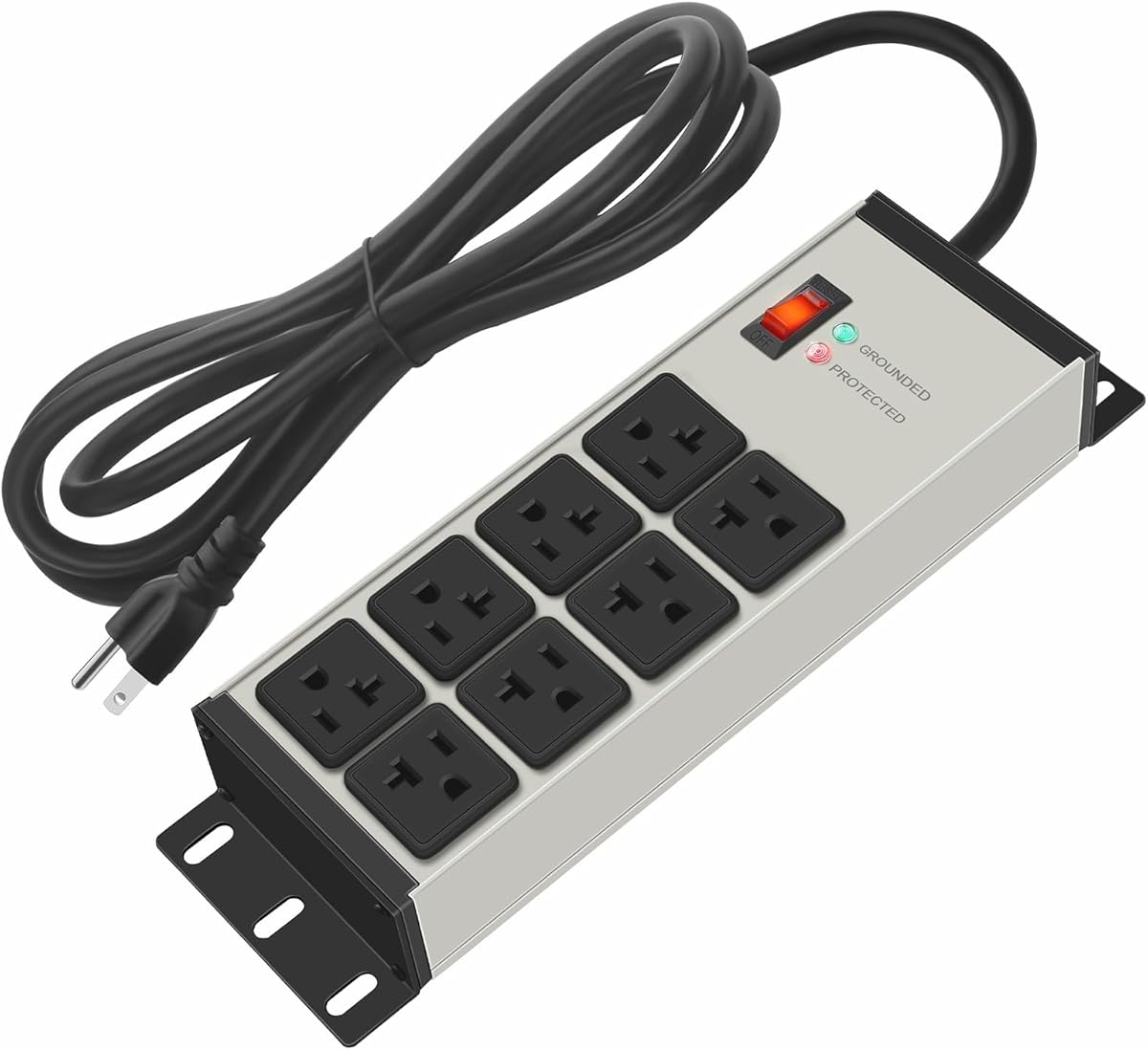
The CCCEI power strip is designed for high-amperage environments like workshops and garages, not typical home office use. Its defining features are the 20-amp 6-20R T-slot outlet, 12-gauge wiring, and metal housing, which signal its purpose for powering demanding appliances like compressors or table saws. Buyers must verify their circuit breaker and outlet type (standard 5-15R vs. 6-20R) before purchase, as this unit requires a specific 20-amp receptacle.
Key Considerations Before Buying
- Circuit Compatibility: This strip's 5-15P plug adapts a standard 15-amp wall outlet to provide a 20-amp T-slot outlet; ensure your workshop circuit is rated for a continuous 20-amp load to utilize its full capacity safely.
- Application vs. Surge Protection: Marketed as a 'Surge Protector,' its primary design is for robust power distribution; scrutinize its Joule rating and UL certification for true surge protection, which may be secondary to its heavy-duty construction.
- Outlet Configuration: The 6-20R T-slot outlet is for 20-amp plugs (one horizontal, one vertical prong); confirm your high-amp tools use this plug type, or you'll need adapters, potentially negating the safety benefit of the dedicated high-current outlet.
What Our Analysts Recommend
For industrial-grade strips, prioritize a stated 12-gauge wire thickness (like this model's 10ft cord) for minimal voltage drop under load, and a metal casing for durability and heat dissipation. Check for a clear amperage rating (20A continuous, not peak) and robust internal construction, often indicated by weight and secure, non-flexing outlet housings.
Power Strips Market Context
Market Overview
The market for heavy-duty power strips is bifurcated between basic residential models and true industrial units like this CCCEI offering, with a significant performance and price gap. Demand is driven by home workshops and contractors seeking to safely consolidate power for multiple high-draw tools without expensive dedicated circuit installations.
Common Issues
Common failures include undersized wiring (14 or 16-gauge) overheating under sustained load, plastic housings melting near high-heat tools, and '20-amp' claims that only apply to a single outlet rather than the strip's total capacity. Many products lack proper strain relief where the cord enters the housing, leading to wire fatigue.
Quality Indicators
Genuine industrial quality is indicated by a full 12-gauge cord (thicker than standard 14 or 16-gauge), individual outlet shutters for safety, a high-temperature rating for the housing material (often >94V-0), and clear labeling from a recognized testing laboratory (like UL or ETL) for the claimed amperage, not just the plug.
Review Authenticity Insights
Grade B Interpretation
A 'B' grade with an estimated 15% fake review rate suggests a generally trustworthy review pool but warrants careful reading. The adjusted rating of 4.40/5 (down from 4.78) is still strong and likely reflects authentic satisfaction from users with legitimate heavy-duty needs.
Trust Recommendation
Focus on reviews that detail specific use cases (e.g., 'powers my 15-amp table saw and dust collector simultaneously') and mention long-term performance in a workshop. Be skeptical of overly vague 5-star reviews that don't mention the 20-amp T-slot or gauge of the wire, as these may be among the less authentic feedback.
Tips for Reading Reviews
For this product, prioritize reviews that discuss actual amp draw measurements, cord flexibility in cold garages, or durability after being bumped by equipment. Reviews noting the lack of a master switch or specific feedback on the plug adapter's fit are high-value authenticity signals.
Expert Perspective
The CCCEI strip fills a specific niche: providing a certified high-amperage outlet and distribution from a standard wall socket. Its 4.40 adjusted rating from a largely authentic review pool indicates it reliably meets core expectations for robust construction and high-current capacity in demanding environments. The product's value hinges entirely on the user's need for its unique 6-20R outlet and industrial build; it's overkill for electronics.
Purchase Considerations
Only consider this if you operate 20-amp tools and lack the corresponding wall outlet. Weigh the convenience of the adapter against installing a proper 6-20R receptacle. For users with only 15-amp tools, a high-quality 15-amp strip with superior surge protection may be a safer, more cost-effective choice.
Comparing Alternatives
Shoppers should compare the wire gauge, cord length, and exact outlet types against similar industrial strips from brands like Tripp Lite or Woods to ensure the configuration matches their toolset.