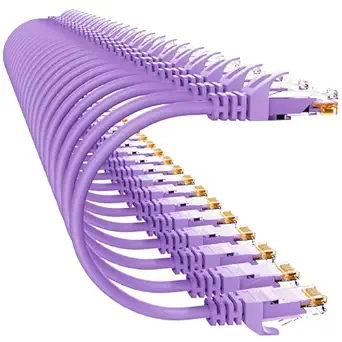
Buying a 150ft Ethernet Cable: What Matters Most
A 150-foot Ethernet run is a serious commitment—long enough that signal degradation, cable jacket quality, and installation environment become real concerns. This Cat6/Cat5E cable claims 10Gbps compatibility, 24AWG conductors, and direct-burial waterproofing, so buyers should verify whether those specs fit their actual network setup.
Key Considerations Before Buying
- Length and signal integrity: At 150 feet (about 45 meters), you're well within the 100-meter limit for Ethernet, but 10Gbps speeds over Cat6 typically max out around 55 meters. If you need full 10Gbps over this distance, consider Cat6a or Cat7 instead.
- Indoor vs. outdoor use: This cable is rated for direct burial, waterproofing, and UV resistance, making it suitable for running between buildings or underground. However, if you're only using it indoors, you may pay a premium for durability features you don't need.
- Connector and shielding: The snagless RJ45 connectors protect the clip during pulls through walls or conduit. Check whether the cable is shielded (STP) or unshielded (UTP)—this listing doesn't specify, which matters in electrically noisy environments.
What Our Analysts Recommend
Look for solid copper conductors (not CCA/copper-clad aluminum) for long runs, as they carry signals better and resist corrosion. Verify the cable's category rating (Cat6 vs. Cat5E) and whether it's UL-listed or ETL-verified for safety. For outdoor use, confirm the jacket material is LLDPE or similar for UV and moisture resistance.
Cat 5e Cables Market Context
Market Overview
The Ethernet cable market is flooded with options, from budget Cat5E to premium Cat8, with prices varying widely. Many sellers inflate specs, so buyers must distinguish between true Cat6 performance and rebranded Cat5E. The shift toward 10Gbps home networks is driving demand for higher categories, but most homes still run gigabit.
Common Issues
Common problems include cables that fail to deliver advertised speeds due to thin conductors (e.g., 26AWG or 28AWG) or CCA wire. Outdoor cables often degrade quickly if not truly UV-resistant or waterproof. Another issue is misleading length—some cables are shorter than stated.
Quality Indicators
Quality cables use pure copper conductors, have clear category markings on the jacket, and pass Fluke tests. Heavier gauge (23-24AWG) indicates better performance over distance. Look for certifications like UL, ETL, or RoHS compliance.
Review Authenticity Insights
Grade A Interpretation
This product has an A authenticity grade, meaning the review base is highly trustworthy. The adjusted rating of 4.70/5 (down from 4.89) accounts for an estimated 8% fake reviews, which is low. This suggests the vast majority of feedback is genuine.
Trust Recommendation
You can trust the overall sentiment, but still scan for reviews that mention specific use cases like burial depth or speed tests. The high rating likely reflects real satisfaction, but individual needs vary.
Tips for Reading Reviews
Focus on reviews that detail installation experience, speed consistency, and durability over time. Look for mentions of actual data transfer rates and whether the cable met expectations for length and performance.
Expert Perspective
This 150ft Ethernet cable appears to be a solid choice for long-distance runs where outdoor durability is needed. The 24AWG gauge and Cat6 rating suggest decent performance for gigabit networks, but the 10Gbps claim is optimistic over this length. The high review rating and authenticity grade indicate reliable quality.
Purchase Considerations
Consider your network speed needs: if you're running 10Gbps, you may need a higher category. Also, check if the cable is shielded if you have interference. The direct-burial feature is a plus for outdoor installations, but ensure it's truly rated for your climate.
Comparing Alternatives
Compare with Cat6a or Cat7 cables for future-proofing, and check if shorter lengths are available if you don't need 150ft. Brands like Cable Matters or Monoprice offer similar specs with clear certifications.