
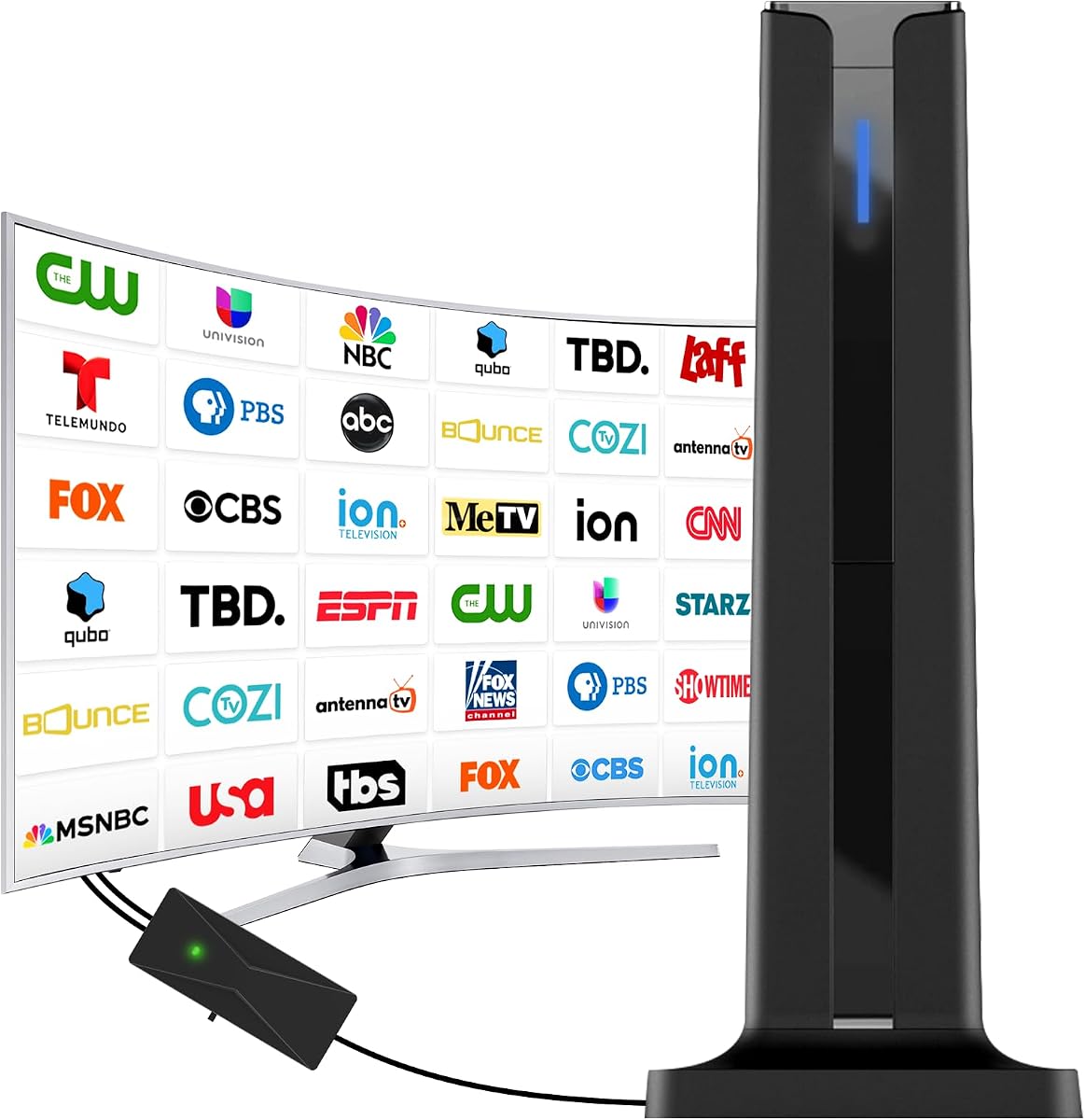
Indoor TV Antennas: Cut the Cord Without the Guesswork
This Digital TV Antenna for Smart TV Indoor with a 3M adhesive stick base is designed for renters and cord-cutters who want free over-the-air channels without drilling holes or climbing ladders. Before buying, it helps to understand how indoor reception, mounting flexibility, and signal range actually affect what you'll watch.
Key Considerations Before Buying
- Reception depends heavily on distance to broadcast towers and local terrain; an indoor antenna like this typically works best within 25–50 miles of major stations, so check a coverage map before assuming it will pull in every channel.
- The 3M stick base offers tool-free mounting on walls, windows, or shelves, but adhesive performance can vary with surface texture, humidity, and temperature, so plan for a backup mounting spot if the first placement underperforms.
- Placement matters more than price: moving the antenna near a window, on an upper floor, or away from metal objects and thick walls often improves reception more than upgrading to a pricier model.
What Our Analysts Recommend
Prioritize antennas with a clearly stated VHF/UHF range, a detachable or repositionable mount, and a coaxial cable long enough to reach your TV from a window or exterior wall. Look for reviews that mention specific channel counts and local reception rather than vague praise like 'works great.'
TV Antennas Market Context
Market Overview
The indoor TV antenna market has grown as more households drop cable and streaming costs rise, with flat, adhesive-backed models becoming popular for their low profile and easy setup. However, performance still varies widely by location, and no single antenna works perfectly for every home.
Common Issues
Buyers frequently complain about missing channels, pixelation during bad weather, and adhesive mounts failing on painted or textured walls. Another common frustration is unrealistic range claims, since indoor antennas are often marketed with maximum mileage figures that assume ideal, unobstructed conditions.
Quality Indicators
Quality indoor antennas usually specify their frequency range (VHF and UHF), include a decent-length coaxial cable, and have a mount that can be repositioned without losing stickiness. Reviews that mention specific channels, cities, or comparisons to older antennas are stronger signals of real-world performance than generic five-star ratings.
Review Authenticity Insights
Grade B Interpretation
A Grade B with an estimated 15% fake review rate means most reviews are likely genuine, but a noticeable minority may be incentivized or inflated. The adjusted rating of 3.90/5 versus the 4.22/5 Amazon average suggests that once suspicious reviews are removed, satisfaction is solid but not exceptional.
Trust Recommendation
Trust the product's overall value, but verify with reviews that include photos, specific channel lineups, or detailed installation stories. Pay attention to critical reviews mentioning adhesive failure or weak VHF reception, since those issues appear repeatedly in genuine feedback.
Tips for Reading Reviews
Skim past short, generic five-star reviews and focus on ones that name a city, distance to towers, or compare performance to a previous antenna. Look for patterns in three-star reviews, which often give balanced pros and cons without extreme hype.
Expert Perspective
This antenna is a reasonable entry-level option for urban and suburban users within moderate range of broadcast towers who want a no-drill, low-cost way to access local channels. The 3M stick base is a convenience highlight, but it also introduces a potential weak point if the mounting surface isn't smooth or clean. With an adjusted rating near 3.9, it performs adequately for many buyers but isn't a top-tier performer for fringe reception areas.
Purchase Considerations
Before buying, confirm how far you live from local transmitters and whether your desired channels broadcast on VHF or UHF, since indoor antennas can struggle with VHF. If you rent or can't mount outdoors, this adhesive model is worth trying, but keep expectations realistic for distant or weak signals.
Comparing Alternatives
Shoppers should compare this with amplified indoor antennas and window-mounted models that may offer better range for a similar price, especially if initial reception is inconsistent.


