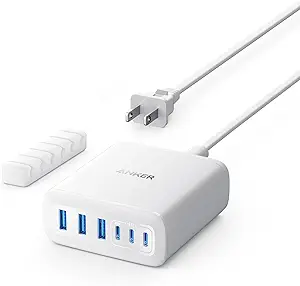
Master Multi-Device Charging with a 420W 10-Port Power Station
When your household juggles MacBooks, iPhones, Androids, iPads, and tablets, a single charger won't cut it. The Zobirez 420W station promises to replace a tangle of bricks with one organized hub, but buyers need to weigh total power distribution across 10 ports against their actual device needs.
Key Considerations Before Buying
- Check per-port wattage: With 420W total, ensure high-power ports (e.g., 60W+ for laptops) match your devices; lower ports may only fast-charge phones.
- Assess your device mix: This station works best for families with varied gadgets—MacBook users need a dedicated high-watt port, while phones can share lower-power USB-C and USB-A outlets.
- Consider physical layout: A 10-port dock must accommodate bulky laptop plugs and slim phone cables without blocking adjacent ports; verify spacing in user photos.
What Our Analysts Recommend
Quality indicators include GaN (gallium nitride) technology for efficient heat dissipation, independent port safety chips to prevent overcharging, and a sturdy base that won't tip when cables are inserted. Look for certifications like UL or FCC that confirm electrical safety and compliance.
Charging Stations Market Context
Market Overview
The multi-device charging station market has exploded as households own an average of 4-5 devices per person. High-wattage hubs (300W+) are now common, but many struggle to deliver advertised power when all ports are active, making real-world testing critical.
Common Issues
A frequent complaint is 'shared power' where plugging in a laptop drops phone charging speeds. Another is heat buildup under sustained high load, which can degrade batteries over time. Buyers also report that some stations fail to negotiate fast-charging protocols with non-Apple or older devices.
Quality Indicators
Premium stations use active cooling (fans or heat sinks) and independent voltage regulators per port. Verified third-party teardowns and consistent output readings from review sites like ChargerLab signal reliability. Brand track record and warranty length (2+ years) also matter.
Review Authenticity Insights
Grade B Interpretation
A Grade B with 10% estimated fake reviews means the vast majority of feedback is authentic, but about 150 reviews may be inflated. This is typical for high-selling Amazon items; the core 90% of genuine reviews give a trustworthy picture of real-world performance.
Trust Recommendation
Focus on verified purchase reviews that describe specific device combinations (e.g., 'MacBook Pro 16” and iPhone 14 simultaneously') and mention charging speeds or heat. Ignore short, vague 5-star reviews or those with identical phrasing.
Tips for Reading Reviews
Sort by 'most recent' to catch any quality changes over time, and look for reviews that include photos of their setup—these often reveal cable management or port spacing issues. Be cautious of reviews that only praise 'fast charging' without naming the device tested.
Expert Perspective
With a 4.67/5 rating and a 4.40/5 adjusted score after filtering suspicious reviews, the Zobirez 420W station shows strong genuine satisfaction, particularly for families with mixed device ecosystems. The 10% fake review rate is manageable, but buyers should verify that their high-power devices (like a 96W MacBook charger) get adequate dedicated wattage. The station's real strength lies in its ability to consolidate charging for a whole household, though power-sharing trade-offs are inevitable.
Purchase Considerations
Weigh the convenience of a single hub against the potential need for two separate high-wattage ports if you have multiple laptops. If your devices are mostly phones and tablets, the 420W capacity is overkill—a lower-watt station may suffice. Also, factor in desk space: this is a sizable dock.
Comparing Alternatives
Shoppers should compare this with Anker's PowerPort series for reliability or Satechi's 165W dock for a more compact, laptop-focused option, especially if they prioritize individual port performance over total device count.