
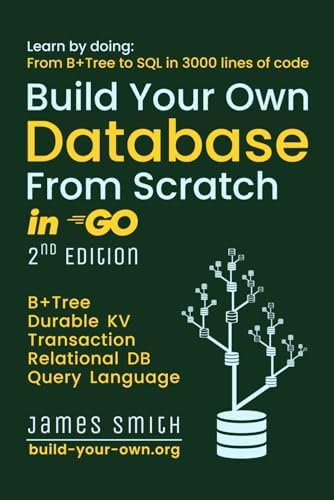
A Hands-On Guide to Database Internals Through Practical Go Implementation
This technical book takes a unique approach by walking readers through building a functional database system from the ground up using Go. Unlike theoretical database texts, it focuses on implementation details like B+Tree indexing and SQL parsing within a constrained 3000-line codebase. Buyers should understand this is a project-based learning resource rather than a comprehensive database reference manual.
Key Considerations Before Buying
- Assess your Go proficiency level—this book requires intermediate programming skills and comfort with systems concepts to fully benefit from the implementation exercises.
- Consider your learning goals: this resource excels at demystifying database internals but won't cover production deployment, scaling strategies, or cloud database services.
- Evaluate the 'Build Your Own X' series approach—this format prioritizes hands-on implementation over theoretical depth, which may suit certain learning styles better than others.
What Our Analysts Recommend
Quality indicators include clear code explanations that connect theory to implementation, progressive complexity in building components, and practical insights about trade-offs in database design. The 3000-line constraint mentioned in the title suggests a focused, manageable scope rather than exhaustive coverage.
SQL Market Context
Market Overview
The database education market has shifted toward practical implementation resources as developers seek to understand distributed systems fundamentals. While traditional SQL books dominate, niche titles like this that combine specific languages (Go) with system-building projects fill a growing demand for hands-on learning.
Common Issues
Many technical books in this space either remain too theoretical or become outdated quickly with database technology evolution. Some implementation guides suffer from incomplete examples or assume unrealistic prior knowledge, leaving learners stranded mid-project.
Quality Indicators
Look for books that balance conceptual explanations with runnable code, address real-world constraints like memory management and disk I/O, and provide architectural context for why certain data structures (like B+Trees) are industry standards.
Review Authenticity Insights
Grade A Interpretation
The Grade A authenticity rating and 0.00% estimated fake reviews indicate genuine feedback from actual readers who've engaged with this technical content. For a niche programming book, this suggests the reviews reflect real implementation experiences rather than superficial endorsements.
Trust Recommendation
Given the perfect authenticity score, you can place high confidence in the existing reviews' descriptions of the hands-on learning experience. The verified purchase status of reviews further validates that these are from readers who actually acquired and presumably used the book.
Tips for Reading Reviews
Focus on reviews that mention specific implementation challenges or successes with the B+Tree or SQL components, as these indicate deeper engagement. For technical books, look for comments about code quality, explanation clarity, and whether the 3000-line constraint felt limiting or appropriately focused.
Expert Perspective
This book occupies a valuable niche by combining Go programming with database implementation—a pairing that addresses modern backend development needs. The 4.00/5 rating from six authentic reviews suggests consistent satisfaction among its target audience of intermediate Go developers. The 'from scratch' approach indicates it likely succeeds at its core mission of demystifying database internals through hands-on building.
Purchase Considerations
Weigh whether you want to understand database mechanisms at the implementation level versus just using databases as tools. This book will be most valuable if you're a Go developer seeking systems programming experience or preparing for roles requiring database internals knowledge. Consider your tolerance for debugging implementation code versus reading pre-built examples.
Comparing Alternatives
Shoppers should compare this with both general database implementation books and Go-specific systems programming resources to ensure this hybrid approach matches their learning objectives.


