
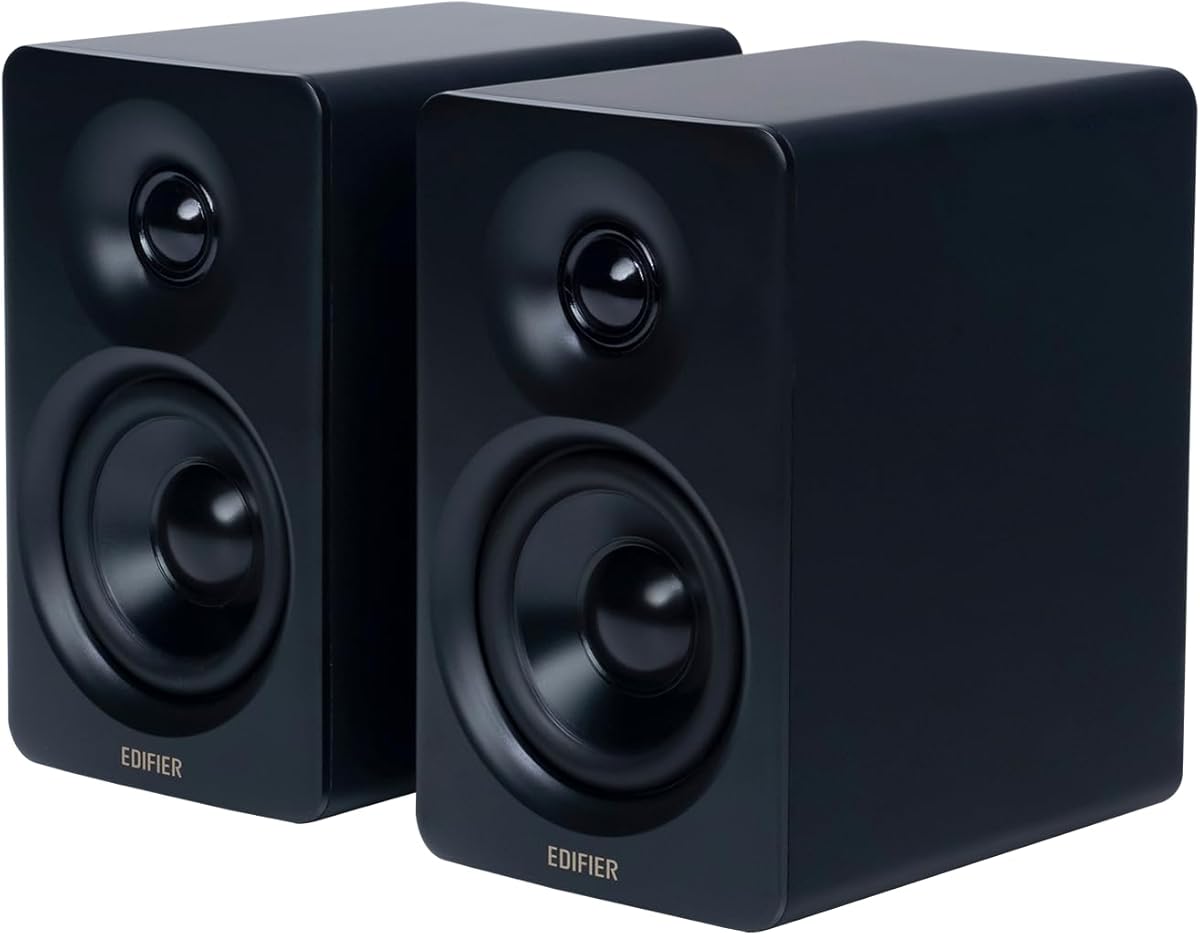
Evaluating Edifier's M60: A Compact Desktop Speaker with Hi-Res Wireless Ambitions
The Edifier M60 presents a specific proposition: packing 66W RMS power, Hi-Res Audio certification, and LDAC Bluetooth 5.3 into a compact desktop form. For buyers, this means weighing the promise of high-fidelity wireless audio against the physical limitations of a small cabinet housing a 3-inch mid-bass driver and 1-inch tweeter. Your decision hinges on whether this technical specification sheet translates to a meaningful audio upgrade for your workspace.
Key Considerations Before Buying
- The 66W RMS power rating is substantial for a compact speaker; assess whether you need that volume potential in a near-field desktop environment or if it risks distortion at close range.
- LDAC and Hi-Res Wireless Audio support are premium features for Bluetooth streaming; verify your source devices (phone, computer) actually support these codecs to utilize them.
- The dual-input design (USB-C and Aux) offers connectivity flexibility; consider which input you'll use primarily, as the audio quality and power delivery may differ between them.
What Our Analysts Recommend
In compact powered speakers, listen for a balanced frequency response where the 3-inch woofer provides clean mid-bass without muddying the mids, and the 1-inch tweeter delivers clear highs without sibilance. Build quality is evident in the cabinet's resonance control—knock on it; a hollow, lightweight feel can indicate unwanted vibration. For a product like the M60, the implementation of its digital features (LDAC, USB-C audio) is as critical as the driver specs.
Computer Speakers Market Context
Market Overview
The compact desktop speaker market is fiercely competitive, split between budget basic models and premium, feature-rich units like the Edifier M60 aiming to justify higher price points with audiophile-grade codecs and power. Brands are increasingly leveraging Hi-Res Audio certification and high-bitrate Bluetooth as key differentiators for discerning users with quality digital libraries.
Common Issues
Common pitfalls in this category include over-emphasizing peak wattage numbers that don't reflect clean, distortion-free sound at typical listening levels, and promising wide soundstages that a physically small, single-enclosure design struggles to deliver. Connectivity claims, especially around USB-C, can be ambiguous, sometimes referring only to power delivery rather than a true digital audio input.
Quality Indicators
Look for specific driver technology mentions (like silk-dome tweeters), cabinet construction materials (dense MDF, internal bracing), and clarity on input capabilities (is USB-C for data, power, or both?). A lack of user reviews, as with this Edifier M60, shifts the burden of quality assessment entirely to the manufacturer's stated specifications and brand reputation in audio.
Review Authenticity Insights
Grade B Interpretation
An 'U' (Unrated) authenticity grade and 0.00% estimated fake reviews simply mean there is no review data to analyze yet—this product is new or has not garnered verified purchases. This is a common scenario for recently launched electronics but provides zero social proof regarding real-world performance or reliability.
Trust Recommendation
With no user reviews to reference, you must rely more heavily on Edifier's track record with similar audio products and scrutinize the official specifications. Pay particular attention to the warranty terms and return policy, as you'll be an early adopter without the benefit of crowd-sourced feedback on long-term durability or software quirks.
Tips for Reading Reviews
When reviews eventually appear for a technical product like this, prioritize those that discuss specific use cases (e.g., 'LDAC pairing with my Android phone,' 'USB-C audio from my MacBook') and compare sound quality across its different inputs. Be wary of reviews that only praise generic 'great sound' without context or that fail to mention the compact size's acoustic impact.
Expert Perspective
The Edifier M60's specifications suggest a targeted effort to bridge the gap between convenience-focused Bluetooth speakers and fidelity-focused desktop monitors. Its 66W RMS and LDAC support are unusually robust for its compact class, potentially appealing to users who want a single, simple speaker for both computer audio and high-quality music streaming. However, the physics of sound mean the small cabinet and driver size will inherently limit deep bass extension and soundstage width compared to larger or dual-speaker setups. Success will depend entirely on Edifier's acoustic tuning to make the most of its hardware within these constraints.
Purchase Considerations
You should purchase the Edifier M60 if your priority is a space-saving, single-unit solution with maximum wireless audio quality from compatible devices and ample power for a small to medium room. Hesitate if you require thunderous bass, a wide stereo image, or need extensive user feedback before buying; consider a traditional 2.0 bookshelf speaker set or a well-reviewed competitor instead.
Comparing Alternatives
Always compare the M60's feature set and price against established competitors in the compact powered speaker segment, such as Audioengine's A1 or even Edifier's own other models, to gauge its value proposition.
![[Upgraded] Computer Speakers for Desktop PC, USB Plug-n-Play, External Speakers for Laptop, Mini PC Sound Bar with Stereo Loud Sound, Enhanced Bass, Compatible with Windows, macOS, ChromeOS, Linux](https://m.media-amazon.com/images/I/71iB3FXuIWL._AC_SY300_SX300_QL70_FMwebp_.jpg)


