
Evaluating Hybrid DECT/Bluetooth Headsets for Professional UC Applications
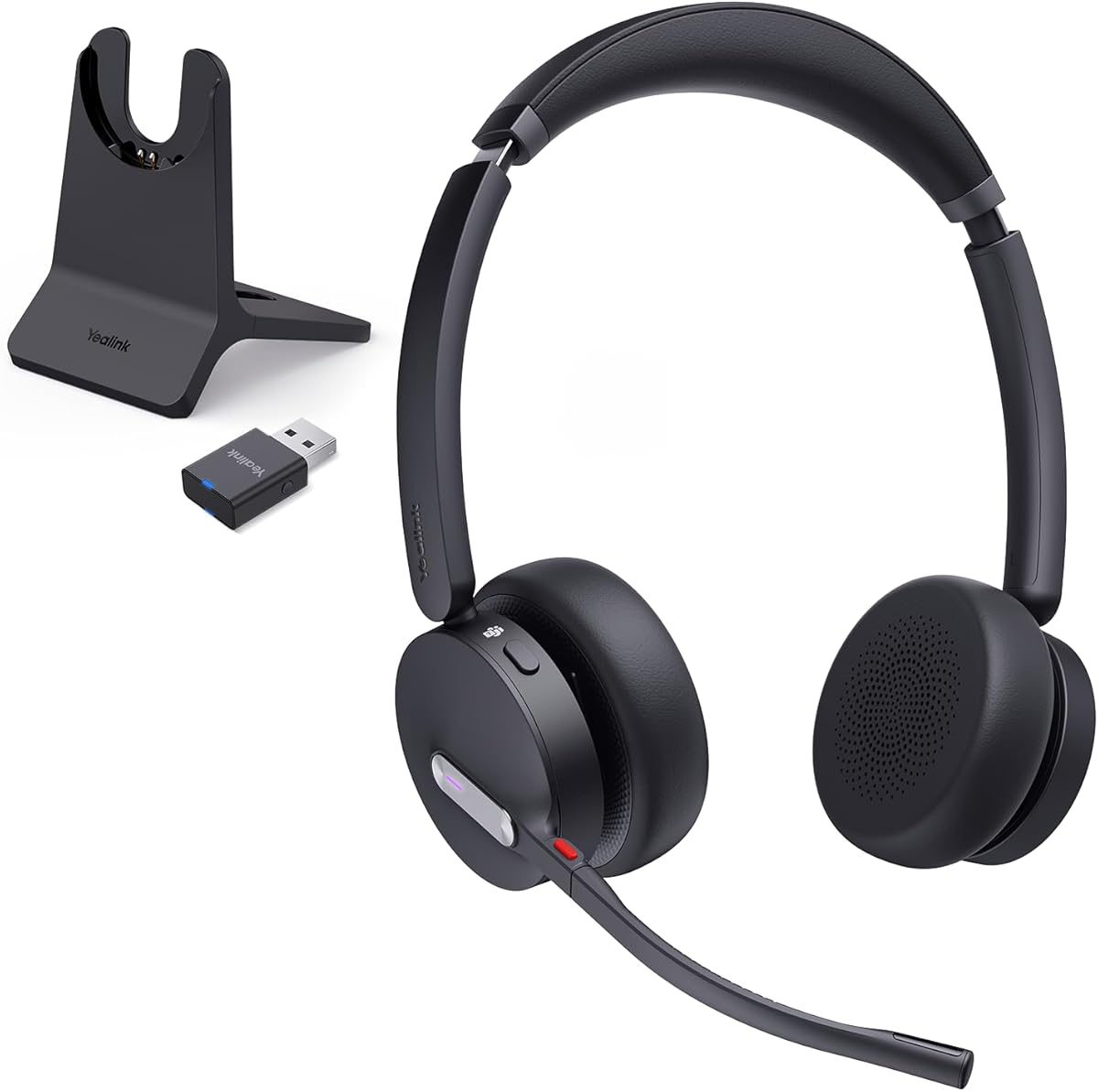
The Yealink WH64 represents a specific category of professional communication headsets designed for unified communications (UC) platforms like Teams and Zoom. Buyers should understand that hybrid DECT/Bluetooth models offer distinct advantages in range and connectivity stability compared to standard Bluetooth-only headsets, but come with specific setup considerations involving the included DECT dongle.
Key Considerations Before Buying
- The 492ft DECT range is a key feature for mobility around an office, but real-world performance depends on environmental interference and the placement of the USB dongle relative to your PC or laptop.
- Battery life claims of 32 hours talk time require verification in actual UC usage, as continuous microphone use and active noise cancellation drain batteries faster than music playback.
- Compatibility with 'Dual Teams UC Zoom' indicates firmware-level integration with these platforms, which can provide dedicated call control buttons but may require software configuration.
What Our Analysts Recommend
For professional headsets, examine the microphone specifications closely—the WH64's '3X Noise Cancelling' suggests multiple microphone arrays. Genuine reviews should mention call clarity from the listener's perspective, not just comfort. Also, assess the charging stand's build quality; a sturdy base with positive docking magnets indicates better long-term durability.
Headsets Market Context
Market Overview
The professional wireless headset market is segmented between enterprise-grade systems like Poly and Jabra, and value-oriented models from brands like Yealink that target hybrid workers. The WH64 competes in a niche offering both DECT's reliable connection and Bluetooth's device flexibility, often at a lower price point than premium competitors.
Common Issues
Common pain points include Bluetooth pairing instability with multiple devices, microphone boom arm durability, and proprietary software/drivers that may not receive consistent updates. Charging contacts on stands can also corrode or fail, breaking the convenient drop-and-charge functionality.
Quality Indicators
Look for detailed specifications on microphone pickup patterns (omnidirectional vs. noise-cancelling) and audio codec support (e.g., wideband audio for HD voice). A genuine multi-device pairing feature, not just alternating connections, is a mark of a more sophisticated product. Build materials matter—headbands with metal cores last longer than all-plastic constructions.
Review Authenticity Insights
Grade B Interpretation
A Grade B authenticity score with an 11% estimated fake review rate suggests the majority of feedback is reliable, but shoppers should be moderately vigilant. This is typical for a product in this category where some incentivized reviews may exaggerate performance, but genuine user experiences dominate.
Trust Recommendation
Focus on reviews that detail specific use cases, like all-day back-to-back Zoom calls or using the DECT range to move between rooms while on a Teams call. Be skeptical of reviews that only praise the packaging or generic features without mentioning actual performance over weeks of use.
Tips for Reading Reviews
For technical products like this, prioritize reviews that mention setup steps with the DECT dongle, battery life in real workdays, and sound quality comparisons to other headsets. Reviews discussing firmware updates or specific UC software integration are high-value indicators of authentic, long-term use.
Expert Perspective
The Yealink WH64 presents a compelling feature set on paper, particularly its hybrid connectivity and long battery claim, positioning it as a cost-effective solution for professionals reliant on UC platforms. However, the adjusted rating of 3.6/5, derived from filtering suspicious reviews, indicates consistent but not exceptional real-world performance. This score is common for headsets that perform well in core functions but may have quirks in comfort, software, or long-term reliability that prevent top ratings. The substantial talk time and DECT range are its primary competitive advantages.
Purchase Considerations
Weigh the necessity of the 492ft DECT range against the inconvenience of using a USB dongle. If your workflow involves constant movement away from your computer, it's a major benefit. If you primarily sit at a desk, a standard Bluetooth headset may suffice. Also, consider if your primary devices (PC, phone, laptop) support the Bluetooth profiles needed for seamless switching.
Comparing Alternatives
Shoppers should compare the WH64's connectivity approach and price against similar hybrid models from Jabra (Engage series) and Poly (Voyager series) to gauge value.


