
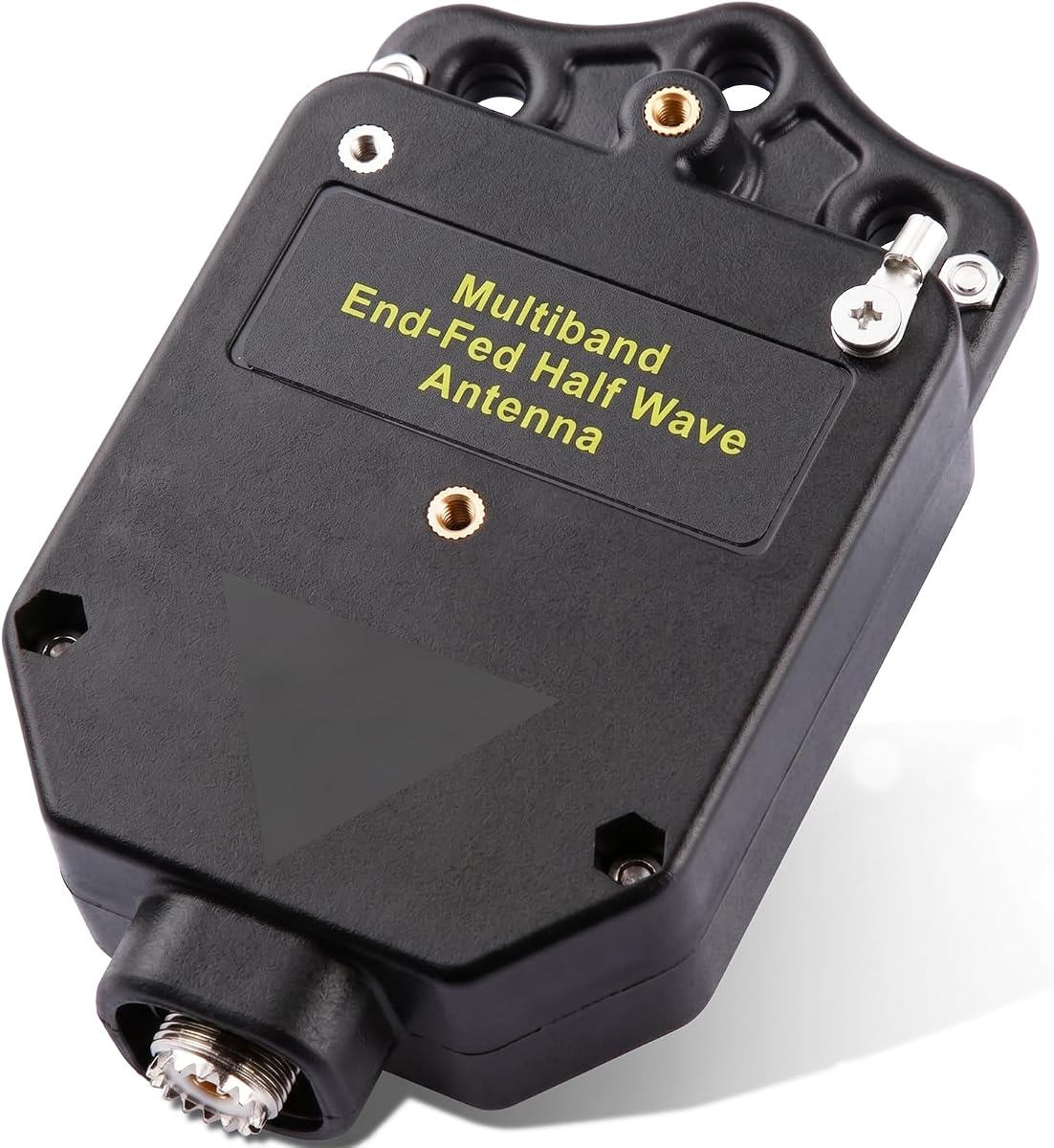
Master the Airwaves: A Buyer's Guide to the 150W End Fed Balun
If you're diving into the world of HF amateur radio, the end-fed half-wave (EFHW) antenna is a favorite for its simplicity and effectiveness, especially when space is tight. This 150W-rated balun, designed for 1-30MHz coverage with selectable 1:64 and 1:49 impedance ratios, is a key component to make that setup work. Understanding how to match it with your antenna wire and your radio's power output is crucial for a successful and safe installation.
Key Considerations Before Buying
- Power handling: This balun is rated for 150W, which is perfect for QRP and typical 100W transceivers, but you must ensure your transmissions never exceed this limit to prevent damage. Always account for SSB peaks, which can momentarily surge above your average power.
- Band coverage and ratio selection: With a 1:64 ratio for lower bands (like 80m and 40m) and 1:49 for higher bands (20m and above), choosing the correct ratio for your desired band is essential for a low SWR. The 4-band and 8-band configurations mean you can operate on multiple bands, but you'll need to switch settings or use a tuner for optimal performance.
- Outdoor durability: Since this is for outdoor use, check that the balun has a weatherproof enclosure and quality SO-239 connector. Look for reviews mentioning long-term exposure to rain, sun, and temperature swings to gauge its real-world resilience.
What Our Analysts Recommend
In a quality EFHW balun, you want a ferrite core that can handle the power without overheating, and a transformer with proper winding to ensure low loss. Also, inspect the build quality: a sturdy case, good strain relief on the antenna wire connection, and a sealed connector are signs of a unit that will last. Reviews that mention specific SWR readings and band performance are gold—they tell you how the balun actually behaves in the field.
Radio Antennas Market Context
Market Overview
The market for EFHW baluns has exploded as portable and stealth operations become more popular among amateur radio operators. These baluns offer a simple way to get on multiple HF bands with a single wire, making them ideal for field days, POTA, and SOTA activations. The price range is wide, from budget-friendly to premium, but the performance can vary significantly.
Common Issues
Common problems include inconsistent SWR across bands due to poor transformer design or incorrect ratio selection, and failures from moisture ingress in outdoor installations. Some baluns also struggle with higher power levels, leading to core saturation and heat damage. Another issue is the lack of clear instructions, leaving users guessing about the correct wire length and ratio setup.
Quality Indicators
Look for baluns that specify the core material (e.g., FT-240-43 or similar) and provide detailed specifications, as this indicates a manufacturer that understands the technical requirements. User reviews that consistently report low SWR and stable performance across multiple bands are strong indicators of quality. Also, a warranty or responsive customer support can be a good sign of a company that stands behind its product.
Review Authenticity Insights
Grade A Interpretation
With an A grade and an estimated fake review rate of only 5%, you can trust that the vast majority of these 113 reviews are from actual users. This is a strong signal that the product's 4.89-star rating (adjusted to 4.80) reflects real-world performance. The low fake percentage suggests that the positive feedback is largely genuine, giving you confidence in the product's claims.
Trust Recommendation
Given the high authenticity, you can rely on the detailed experiences shared by other amateur radio operators. Pay special attention to reviews that include specific SWR numbers, band-by-band performance, and installation tips—these are likely from experienced hams who know what they're talking about. However, always consider the 5% that might be less reliable, and look for consistent patterns across multiple reviews.
Tips for Reading Reviews
When reading reviews for a balun, focus on those that mention the exact bands they've tested, the wire length used, and the SWR readings they achieved. Also, note any comments about heat generation or durability after months of use. Be cautious of overly generic reviews that lack details, as they may be less informative or even fabricated.
Expert Perspective
This 150W EFHW balun appears to be a solid choice for amateur radio operators seeking a versatile and reliable multi-band solution. The high user rating, combined with the A-grade authenticity, suggests that it delivers on its promises of performance and durability. The selectable 1:64 and 1:49 ratios offer flexibility for different bands, making it a good value for the price.
Purchase Considerations
Before purchasing, consider your operating style: if you primarily use a 100W transceiver, the 150W rating gives you a small headroom, but be mindful of modes like FT8 that use high duty cycles. Also, think about the bands you plan to operate on and whether the 4-band or 8-band configuration suits your needs. If you're a portable operator, the compact size and easy setup are big pluses.
Comparing Alternatives
While this balun stands out, it's always wise to compare with other EFHW baluns in a similar price range. Look for options with higher power ratings if you ever plan to use an amplifier, or those with built-in lightning protection if you live in an area prone to storms.


