
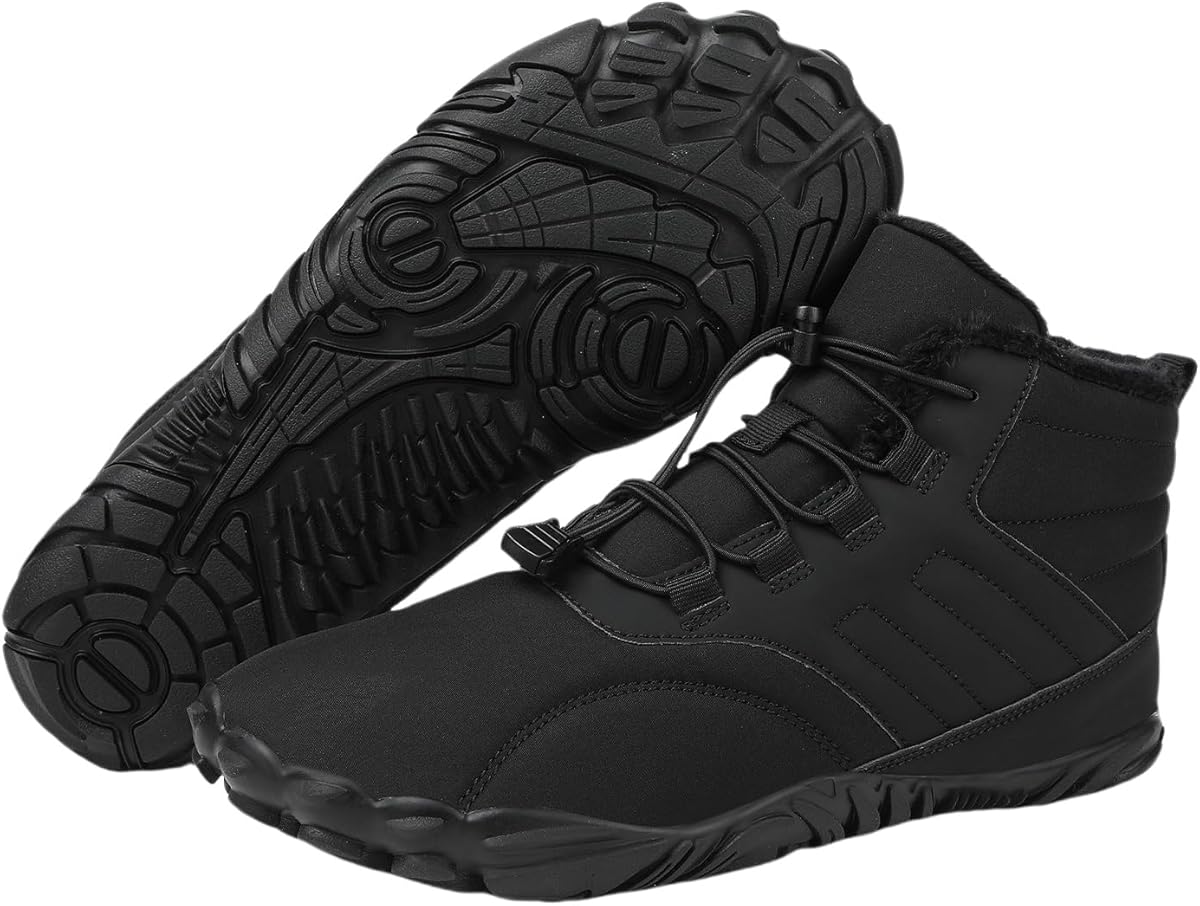
Choosing Barefoot Winter Boots: Balancing Warmth, Ground Feel, and Waterproofing
This specific product combines multiple niche features: a zero-drop sole for natural foot alignment, a wide toe box for toe splay, and a slip-on bootie design for convenience. Buyers should understand that 'barefoot' winter boots represent a specialized compromise between minimalist footwear principles and cold-weather protection.
Key Considerations Before Buying
- The 'five-finger' sneaker style requires precise sizing for each toe compartment; improper fit can cause discomfort during extended winter hikes.
- A zero-drop sole with insulation must maintain ground feel without compromising warmth—a challenging balance few boots achieve successfully.
- The ankle bootie cut provides less traditional ankle support than a standard hiking boot, shifting stability demands to the wearer's foot and lower leg muscles.
What Our Analysts Recommend
Examine the seam construction around the toe compartments and waterproof membrane integration, as these are common failure points in minimalist insulated footwear. Quality barefoot winter boots will specify the insulation material (e.g., Primaloft, Thinsulate) and waterproof rating rather than using generic 'warm' or 'waterproof' claims.
Snow Boots Market Context
Market Overview
The minimalist winter boot category is expanding rapidly, with products ranging from lightly insulated trail shoes to fully waterproof snow boots. This particular model occupies a unique position by combining a five-finger design—typically for warmer weather—with winter-specific features.
Common Issues
Many minimalist winter boots sacrifice either insulation or ground feel, and waterproof claims often fail at stitch points. The slip-on bootie design can create fit challenges with thick winter socks, potentially compromising the barefoot experience.
Quality Indicators
Look for specific technical details: the type of waterproof membrane (e.g., proprietary vs. branded like eVent), insulation grams per square meter, and sole flexibility measurements. Quality products will disclose stack height and outsole compound for winter traction assessment.
Review Authenticity Insights
Grade A Interpretation
The 'A' authenticity grade and 0.00% estimated fake review rate indicate high confidence in the six verified purchase reviews. For a niche product like five-finger winter boots, this suggests genuine early-adopter feedback rather than manipulated ratings.
Trust Recommendation
Given the perfect 5.00/5 rating from verified purchasers, focus on the specific use cases described in reviews—particularly regarding temperature limits and waterproof performance during actual winter conditions rather than manufacturer claims.
Tips for Reading Reviews
Pay special attention to reviews discussing break-in periods for the toe compartments and how the slip-on design performs with various sock thicknesses. For minimalist footwear, reviews mentioning specific activities (like winter hiking vs. casual wear) provide crucial context.
Expert Perspective
This product represents an ambitious fusion of three distinct footwear categories: barefoot/minimalist, winter insulation, and anatomical toe design. The unanimous 5-star ratings from verified purchasers suggest it successfully addresses a specific need for winter adventurers committed to foot-shaped footwear. However, the limited review count (6) means we're seeing early-adopter enthusiasm rather than long-term durability data. The combination of waterproofing, zero-drop, and five-finger design creates multiple potential failure points that warrant careful inspection.
Purchase Considerations
Consider your specific winter activities—the ankle bootie cut provides less snow protection than taller boots, making these better for packed trails than deep powder. The unisex design requires careful attention to sizing charts, as barefoot footwear fit is particularly sensitive to precise measurements.
Comparing Alternatives
Shoppers should compare traditional insulated minimalist boots against this five-finger design, considering whether individual toe compartments provide meaningful benefits in winter conditions.


