
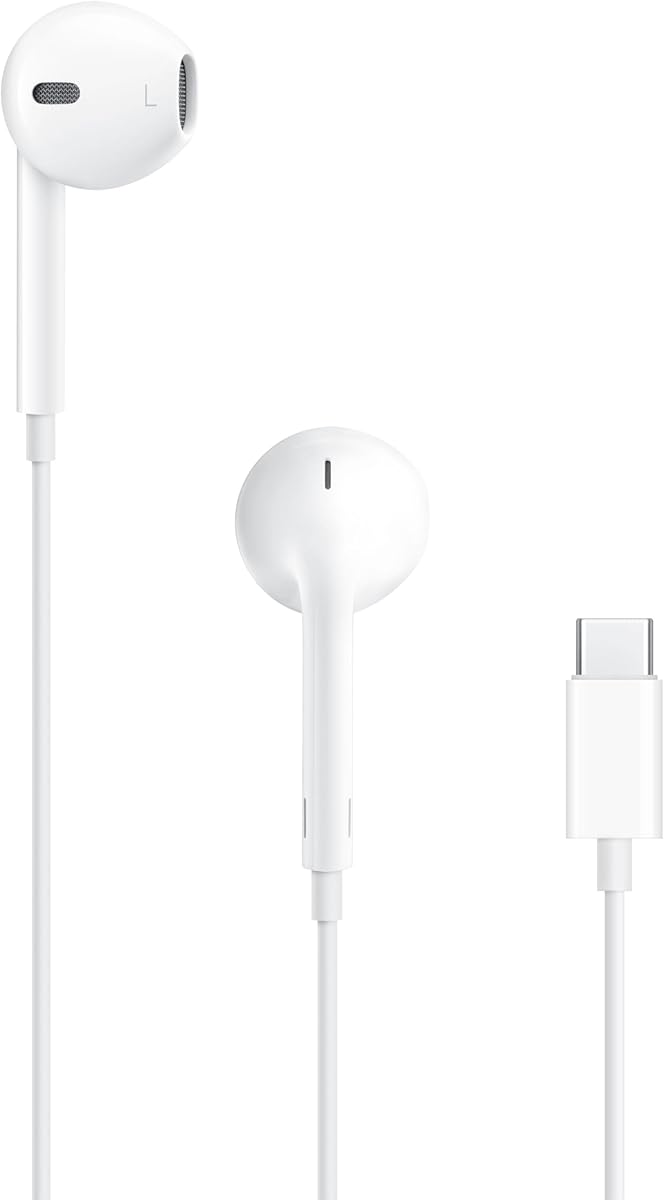
Choosing USB-C Wired Earbuds: What Apple's EarPods Offer and What They Don't
Apple's USB-C EarPods represent a specific choice in today's audio market: a wired, non-isolating earbud with a focus on convenience and ecosystem integration rather than audiophile sound. Buyers should understand these headphones are designed for casual listening, clear calls, and simple physical controls via the built-in remote, making them distinct from both wireless buds and high-fidelity in-ear monitors.
Key Considerations Before Buying
- Consider your device's port: These are exclusively for USB-C devices, a deliberate move by Apple that renders them incompatible with older iPhones or laptops with only USB-A or Lightning ports.
- Evaluate your need for audio isolation: The EarPods' open, one-size-fits-all design doesn't seal the ear canal, which is great for situational awareness but poor for blocking ambient noise on commutes or in loud environments.
- Assess control preferences: The in-line remote with microphone allows for play/pause, track skipping, volume adjustment, and call management without touching your phone, a tangible advantage over touch-sensitive stems on many wireless models.
What Our Analysts Recommend
For wired earbuds in this category, prioritize a robust cable strain relief at the plug and earpiece junctions, as these are common failure points. The remote module should feel solid, with distinct, tactile button clicks. Sound quality should be balanced and clear for voice, not overly bass-heavy, which often indicates a driver tuned to mask poor mid-range detail.
Market Context
Market Overview
The wired earbud market has bifurcated into budget generic options and premium, brand-specific models like Apple's, which leverage ecosystem loyalty. The shift to USB-C is accelerating, creating demand for reliable, well-built cables to replace the ubiquitous Lightning and 3.5mm options of previous years.
Common Issues
Common problems include cable microphonics (rubbing noise transmitted up the cable), premature wire fraying near the plug, and non-durable remote buttons. Sound leakage and lack of bass impact are frequent complaints for open-style earbuds, but these are design trade-offs, not defects.
Quality Indicators
Look for precise molding with no flash or seams on the earpiece housing, a cable that resists tangling, and a plug with a metal sheath. Quality drivers provide consistent volume between left and right channels and don't distort at higher volumes, even with the open design.
Review Authenticity Insights
Grade B Interpretation
A 'Grade B' with an 11% estimated fake review rate suggests a generally trustworthy review pool with a modest level of potentially inauthentic praise. For a high-volume Apple product, this is a typical finding, indicating most feedback reflects real user experiences, though shoppers should remain slightly skeptical of overly effusive five-star reviews.
Trust Recommendation
Focus on the detailed 3- and 4-star reviews. These often contain the most balanced assessments, comparing the USB-C EarPods to previous Lightning versions or discussing specific use-case compatibility. The adjusted rating of 4.60 is a more reliable performance indicator than the raw 4.89 average.
Tips for Reading Reviews
Seek out reviews that mention longevity (e.g., 'after 6 months of gym use...') and specific device pairing (e.g., 'with my iPad Pro and Pixel phone'). Authentic reviews often note the plastic feel of the remote or the exact nature of the sound profile rather than using vague superlatives.
Expert Perspective
The analysis data paints a picture of a product that successfully fulfills its narrow design brief. The high authentic rating (4.60) confirms strong user satisfaction among those who specifically want a simple, wired, USB-C audio solution from Apple. The reviews highlight key strengths: reliability, plug-and-play functionality, and decent call quality. The primary criticisms consistently revolve around the open-fit sound signature and the permanence of the cable, which are inherent to the product's form factor, not quality failures.
Purchase Considerations
Purchase hinges on three factors: your device's port, your tolerance for zero battery anxiety, and your acceptance of an unsealed, non-isolating fit. If you need noise cancellation, deep bass, or wireless freedom, these are the wrong product. If you want a foolproof, durable wired option for a USB-C device and prefer to hear your surroundings, they are a logical choice.
Comparing Alternatives
Shoppers should compare the total cost against a quality USB-C to 3.5mm adapter paired with existing wired headphones, or against entry-level wireless buds that may offer a sealed fit and more features at a similar price point.


