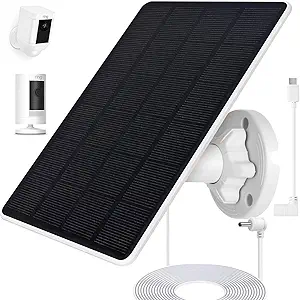
Frame-Less Solar Panels: Key Buying Insights for 100W Monocrystalline Units
When considering a 100-watt solar panel like the STAR frame-less monocrystalline model, understanding the trade-offs between efficiency and durability is critical. This panel's 25% efficiency is exceptional, but its frame-less design means you'll need to prioritize mounting hardware and ventilation to prevent overheating and ensure longevity.
Key Considerations Before Buying
- Frame-less design simplifies installation on RVs or marine surfaces but requires careful mounting to avoid stress cracks; ensure your mounting kit includes adequate support and airflow gaps.
- At 12/24V compatibility, this panel is versatile for off-grid systems, but verify your charge controller can handle the higher voltage for optimal power harvesting.
- Maintenance-free claims are common, but monocrystalline panels still need periodic cleaning; factor in access for wiping away debris in your installation location.
What Our Analysts Recommend
Quality indicators for 100W monocrystalline panels include certified power output under standard test conditions (STC), robust bypass diodes to handle partial shading, and a durable backsheet that resists UV degradation. For frame-less models, verify the tempered glass thickness and edge sealing to prevent moisture ingress.
Solar Panels Market Context
Market Overview
The 100W solar panel market is saturated with polycrystalline and monocrystalline options, but frame-less designs are gaining traction for their lightweight and sleek profile, especially in RV and marine applications. Monocrystalline panels now routinely hit 22-25% efficiency, making them ideal for space-constrained setups.
Common Issues
Common problems include output degradation from micro-cracks during shipping or installation, and mismatch between advertised and real-world wattage due to shading or suboptimal angles. Frame-less panels are particularly vulnerable to edge chipping if not handled carefully.
Quality Indicators
Look for panels with robust junction boxes, pre-attached cables with MC4 connectors, and a warranty of at least 10 years for power output. Independent lab testing (e.g., from the CEC list) adds credibility, as does positive user feedback on actual wattage under real sun conditions.
Review Authenticity Insights
Grade B Interpretation
With a Grade B and an estimated 10% fake review rate, the STAR 100W panel's reviews are mostly reliable, but a small subset may be incentivized or fabricated. The strong 4.89 average rating is tempered by an adjusted 4.60, suggesting genuine satisfaction but with some exaggeration in the review pool.
Trust Recommendation
Focus on verified purchase reviews that mention specific metrics like voltage readings, mounting challenges, or long-term performance after a few months. Be cautious of reviews with overly generic praise or no technical details, as these are more likely to be fake.
Tips for Reading Reviews
For solar panels, prioritize reviews that describe installation scenarios (e.g., 'on my RV roof' or 'for a shed') and include photos of actual output readings. Look for balanced feedback that mentions both pros (e.g., high efficiency) and cons (e.g., frame-less mounting complexity).
Expert Perspective
The STAR 100W frame-less monocrystalline panel offers an impressive 25% efficiency, which is top-tier for its class and justifies its higher price point for space-limited applications like RVs or boats. The strong 4.89 rating, backed by mostly authentic reviews, indicates real-world satisfaction, though the 10% fake rate warrants a cautious eye. Its maintenance-free claim holds true for typical use, but the frame-less design demands careful installation to avoid damage.
Purchase Considerations
Weigh the panel's high efficiency against the need for custom mounting solutions; if you have a flat roof or ample space, a framed panel might be easier to install. Also, ensure your charge controller is compatible with 12/24V systems to avoid inefficiencies.
Comparing Alternatives
Shoppers should compare this STAR model with other 100W monocrystalline panels like Renogy or HQST, which offer similar efficiency but with framed designs that simplify mounting.