Choosing a High-Capacity Portable Power Station: What the Jackery 2000 v2 Reveals
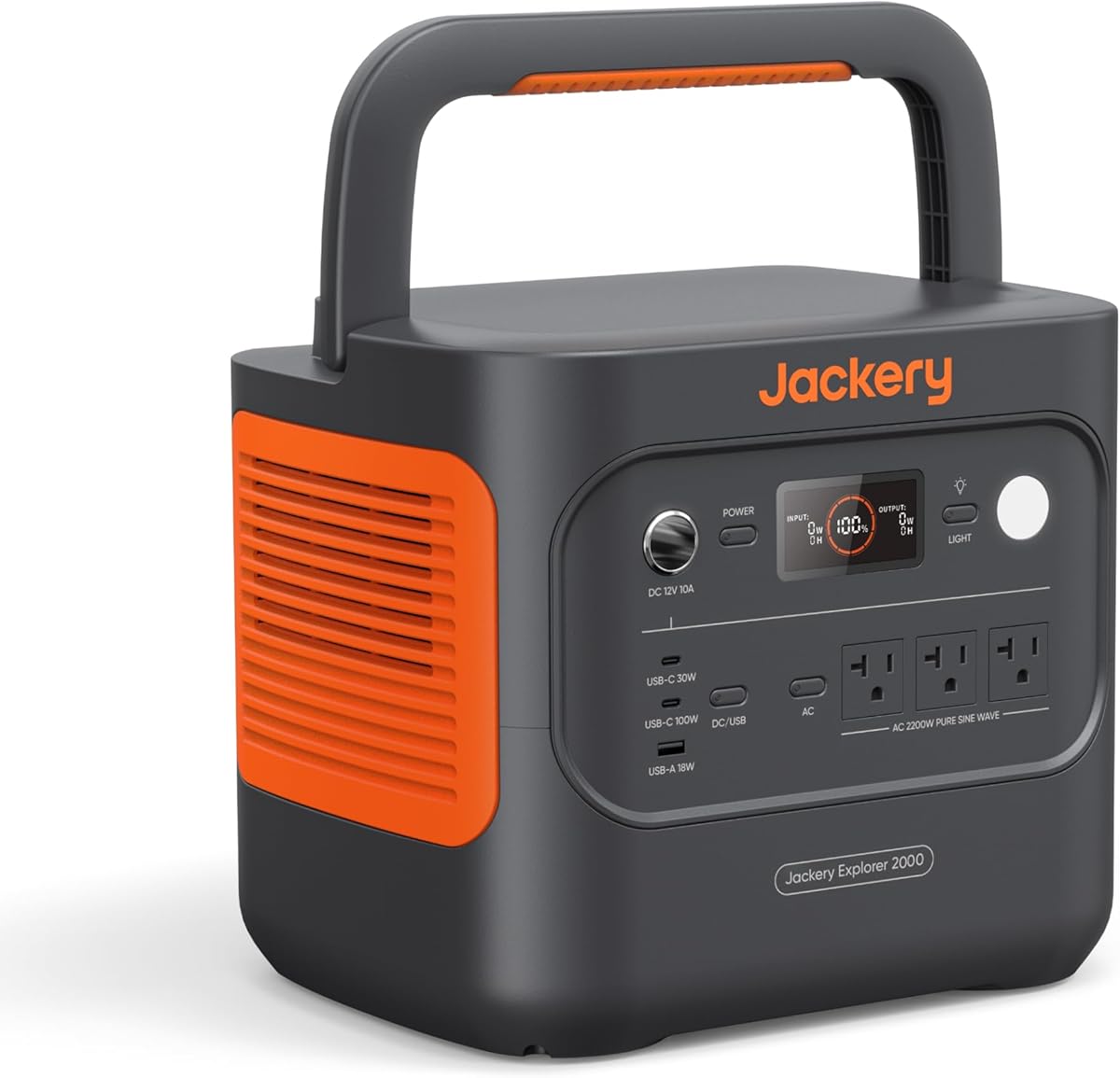
The Jackery Explorer 2000 v2 represents a premium tier in portable power stations, blending a 2042Wh LiFePO4 battery with a 2200W pure sine wave inverter. Buyers should understand that this product's value lies in its specific combination of capacity, fast USB-C PD charging, and solar readiness, making it distinct from smaller power banks or traditional gas generators.
Key Considerations Before Buying
- Assess your true watt-hour needs: The 2042Wh capacity can run a 100W fridge for ~18 hours, but actual runtime depends on the specific devices you plan to power simultaneously.
- Solar compatibility is key for off-grid use: While the unit accepts solar input, achieving its advertised recharge speed requires purchasing Jackery's specific (and optional) high-wattage solar panels.
- The LiFePO4 chemistry offers a major advantage over older lithium-ion, providing 3-4x more charge cycles (approx. 3000+) and better thermal stability, which is critical for a long-term investment.
What Our Analysts Recommend
For a unit in this class, scrutinize the inverter's output waveform (pure sine wave is essential for sensitive electronics), the number and type of ports (like the 100W USB-C PD here for fast laptop charging), and the battery management system's safety certifications. Physical build quality, including robust handles and a solid casing, is a tangible indicator of durability.
Generators Market Context
Market Overview
The portable power station market is rapidly evolving, with LiFePO4 batteries becoming the new standard for premium models due to their longevity and safety. Competition is fierce between brands like Jackery, EcoFlow, and Bluetti, each pushing higher capacities and faster recharge times.
Common Issues
Common user frustrations include overestimating real-world capacity (marketed Wh vs. usable Wh after inverter loss), slow solar recharge times with undersized panels, and confusion over what '2200W surge' actually means for starting motor-driven appliances like refrigerators.
Quality Indicators
Look for transparent specs on cycle life, clear communication on inverter efficiency (often 85-90%), and a comprehensive warranty that reflects confidence in the battery. A well-implemented battery management system with temperature control and overload protection is non-negotiable for safety.
Review Authenticity Insights
Grade B Interpretation
A 'Grade B' with an 11% estimated fake review rate indicates a generally trustworthy review pool, but suggests a modest level of potentially incentivized or inauthentic feedback. The adjusted rating of 4.60/5 is a strong, realistic score that accounts for this noise.
Trust Recommendation
Prioritize reviews that discuss specific, long-term use cases like 'powering my CPAP for three nights camping' or 'running a sump pump during a 6-hour outage,' as these are harder to fabricate. Be slightly more skeptical of overly generic 5-star reviews lacking detail.
Tips for Reading Reviews
Focus on critical 3- and 4-star reviews for balanced insights on limitations, such as the unit's weight (over 40 lbs) or the actual time to recharge via a car outlet. Look for photos/videos from verified purchasers showing the unit in real-world settings.
Expert Perspective
The Jackery Explorer 2000 v2's exceptionally high authentic rating of 4.60/5, derived from a largely genuine review pool, signals strong real-world satisfaction. Its position is defined by Jackery's established ecosystem and user-friendly interface, though it may trade some peak recharge speed for that reliability. The data suggests it successfully meets expectations for emergency home backup and extended camping for users who value plug-and-play simplicity over absolute maximum technical specs.
Purchase Considerations
This product justifies its cost if you need a reliable, all-in-one solution with a proven track record and prioritize safety (LiFePO4) and ease of use. It may be less ideal for users who require the absolute fastest possible solar recharge or who need to power devices with high-startup surges very close to its 2200W limit consistently.
Comparing Alternatives
Shoppers should directly compare the recharge times, port configurations, and warranty terms of competing 2kWh LiFePO4 models from EcoFlow and Bluetti before deciding.