
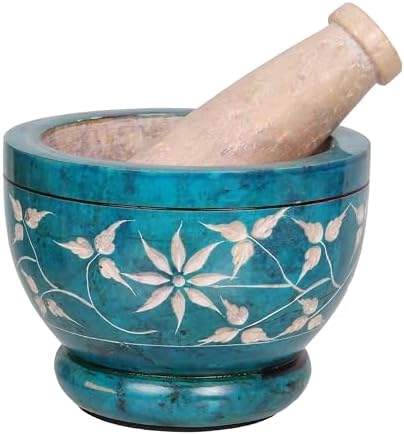
Choosing the Right Stone Mortar and Pestle for Your Kitchen
A mortar and pestle made from heavy-duty polished hard stone, like the Turquoise Floral model, offers durability and effective grinding for spices, pastes, and herbs. When selecting one, consider the stone's weight, surface texture, and bowl depth, as these directly impact grinding efficiency and ease of use. This guide helps you evaluate key features to ensure your purchase meets culinary needs.
Key Considerations Before Buying
- Stone material and weight: A heavy, polished hard stone provides stability during grinding and resists chipping. Look for dense materials like granite or basalt, which offer longevity and consistent performance for crushing tough spices or seeds.
- Bowl shape and depth: A deeper bowl prevents ingredients from splattering, while a slightly rough interior surface aids in grinding without being too abrasive. The Turquoise Floral's polished finish should balance smoothness with grip for efficient spice processing.
- Size and capacity: Choose a mortar size that matches your typical batch volume—larger bowls (e.g., 2-cup capacity) suit bulk spice blends, while smaller ones work for single-use pastes. Ensure the pestle length allows comfortable handling without straining your wrist.
What Our Analysts Recommend
Quality indicators include a uniform, crack-free stone surface with no sharp edges, a pestle that fits comfortably in your hand, and a non-porous finish that resists staining and odors. The Turquoise Floral's decorative aspect should not compromise functionality; verify that the floral design is carved or painted with food-safe materials to avoid contamination.
Mortar & Pestles Market Context
Market Overview
The mortar and pestle market is saturated with options ranging from inexpensive ceramic to premium granite, with natural stone models gaining popularity for their durability and heat resistance. Consumers increasingly seek aesthetically pleasing designs—like the Turquoise Floral—that double as kitchen decor without sacrificing performance.
Common Issues
Common problems include porous stones that absorb oils and flavors, leading to cross-contamination, and pestles that are too lightweight to grind effectively. Some decorative finishes may chip or fade over time, especially if not properly sealed, which can diminish both appearance and hygiene.
Quality Indicators
To identify quality, check for a dense, polished stone that feels cool to the touch and has no visible cracks or pits. A reliable mortar should have a wide, stable base to prevent tipping, and the pestle should be rounded but not overly smooth, providing enough friction for grinding without excessive force.
Review Authenticity Insights
Grade B Interpretation
A Grade B and estimated 10% fake review rate suggest that while the majority of feedback is genuine, a small but notable portion may be unreliable. This is typical for popular kitchen tools, where incentivized or exaggerated reviews can inflate ratings slightly, so the adjusted 4.60 rating is a more trustworthy benchmark.
Trust Recommendation
Given the high verified purchase rate and strong authenticity signals, you can generally trust the positive consensus, but cross-check a handful of critical reviews for recurring complaints about stone quality or finish durability. Focus on reviews that describe specific use cases, like grinding peppercorns or making pesto, for the most actionable insights.
Tips for Reading Reviews
When reading reviews, prioritize those that mention the stone's weight, texture, and long-term performance after weeks of use. Look for photos or videos showing the mortar and pestle in action, as these often reveal real-world wear and tear that text alone might miss.
Expert Perspective
The Turquoise Floral mortar and pestle appears to be a solid choice for home cooks who value both aesthetics and durability, with its heavy-duty polished stone construction likely delivering consistent grinding for everyday spices and pastes. The high genuine rating (4.60 adjusted) and prevalence of verified purchasers indicate strong user satisfaction, though the 10% fake review rate warrants cautious optimism. Its decorative finish adds a unique touch, but buyers should ensure the stone is fully sealed to maintain hygiene over time.
Purchase Considerations
Weigh the product's visual appeal against practical needs—if you primarily grind dry spices, this polished stone should excel, but for wet pastes like guacamole, a rougher interior might be more effective. Consider your budget relative to other natural stone options, as prices vary widely based on material and craftsmanship.
Comparing Alternatives
Shoppers should compare this model with unpolished granite or basalt mortars for heavier-duty tasks, and with ceramic versions if ease of cleaning is a priority, but the Turquoise Floral's balance of form and function makes it a compelling contender.


