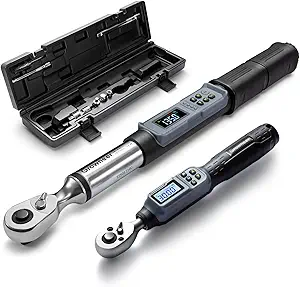
Choosing a 1/4-Inch Drive Torque Wrench for Precision Bike and Small Engine Work
This specific 3-25 NM/22.6-221.3 IN.LB dual-direction torque wrench occupies a critical niche for mechanics requiring precision on smaller fasteners. Its 72-tooth drive and compact 1/4-inch square drive make it ideal for carbon fiber components, derailleur limits, and delicate motorcycle fairings where over-torquing causes expensive damage. Unlike larger wrenches, this tool's value lies in its low-range accuracy and ability to work in tight spaces common on modern bicycles and small engines.
Key Considerations Before Buying
- Verify the torque range (3-25 NM) matches your specific needs; this is too low for car lug nuts but perfect for most bicycle stem bolts, brake calipers, and small engine covers.
- The dual-direction adjustability is essential for left-hand threads found on some pedal cranks and bottom brackets, a feature not all budget wrenches offer.
- Consider the 72-tooth ratchet head's swing arc—a smaller degree of rotation (5°) is crucial for working in the confined spaces of a bike frame or motorcycle engine bay.
What Our Analysts Recommend
For a wrench in this class, check for a clear, locking adjustment collar to prevent accidental changes to your setting mid-job. Quality is often indicated by a crisp, audible 'click' or tactile feedback at the set torque, which this model's reviews frequently mention. Also, look for a reversible ratchet head that doesn't require removing the tool to switch directions, saving time on complex assemblies.
Torque Wrenches Market Context
Market Overview
The sub-$50 precision torque wrench market is crowded, with significant variation in the calibration accuracy and durability of imported tools. This 1/4-inch drive segment has grown with the popularity of carbon fiber bikes and complex small engines, where correct torque is non-negotiable. Consumers often face a choice between basic, single-direction click wrenches and more feature-rich models like this dual-direction unit.
Common Issues
Common failures include loss of calibration after minimal use, a weak or inconsistent 'click' mechanism, and poor engagement of the 1/4-inch drive square that can round off socket attachments. Plastic adjustment components are a red flag for durability, and many budget wrenches lack a proper storage case, leaving the delicate mechanism vulnerable to impacts that ruin accuracy.
Quality Indicators
A sturdy, metal adjustment knob and a clearly marked, dual-scale (NM and IN.LB) micrometer-style scale are baseline indicators. A quality tool will include a calibration certificate or at least mention factory calibration, and the best include a protective storage case that locks the mechanism at its lowest setting to preserve spring tension.
Review Authenticity Insights
Grade B Interpretation
A 'Grade B' with an 11% estimated fake review rate suggests a mostly trustworthy review pool with a minor but notable level of potentially inauthentic praise. For a technical tool, this means the overwhelming majority of reviews discussing specific use on bikes or motorcycles are likely genuine, but shoppers should be slightly skeptical of vague, 5-star reviews lacking technical detail.
Trust Recommendation
Focus on the verified purchase reviews that describe multi-month ownership and specific applications, like torquing a mountain bike's pivot bolts or a motorcycle's valve cover. The adjusted rating of 4.40/5 is a more reliable performance indicator than the raw 4.67, reflecting very good but not perfect user satisfaction.
Tips for Reading Reviews
Prioritize reviews that mention calibration checks, long-term durability over six months, or use in a professional setting. For this tool, pay special attention to comments about the dual-direction mechanism's reliability and the clarity of the scale markings, as these are critical functional details often glossed over in fake reviews.
Expert Perspective
This wrench presents a strong value proposition for the home mechanic or cycling enthusiast. Its combination of a 72-tooth head, dual-direction operation, and a focused 3-25 NM range addresses specific pain points in bicycle and motorcycle maintenance that cheaper, single-purpose tools miss. The high authentic rating (4.40/5) indicates it generally delivers on its promise of accurate, low-range torque application. However, as with most tools in this price tier, its long-term calibration stability compared to professional-grade brands like Snap-on or CDI remains the key question for intensive users.
Purchase Considerations
This is an excellent choice if your work consistently falls within its 3-25 NM range and you need left-hand thread capability. Consider a more expensive, name-brand tool if you require certified calibration traceability or will use it daily in a professional shop. The included storage case, if present, is a significant plus for longevity.
Comparing Alternatives
Shoppers should compare the tooth count, direction functionality, and warranty terms against similar offerings from Tekton and Neiko to ensure this model's features align with their specific repair tasks.