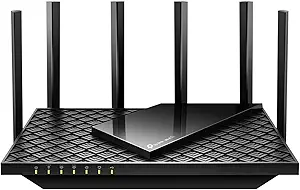
WiFi 7 routers demand scrutiny of multi-gig ports and device management capabilities
The NETGEAR RS500 represents the early adopter tier of WiFi 7 routers, offering BE12000 tri-band speeds and a 2.5 Gig WAN port. Buyers should understand that its 3,000 sq. ft. coverage claim depends heavily on home construction materials, and the '120 devices' specification refers to theoretical connection capacity, not simultaneous high-bandwidth performance.
Key Considerations Before Buying
- Verify your internet plan and modem compatibility before investing in this router's 2.5 Gig port; most residential plans won't exceed 1 Gbps, making this a future-proofing feature rather than immediate necessity.
- WiFi 7's primary benefits—Multi-Link Operation (MLO) and 320MHz channels—require compatible client devices; without WiFi 7 phones or laptops, you're paying for capabilities you cannot yet utilize.
- NETGEAR's 'Free Expert Help' typically means phone support for initial setup; for ongoing network management, you'll rely on the Nighthawk app, which receives mixed reviews for advanced configuration options.
What Our Analysts Recommend
Quality WiFi 7 routers should demonstrate stable performance across all three bands (2.4GHz, 5GHz, and 6GHz) with minimal interference. Pay attention to thermal management in reviews—high-performance routers like the RS500 can overheat if ventilation is inadequate. Genuine reviews will mention specific use cases like 4K streaming across multiple TVs or latency-sensitive gaming.
Routers Market Context
Market Overview
WiFi 7 routers are premium products in early adoption phase, with NETGEAR, ASUS, and TP-Link competing in the $400-$700 range. The RS500 sits at the mid-to-high end of this emerging category, positioned against ASUS's RT-BE96U and TP-Link's Archer BE800. Market differentiation currently focuses on port configuration and proprietary gaming/streaming optimizations.
Common Issues
Early WiFi 7 adopters report firmware instability, compatibility issues with older devices, and inconsistent 6GHz band performance through walls. Many users overestimate coverage needs, purchasing routers rated for 3,000+ sq. ft. for apartments under 1,500 sq. ft., creating unnecessary signal interference. The 'router only' designation means no modem functionality—a common point of confusion.
Quality Indicators
Look for consistent mention of the 2.5 Gig port actually being utilized with compatible modems/NICs, not just as a marketing bullet. Quality routers maintain stable connections with 40+ simultaneous devices in real-world testing. Premium models should include robust QoS (Quality of Service) features that users can successfully configure for gaming or video conferencing prioritization.
Review Authenticity Insights
Grade B Interpretation
A Grade B authenticity rating with 11% estimated fake reviews indicates generally reliable feedback with some promotional content. The 0.24-point drop from the displayed 4.44 to adjusted 4.20 rating suggests modest review inflation, common in competitive networking categories where manufacturers incentivize early positive reviews.
Trust Recommendation
Focus on verified purchase reviews that mention specific setup scenarios, like connecting to a Fios 2 Gig plan or troubleshooting compatibility with particular smart home ecosystems. Be skeptical of reviews that only praise speed tests without context about device count or home size, as these may be formulaic promotional content.
Tips for Reading Reviews
Prioritize reviews that discuss real-world multi-device performance—streaming while gaming while backing up to NAS—over isolated speed test results. Look for mentions of firmware updates improving stability, as early WiFi 7 routers evolve significantly through software. Pay special attention to reviews mentioning NETGEAR Armor or subscription services, as these represent ongoing cost considerations.
Expert Perspective
The RS500 represents a calculated investment in next-generation WiFi, with its adjusted 4.20 rating from authentic reviews suggesting solid but not flawless performance. Its tri-band design with dedicated 6GHz spectrum is genuinely beneficial for congested urban environments, though the 3,000 sq. ft. coverage assumes optimal conditions. The 2.5 Gig WAN port future-proofs for multi-gig internet plans now available in many metropolitan areas, but most users won't saturate this capability today. NETGEAR's established presence in high-performance networking provides some assurance, though early WiFi 7 implementations carry inherent firmware maturation risks.
Purchase Considerations
Only consider this router if you have compatible WiFi 7 devices or plan to acquire them within the product's lifespan, and if your internet plan exceeds 1 Gbps or you frequently transfer large files between local devices. For homes under 2,000 sq. ft. with sub-1 Gbps internet, WiFi 6E routers offer better value. The 'router only' designation is crucial—ensure you have a separate modem compatible with your ISP's technology (DOCSIS 3.1 for cable, ONT for fiber).
Comparing Alternatives
Compare the RS500's port configuration and QoS features against similarly priced WiFi 7 routers from ASUS and TP-Link, particularly regarding included security software subscriptions and parental control capabilities.