Precision Weighing: Key Factors for Choosing a 0.001g Milligram Scale
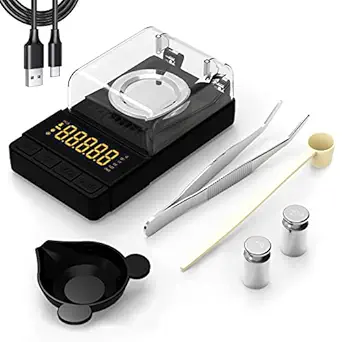
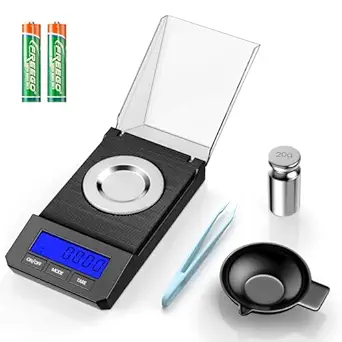
When accuracy to a thousandth of a gram matters—whether you're weighing precious metals like gold or silver, measuring reloading powders, or portioning supplements—a milligram scale is an essential tool. The Silver Milligram Scale 100g/0.001g offers this precision, but understanding its capabilities and limitations is crucial for getting reliable results.
Key Considerations Before Buying
- Resolution vs. accuracy: A 0.001g resolution means the scale displays increments of one milligram, but actual accuracy depends on the load cell and calibration. For critical measurements, always use the included 20g calibration weight to verify and adjust the scale before each session.
- Capacity and readability: With a 100g maximum capacity, this scale balances high precision with versatility. However, as you approach the upper limit, readability may degrade slightly—keep measurements below 80g for optimal stability.
- Environmental sensitivity: Milligram scales are highly sensitive to air currents, vibrations, and temperature changes. Place the scale on a stable, level surface away from drafts and handle powders gently to avoid fluctuations.
What Our Analysts Recommend
Look for a scale that includes a calibration weight (like this one does) and offers a protective cover or case to prevent dust buildup. Additionally, check for a tare function and a clear, backlit display for easy reading in various lighting conditions. A stable base with non-slip feet is also a sign of thoughtful design.
Calibration Weights Market Context
Market Overview
The market for analytical and precision scales has grown with the rise of hobbyist jewelry making, reloading, and home chemistry. Budget-friendly milligram scales now compete with lab-grade instruments, but performance varies widely. Most units in this price range use strain-gauge load cells, which can be reliable if properly calibrated.
Common Issues
A frequent problem is drift—the reading slowly changes without any load. This often stems from temperature fluctuations or inadequate warm-up time. Another issue is the '0.001g' claim being misleading; some scales only display that resolution but are only accurate to 0.005g. Always test with known weights.
Quality Indicators
Quality milligram scales feature a sturdy ABS plastic or metal housing, a clear LCD with backlight, and a calibration mode that accepts standard weights. The inclusion of a traceable calibration weight (like 20g) is a positive sign. Also, check for overload protection and a low-battery indicator.
Review Authenticity Insights
Grade B Interpretation
The Grade B rating and 10% estimated fake reviews indicate that while the majority of reviews are authentic, a noticeable minority may be incentivized or fabricated. This means the overall 4.44-star average is slightly inflated; the adjusted 4.20 rating is likely closer to the true customer experience.
Trust Recommendation
Given the moderate fake review percentage, you can trust the detailed, balanced reviews that mention specific weight measurements or calibration tests. Be cautious of overly enthusiastic, vague reviews that lack specifics. Look for reviewers who discuss both pros and cons, as they are more likely to be genuine.
Tips for Reading Reviews
When reading reviews for this scale, focus on those that mention testing with known weights (like coins or calibration weights) and those that describe long-term use. Ignore one-line positive reviews. Also, check if multiple reviews share the same phrasing, which is a red flag for fake feedback.
Expert Perspective
Based on the analysis, this milligram scale appears to be a functional and reasonably accurate tool for its intended uses, backed by a large user base. The inclusion of a 20g calibration weight and accessories adds value, and the 100g capacity covers most needs. However, the 10% fake review rate suggests some marketing hype, so expectations should be tempered.
Purchase Considerations
Before purchasing, consider how often you'll need maximum precision. If you're a hobbyist, this scale is likely sufficient. For professional or lab use, you might want a higher-end model with better temperature compensation. Also, factor in the cost of replacement calibration weights and batteries over time.
Comparing Alternatives
Shoppers should compare this model with other milligram scales in the same price range, particularly those with similar capacity and resolution, to ensure you're getting the best balance of price and performance.