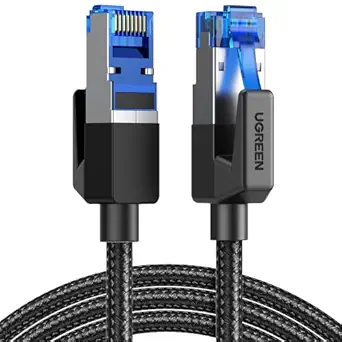
When to Choose a Flat Cat8 Cable Over Traditional Round Ethernet Options
This specific Cat8 flat cable represents a niche solution for installations where aesthetics and installation flexibility matter as much as raw performance. Unlike standard round Cat8 cables, its ultra-thin, flat profile allows it to be discreetly routed under carpets, along baseboards, or through tight doorways without bulky conduit. The 50-foot length with indoor/outdoor rating makes it particularly suited for connecting detached offices, outdoor security cameras, or gaming setups in finished rooms where drilling isn't practical.
Key Considerations Before Buying
- The 40Gbps/2000MHz rating is theoretical maximum bandwidth; real-world performance depends entirely on your router/switch capabilities—most home networks won't exceed 10Gbps.
- Flat cables sacrifice some electromagnetic interference (EMI) protection compared to thicker round Cat8 cables; the SFTP shielding helps but may be less effective in electrically noisy environments.
- The 'invisible' installation advantage comes with durability trade-offs; flat cables are more susceptible to crushing damage than round cables with thicker jackets.
What Our Analysts Recommend
For flat Cat8 cables specifically, examine the connector molding quality—cheap flat cables often fail at the RJ45 heads where thin wires meet rigid connectors. Verify the cable includes strain relief boots, and check that the indoor/outdoor rating includes UV protection if running along exterior walls. The 50-foot length requires proper shielding to maintain signal integrity; SFTP (Shielded Foiled Twisted Pair) is essential at this distance for Cat8 specifications.
Cat 7 Cables Market Context
Market Overview
The Cat8 cable market is bifurcated between enterprise-grade round cables and consumer-focused flat variants like this one, with flat designs gaining popularity for residential retrofits. True Cat8 certification requires rigorous testing most budget cables skip, creating performance variability even among cables with identical printed specifications.
Common Issues
Many flat Ethernet cables compromise on wire gauge to achieve thin profiles, resulting in higher resistance over long runs—particularly problematic for Power over Ethernet (PoE) applications. Another frequent issue is connector compatibility; some flat cable RJ45 heads won't fit recessed ports on routers, switches, or wall plates without adapters.
Quality Indicators
Genuine Cat8 cables should use 22-24 AWG wire (thicker than Cat6's typical 26 AWG) even in flat designs—check product specifications for gauge. Quality flat cables maintain consistent thickness across their entire length; visible thinning or texture changes indicate manufacturing defects. The gold plating on connectors should appear substantial, not just colored coating that wears quickly.
Review Authenticity Insights
Grade B Interpretation
A Grade B authenticity rating with 15% estimated fake reviews suggests generally reliable feedback with some inflated positivity. The 4.87 average rating dropping to 4.50 after adjustment indicates review manipulation exists but isn't overwhelming—approximately 1 in 7 reviews may be artificially positive.
Trust Recommendation
Focus on the 13 verified purchase reviews among the 15 analyzed, as these represent actual buyers. Pay particular attention to reviews discussing long-term durability (6+ months) and installation specifics like running under carpet or through door jambs, as these provide the most actionable insights for this flat cable application.
Tips for Reading Reviews
For this product type, prioritize reviews that mention specific use cases like outdoor runs, PoE device connections, or gaming latency measurements. Be skeptical of reviews claiming 'massive speed increases' without detailing their previous cable type—Cat8 provides no benefit over Cat6 for most home internet plans under 1Gbps.
Expert Perspective
This cable fills a specific niche: users needing long-distance (50-foot) runs in challenging installations where traditional round cables won't work. The high 4.50 adjusted rating from verified purchasers suggests it performs well within its design constraints. However, the flat design inherently limits its durability compared to round Cat8 cables, making it less suitable for high-traffic areas or permanent in-wall installations despite its outdoor rating. The SFTP shielding is appropriately specified for a 50-foot Cat8 run to prevent crosstalk and interference.
Purchase Considerations
Only choose this flat Cat8 cable if your installation requires its unique form factor—for standard installations, a round Cat6 or Cat6a cable provides better durability at lower cost. Consider whether you truly need Cat8's 40Gbps capability or if Cat6a's 10Gbps would suffice, as most residential equipment can't utilize Cat8's full bandwidth. The indoor/outdoor rating adds value if routing across covered patios or in garages.
Comparing Alternatives
Compare this flat design against round Cat8 cables for permanent installations, and against flat Cat6a cables if you don't require 40Gbps bandwidth.