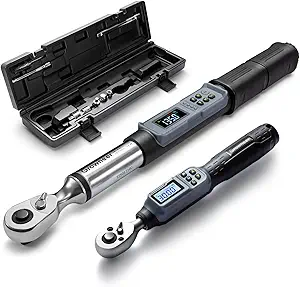
Choosing a precision torque wrench for delicate bicycle components and small fasteners
This 1/4-inch drive click-type torque wrench is specifically engineered for applications requiring precise low-torque settings, particularly bicycle maintenance where over-tightening carbon components or aluminum bolts can cause catastrophic failure. Its dual-range scale (20-240 in.lb/2.3-27.1 Nm) and compact aluminum body target users who need accuracy for small fasteners rather than automotive lug nuts.
Key Considerations Before Buying
- Verify the torque range matches your specific needs—this 20-240 in.lb range is ideal for bicycle stems, seatposts, derailleur mounts, and small engine components, but insufficient for car wheels or suspension bolts.
- The 72-tooth ratchet mechanism provides a 5-degree swing arc, crucial for working in confined spaces like bicycle frames or engine bays where full rotation isn't possible.
- Consider calibration requirements—click-type wrenches like this should be stored at their lowest setting and periodically verified, especially when used for carbon fiber components where ±5% accuracy matters.
What Our Analysts Recommend
Quality indicators include a clear, dual-scale readout (like this model's inch-pound and Newton-meter markings), a positive click with tactile feedback you can feel and hear, and a locking collar that securely maintains your setting. The aluminum construction here reduces weight but check for machined rather than cast components at the drive head.
Torque Wrenches Market Context
Market Overview
The precision torque wrench market has expanded significantly with the growth of carbon fiber bicycles and lightweight components requiring exact torque specifications. Manufacturers now differentiate between general-purpose wrenches and specialized tools like this bicycle-focused model with specific low-torque ranges.
Common Issues
Users frequently report calibration drift in inexpensive torque wrenches, difficulty reading small dual scales, and mechanisms that fail to provide consistent audible/tactile clicks at lower settings. Many budget models lack proper certification or calibration documentation.
Quality Indicators
Look for wrenches with traceable calibration certificates (often missing in this price segment), hardened steel drive mechanisms rather than plated components, and smooth adjustment collars without play. The 72-tooth count here indicates better engagement than standard 45-tooth designs.
Review Authenticity Insights
Grade B Interpretation
A Grade B authenticity rating with 11% estimated fake reviews suggests generally reliable feedback but warrants careful review scrutiny. The adjusted 4.60/5 rating (down from 4.89/5) indicates some review inflation but still reflects strong genuine satisfaction.
Trust Recommendation
Focus on verified purchase reviews discussing specific applications like '2019 Trek Domane seat clamp' or 'Shimano crank arm bolts' rather than generic praise. The 337-review sample provides sufficient data points to identify consistent patterns about calibration consistency out of the box.
Tips for Reading Reviews
Prioritize reviews mentioning long-term use (6+ months) and recalibration experiences. For bicycle applications, look for mentions of specific component brands (SRAM, Campagnolo, etc.) and whether the click was detectable at lower torque settings like 20-40 in.lb.
Expert Perspective
This wrench's specifications align precisely with bicycle mechanic needs—the 1/4-inch drive accommodates common hex bits, the range covers 95% of bicycle torque values, and the compact design fits in tool rolls. The high genuine rating (4.60/5 adjusted) suggests it performs reliably for its intended use case. The aluminum body represents a trade-off: lighter weight but potentially less durable than steel in professional shop environments.
Purchase Considerations
Weigh whether you need the included calibration certificate (often extra cost) for workshop certification, and consider the storage case quality—essential for maintaining calibration. For home bicycle mechanics versus professional daily use, the durability expectations differ significantly.
Comparing Alternatives
Compare the tooth count (72 vs. 90+ in premium models), warranty length, and whether competitors include calibration adjustment tools at similar price points.