
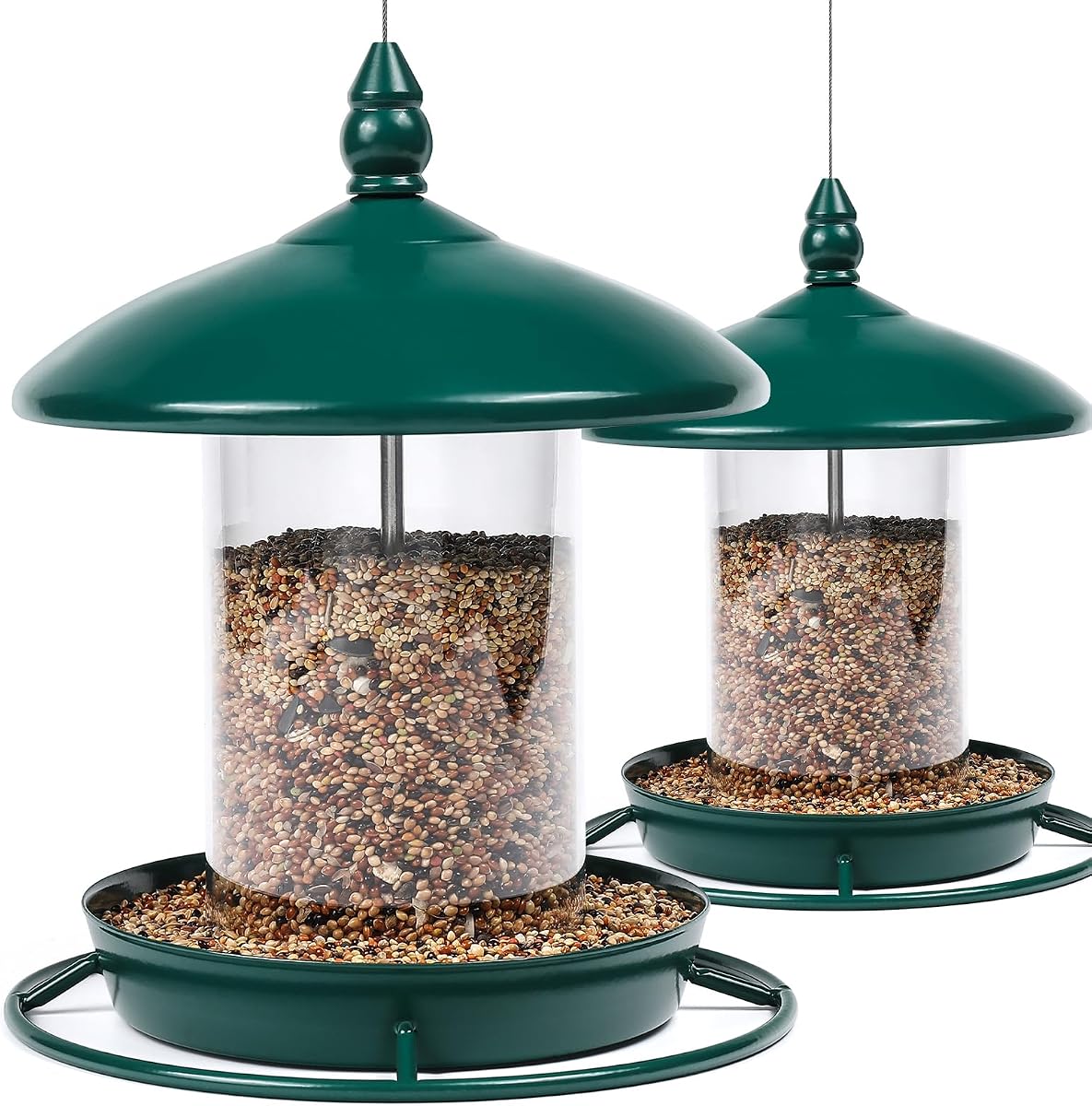
Green Hanging Feeders: 5 Things to Check Before You Buy
When shopping for a hanging bird feeder, especially a two-pack like this green model, you're balancing aesthetics, durability, and practicality. The right feeder attracts a variety of birds without becoming a maintenance headache, so understanding construction and placement is key.
Key Considerations Before Buying
- Material and Weather Resistance: Look for feeders made from UV-stabilized plastic or powder-coated metal to prevent fading and rust. This green feeder's plastic construction should be thick enough to withstand squirrel gnawing and harsh sun.
- Drainage and Seed Management: Quality feeders have drainage holes to prevent mold and a seed tray to catch hulls, reducing waste and keeping the ground clean. Check if the feeder's ports are sized to allow seeds to flow freely without clogging.
- Ease of Cleaning: Feeders need regular cleaning to prevent disease. Look for models that disassemble easily or have wide openings for scrubbing. A feeder that's hard to clean will likely be neglected, harming birds.
- Hanging Mechanism: Ensure the hook or hanger is sturdy and rust-resistant, and that the feeder hangs level. A flimsy hook can bend under wind or squirrel weight, spilling seed and damaging the feeder.
- Capacity and Refill Frequency: A two-pack means you can place feeders in different spots, but consider the seed capacity. Smaller feeders require more frequent refills, which can be a pro for monitoring bird activity but a con for convenience.
What Our Analysts Recommend
Quality indicators include smooth, burr-free edges around feeding ports to prevent injury, clear or translucent seed reservoirs that let you see seed levels at a glance, and a design that discourages water pooling. Also, check for a perch that's comfortable for a variety of bird sizes, and a build that feels solid in hand—not flimsy or brittle.
Feeders Market Context
Market Overview
The bird feeder market is saturated with options, from basic tube feeders to elaborate hoppers and platform styles. The trend is toward durable, low-maintenance materials like recycled plastics and metal accents, with many buyers seeking multi-packs for value and to create a 'bird-friendly' backyard ecosystem.
Common Issues
Common complaints in this category include feeders that leak seed, ports that are too small for larger birds like cardinals, and plastic that becomes brittle and cracks after a few seasons. Squirrel damage is also a frequent frustration, leading to the popularity of caged designs or feeders with weight-activated shutoffs.
Quality Indicators
High-quality feeders often feature thicker plastic or metal construction, clear seed tubes with metal-reinforced ports, and easy-to-clean bases. Look for brands that offer replacement parts, as this signals a commitment to longevity. Also, check for a design that minimizes seed waste, such as a built-in tray or a 'no-mess' seed option.
Review Authenticity Insights
Grade B Interpretation
With a Grade B and an estimated 10% fake review rate, this product's review score of 4.33 is likely only slightly inflated. The high percentage of verified purchases and detailed, balanced reviews suggests that the majority of feedback is genuine, making the rating reasonably trustworthy.
Trust Recommendation
You can generally trust the 4.33 rating, but be aware that a small portion of reviews may be incentivized or overly positive. Focus on reviews that mention specific bird species, weather conditions, and durability over time, as these are harder to fabricate and provide actionable insights.
Tips for Reading Reviews
For bird feeders, pay special attention to reviews with photos of the feeder in use—they reveal actual scale and bird activity. Also, look for recurring themes: if multiple reviewers mention the same flaw (e.g., 'seeds get wet'), it's likely a real issue. Conversely, be wary of overly short reviews that lack specifics.
Expert Perspective
This green hanging feeder two-pack appears to be a solid, no-frills option for backyard birders, especially those starting out or wanting to place feeders in multiple locations. The 4.33 rating, even adjusted to 4.10, indicates good user satisfaction. The main trade-offs are likely in material longevity and ease of cleaning, which are typical for feeders in this price range. The 10% fake review rate is a minor concern but doesn't undermine the overall positive consensus.
Purchase Considerations
Before buying, consider your local bird species and their feeding habits. If you have aggressive squirrels, you might need a caged feeder. Also, think about maintenance: are you willing to clean these feeders weekly? If you prefer a low-maintenance option, look for models with removable bases or dishwasher-safe parts.
Comparing Alternatives
While this two-pack offers great value, compare it with other hanging feeders in the same price bracket, such as those with metal parts or squirrel-proofing features, to ensure you're getting the best fit for your specific backyard challenges.


