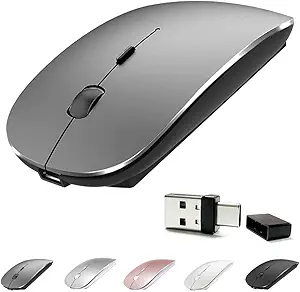
Choose a Wireless Mouse That Balances Portability, Performance, and Price
When shopping for a wireless mouse, especially one that promises dual connectivity via Bluetooth 5.2 and a 2.4GHz USB receiver, you need to weigh factors like battery life, ergonomics, and compatibility with your devices. This particular model targets users of laptops, iPads, MacBooks, and other Apple devices, offering a rechargeable, ultra-thin design with silent clicks and an LED indicator. Understanding what makes a mouse reliable in this crowded category can save you from a frustrating purchase.
Key Considerations Before Buying
- Connectivity flexibility is crucial: a mouse with both Bluetooth 5.2 and a 2.4GHz USB receiver lets you switch between devices or use the more stable 2.4GHz connection when Bluetooth is crowded. Ensure the receiver is stored inside the mouse to avoid losing it.
- Rechargeability matters for daily use: an ultra-thin design often means a smaller battery, so check the advertised battery life and whether the mouse supports quick charging. A built-in LED can help you monitor power levels at a glance.
- Silent clicks are a trade-off: while they reduce noise in shared spaces, silent switches sometimes feel mushy or less responsive. Test the tactile feedback if possible, or read reviews that mention click feel specifically.
What Our Analysts Recommend
Quality indicators for a wireless mouse include a solid build with no wobbling buttons, a responsive sensor (at least 1000 DPI), and low-latency wireless performance. For portable models, a slim profile that fits comfortably in a laptop bag and a reliable power switch or auto-sleep feature are essential. Look for verified purchaser reviews that mention long-term durability and consistent Bluetooth pairing.
Mice Market Context
Market Overview
The wireless mouse market has exploded with options ranging from budget-friendly to premium, driven by the rise of remote work and mobile computing. Bluetooth 5.2 is now standard, offering better range and power efficiency, while 2.4GHz receivers remain popular for gaming and latency-sensitive tasks. Ultra-thin designs are particularly sought after for travelers and tablet users.
Common Issues
Common problems in this category include poor battery life due to small lithium-ion cells, unreliable Bluetooth connections that drop or lag, and ergonomic strain from flat designs that lack palm support. Some budget mice also suffer from cheap switches that fail after a few months of use.
Quality Indicators
To identify a quality wireless mouse, look for a reputable sensor brand (like PixArt), a battery capacity of at least 300mAh for rechargeable models, and positive reviews that mention consistent performance over months. A well-designed charging port (USB-C is preferred) and a physical on/off switch are also signs of thoughtful engineering.
Review Authenticity Insights
Grade B Interpretation
With a Review Authenticity Grade of B and an estimated 10% fake review rate, this product's reviews are mostly reliable but not flawless. The B grade indicates that while the vast majority of reviews are genuine, a small portion may be incentivized or fabricated, which is common for budget electronics. The high 4.67-star average should be viewed with slight caution, as it may be inflated by a few suspicious entries.
Trust Recommendation
Given that nearly all reviews are from verified purchasers and include specific details about the mouse's performance and design, you can trust the overall positive sentiment. However, focus on reviews that mention long-term use (several months) and any downsides, as these are more likely to reflect real-world experience. Cross-check with the adjusted rating of 4.40 for a more conservative estimate.
Tips for Reading Reviews
When reading reviews for a wireless mouse, prioritize those that describe connectivity stability, battery life under daily use, and comfort during extended sessions. Be skeptical of overly short reviews with generic praise or those posted in clusters around the same date, as these may be part of a promotion campaign.
Expert Perspective
This wireless Bluetooth mouse offers a compelling mix of features for its price point, particularly with dual connectivity and a rechargeable design that appeals to mobile users. The high rating and strong authenticity signals suggest it delivers on its promises for most buyers, though the 10% fake review rate and B grade warrant a bit of caution. The ultra-thin form factor is a double-edged sword: it enhances portability but may sacrifice ergonomic comfort for those with larger hands. Given the budget-friendly positioning, it's a solid choice for casual use or as a travel companion, but heavy users might prefer a more robust model.
Purchase Considerations
Weigh your need for portability against comfort: if you frequently move between devices or work on the go, this mouse's slim design and dual connectivity are major advantages. However, if you spend long hours at a desk, consider whether the flat profile will cause hand fatigue. Also, check compatibility with your specific device (e.g., iPadOS or macOS) to ensure seamless pairing.
Comparing Alternatives
Shoppers should compare this model with other budget wireless mice like the Logitech M350 or Microsoft Surface Mobile Mouse, which offer similar features but may have better ergonomics or longer battery life. Reading comparison reviews can highlight trade-offs in sensor accuracy and build quality.