
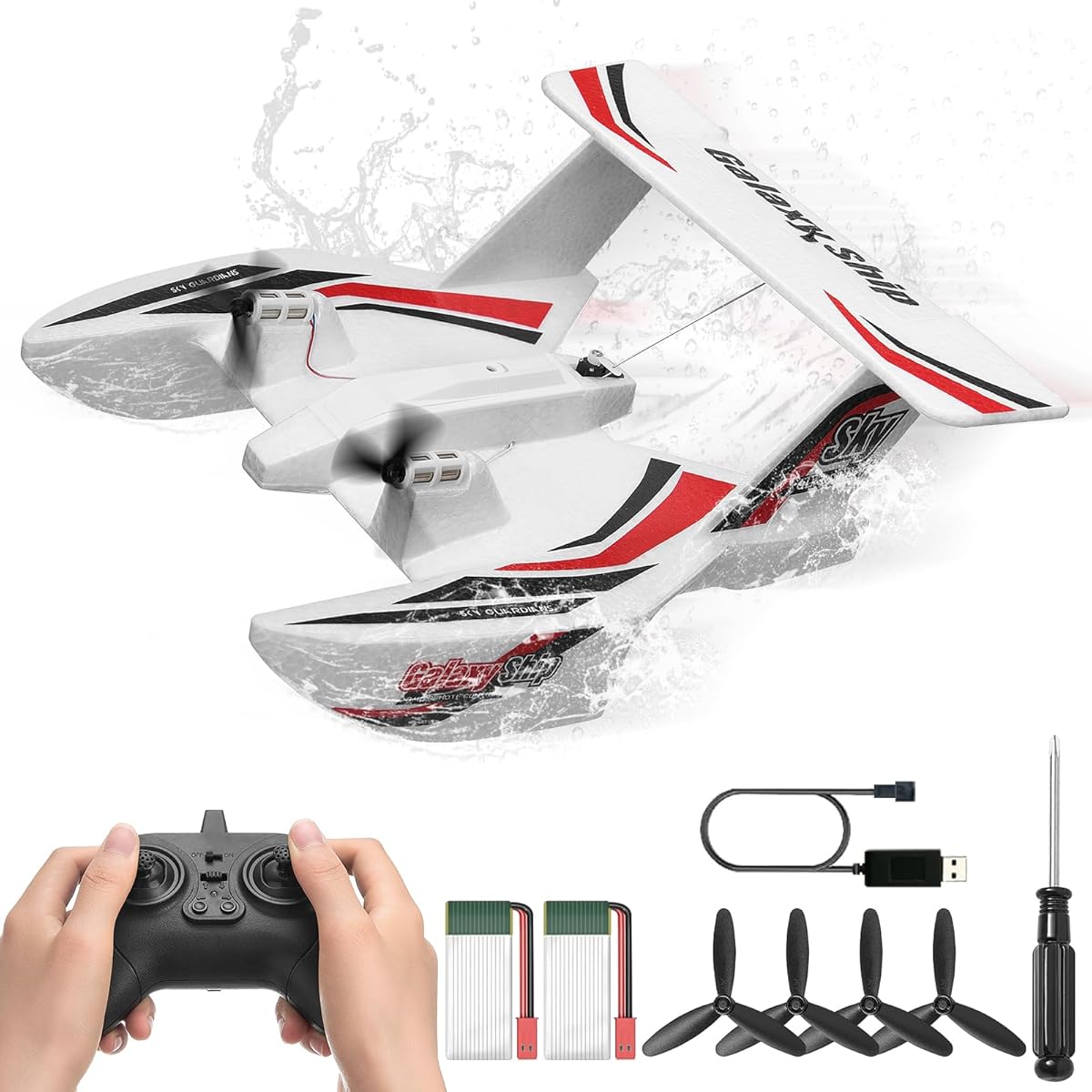
Choosing Your First RC Plane: The VEVOR 3CH Amphibious Model
When stepping into the world of remote-controlled airplanes, the VEVOR RC Plane stands out as a ready-to-fly option that combines amphibious capability with a 6-axis gyro stabilizer for easier control. This guide helps beginners and parents understand what makes this specific model unique, from its dual battery setup to its suitability as a first-time flyer.
Key Considerations Before Buying
- Stability vs. Skill Level: The 6-axis gyro stabilizer is a key feature for beginners, as it automatically corrects flight attitude and reduces crashes. However, it also limits advanced maneuvers, so consider if you want a plane that grows with your skills or one that prioritizes easy learning.
- Amphibious Design: This plane can take off and land on both grass and water, which adds versatility but also requires careful battery management. Water landings can be thrilling but may lead to moisture damage if not dried properly, so check if the electronics are adequately sealed.
- 3-Channel Control: With throttle, rudder, and elevator controls, this is a simplified setup compared to 4-channel planes. It's ideal for absolute beginners but may feel limiting for those seeking aerobatic flight like loops or rolls.
What Our Analysts Recommend
For a beginner RC plane, prioritize durability and ease of repair—look for foam construction that can withstand minor impacts. A good transmitter range (at least 300 meters) and rechargeable batteries with quick charging or spares are essential. Also, verify that replacement parts like propellers and wings are readily available for the VEVOR model.
Airplanes & Jets Market Context
Market Overview
The ready-to-fly (RTF) RC airplane market has grown significantly, with budget-friendly brands like VEVOR competing against established names like HobbyZone and E-flite. These models often include gyro stabilization to lower the learning curve, making them popular for family use and as gifts. The amphibious niche adds a unique selling point but is less common, so options are limited.
Common Issues
Common problems in this category include fragile landing gear, short flight times (often 5-10 minutes), and difficulty in windy conditions. Users also report that gyro systems can be overly sensitive, requiring fine-tuning. For amphibious models, water ingress into electronics is a recurring concern.
Quality Indicators
Quality in RTF planes is indicated by durable EPP or EPO foam, a robust transmitter with clear controls, and a gyro system that offers adjustable sensitivity. Verified purchaser reviews often highlight battery life, ease of assembly, and crash resistance—look for patterns in these areas across multiple reviews.
Review Authenticity Insights
Grade B Interpretation
A Grade B with 10% estimated fake reviews suggests that while most feedback is genuine, a small portion may be incentivized or overly positive. This is common for budget RC products on Amazon, where sellers sometimes solicit reviews. The 3.75 rating is largely trustworthy but should be taken with slight caution.
Trust Recommendation
Focus on the 90% of reviews that appear authentic—especially those from verified purchasers describing specific experiences, like first flights or durability tests. Ignore overly generic 5-star reviews with no details, as they are more likely to be fake. The adjusted rating of 3.60 is likely a more accurate reflection of real user satisfaction.
Tips for Reading Reviews
For RC planes, prioritize reviews that mention flight time, ease of control, and crash durability. Look for comments on the gyro stabilizer's performance in wind and the amphibious feature's practicality. Photos or videos of the plane in action add credibility. Also, note any recurring complaints about battery connectors or transmitter range.
Expert Perspective
The VEVOR RC Plane offers a compelling entry point for beginners, especially with its dual batteries extending flight time to around 20 minutes total—a significant advantage over single-battery competitors. The 6-axis gyro stabilizer effectively reduces crashes, making it a forgiving choice for kids and adults new to flying. However, the 3-channel control limits growth, and the amphibious design adds complexity without guaranteed waterproofing, as hinted by some reviews. Given the 3.60 adjusted rating, it's a solid starter but not a long-term investment for serious hobbyists.
Purchase Considerations
Weigh the convenience of an RTF package against potential limitations: if you want a plane that can handle light wind and both grass and water landings, this is a good value. However, if you plan to progress quickly to aerobatics, consider a 4-channel model instead. The 10% fake review rate is low enough not to dismiss the product, but cross-check with independent forums for long-term reliability.
Comparing Alternatives
Shoppers should compare this VEVOR model with similarly priced RTF planes like the HobbyZone Sport Cub S or Volantex RC Ranger, which offer 4-channel control and proven durability. For amphibious use, the VEVOR is a unique budget option, but check if replacement floats are available.


